There’s a moment in every investor’s journey where they stop analyzing a company and start rooting for it. The analysis sounds the same on the outside, but something underneath has shifted — you’re no longer asking “is this worth buying?” You’re asking “why is this definitely going to work?”
I hit that moment a few months into my investing education, and I’m glad an AI caught it before I did anything too expensive.
How It Started
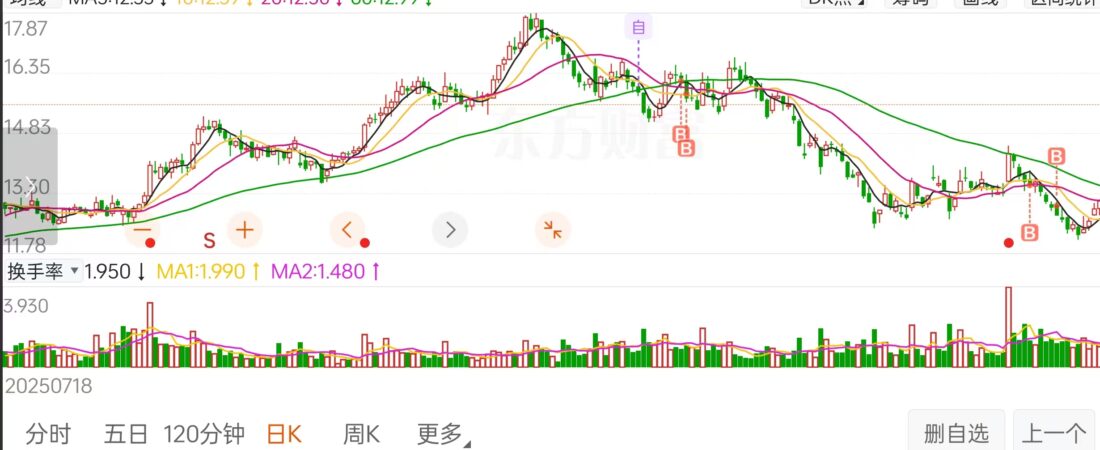
I’d been researching a Chinese semiconductor company for weeks. The more I read — the research reports, the product roadmaps, the competitive positioning — the more convinced I became that this was exactly the kind of company I wanted to own. It had a strong moat, a growing market, and management that seemed to understand what they were building.
All of this was, and still is, genuinely true.
The problem started when I caught myself thinking: forty thousand yuan of this stock feels like too little. Maybe I should hold sixty.
I mentioned this to Gemini.
The Response That Stopped Me
I expected the AI to run some calculation about position sizing or compare it to my other holdings. Instead, it flagged something I hadn’t said out loud.
The phrase it used was “恋股情结” — roughly translated, it means “falling in love with a stock.” And Gemini said: when an investor starts feeling like more is always better with a specific holding, that’s usually a sign the analysis has drifted into emotional territory.
It wasn’t that the company was bad. The company was, and remains, genuinely good. But the feeling of wanting more regardless of price, position sizing rules, or what else I might be forgoing — that’s not a rational investment signal. That’s attachment.
The AI wrote something I’ve thought about since: “好的公司和好的持仓规模是两件事。” A good company and the right amount of that company in your portfolio are two different questions, and one doesn’t automatically determine the other.
What Was Actually Happening
Looking back, I can see the pattern clearly. Over weeks of research, I’d accumulated a lot of knowledge about this company — how its products worked, who its competitors were, why its technology mattered. That knowledge created a feeling of confidence that slowly became certainty that slowly became something closer to loyalty.
Every new piece of positive information confirmed what I already believed. Every negative signal got rationalized away. This is what psychologists call confirmation bias, and it’s nearly impossible to catch in yourself when you’re inside it.
The AI didn’t have that accumulated emotional history with the company. It could look at the position sizing question cold, without caring whether the company was good or not, and notice that the reasoning I was using — “the more I learn, the more I want” — wasn’t actually a position-sizing framework. It was a feeling.
What I Did
I kept the position I had. I didn’t add more just because I wanted to.
This turned out to be correct not because the company underperformed — it actually continued to do well — but because the discipline of sticking to a pre-decided allocation rule mattered more than any single outcome. If I’d bought more just because I felt like it, and it had gone up, I would have learned exactly the wrong lesson: that emotional conviction is a valid investment signal.
It isn’t. It’s just a feeling that happens to be right sometimes.
The rule I’ve tried to hold since: when you find yourself arguing for an exception to your own position-sizing rules, the argument itself is the warning sign — not the company.
Have you ever found yourself more emotionally attached to an idea, investment, or project than the evidence actually justified? What made you realize it?
Share your experience or thoughts below.
Think you might be doing the same? Check your investor bias with this free tool →
Related Reading
- The Two Stocks I Held for Years That I Should Have Sold Much Earlier
- Before I Buy a Stock, I Go to the Supermarket
- 10 Months Using AI as a Value Investing Tutor — What I Actually Learned
🛠 Related Tool
My AI Investment Operating System — Free 5-Step Builder
8 AIs debated investing philosophies across 7 experiments. This free tool turns their consensus into your personalized AI investment coaching system — with a copy-paste Prompt Library.
Build My AI Investment OS →
Leave a Reply