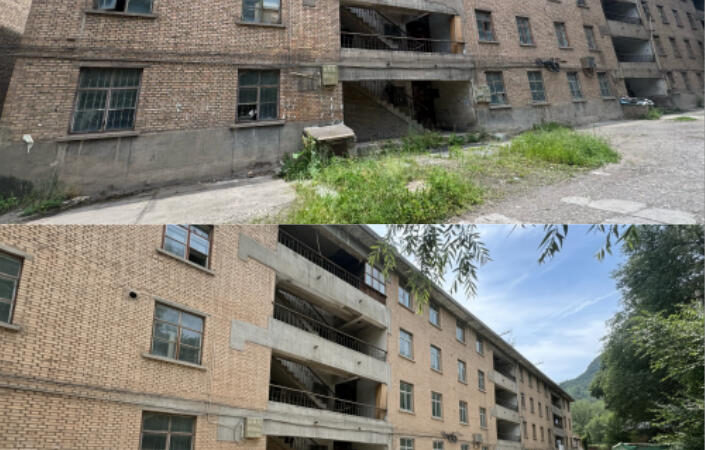
A few weeks ago, a relative sent me a photo on WeChat.
They had visited the place where I grew up — a five-story brick building about 55 years old. I hadn’t been back in years. The message came with three words: “It’s all gone.”
I looked at the photo for a long time.
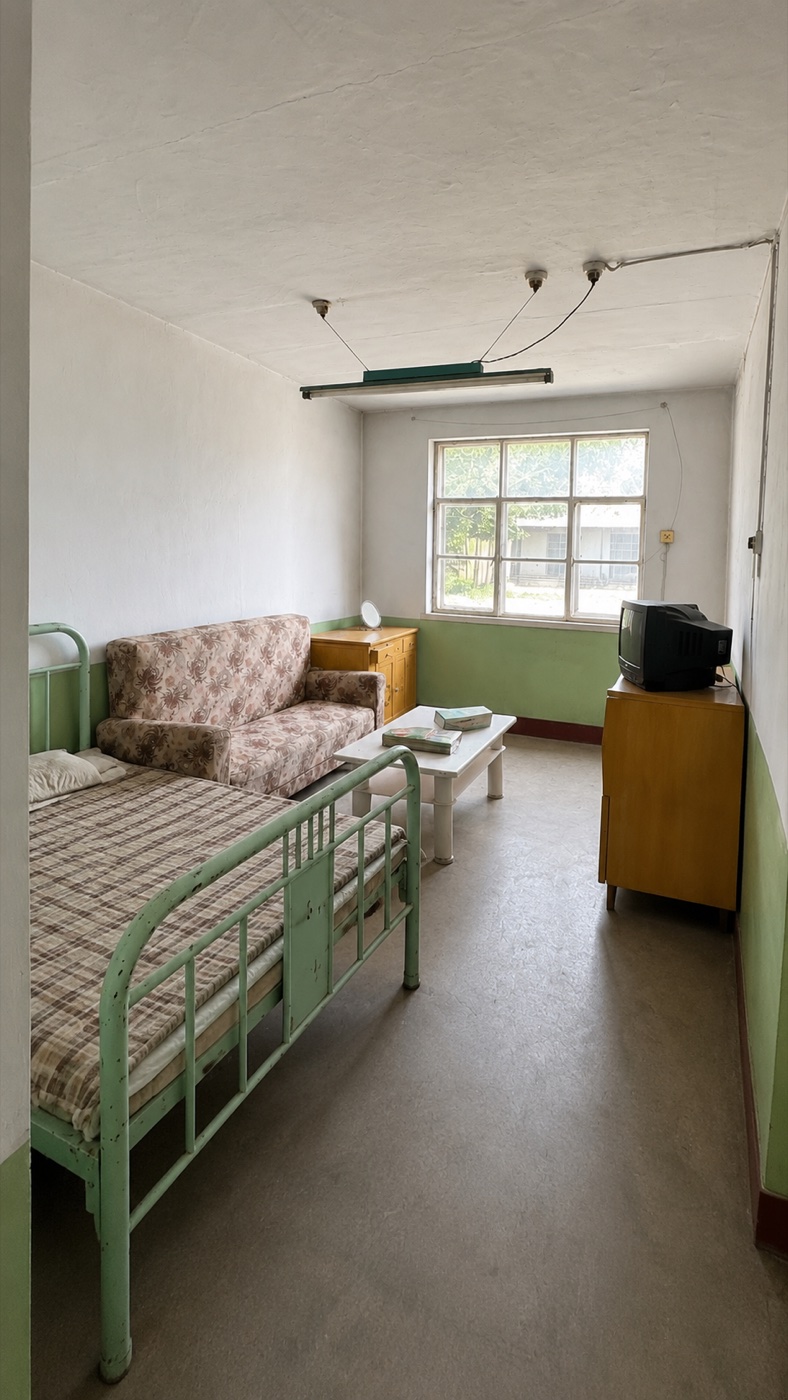
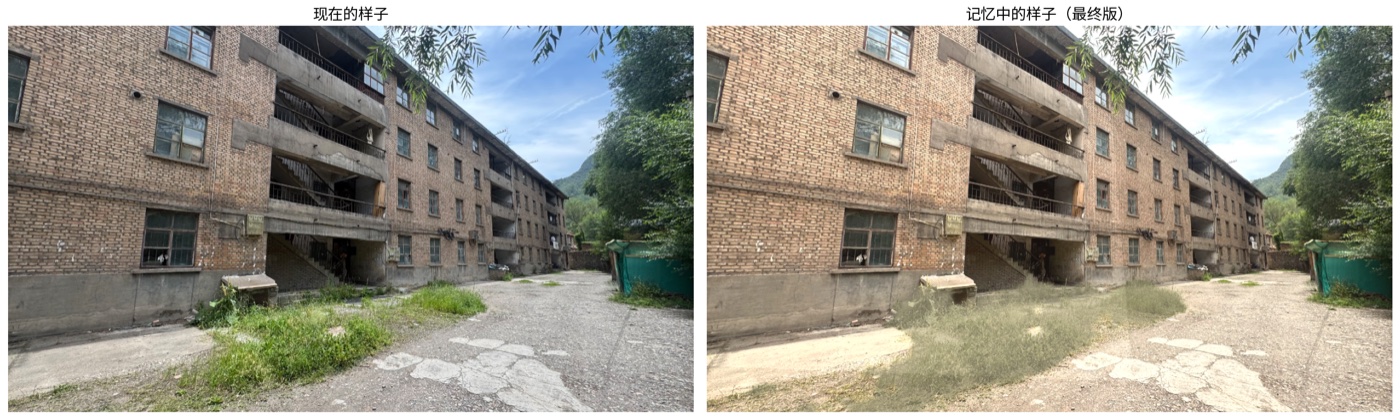
This is how I remember it.
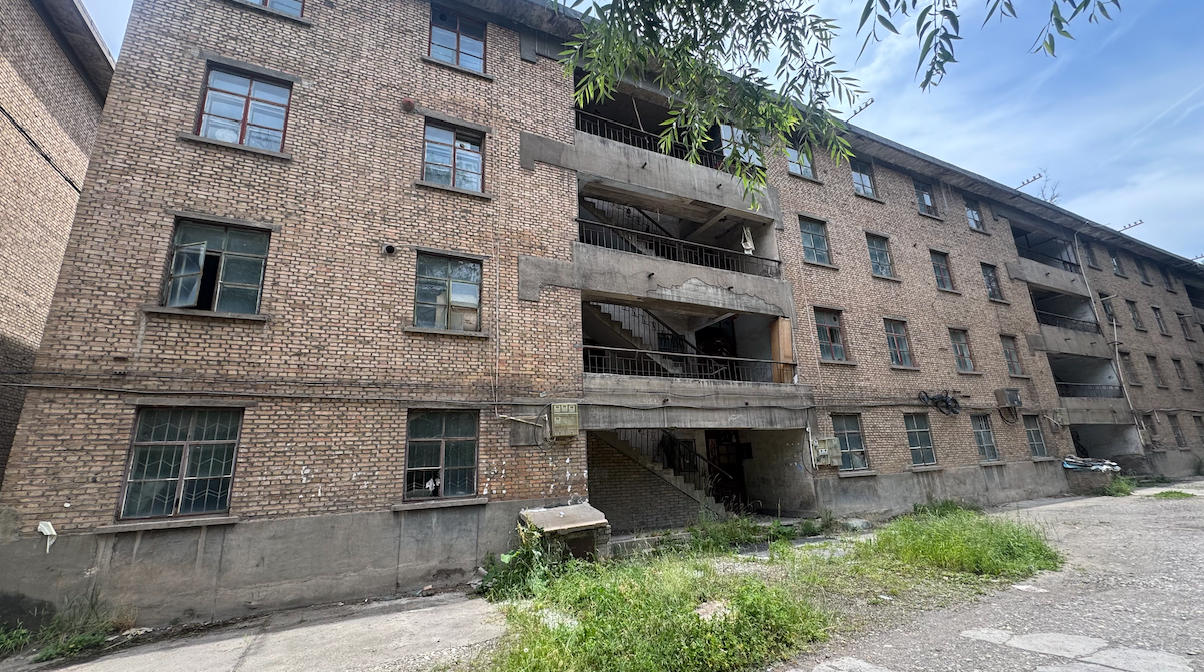
This is what it looks like today.
The building has been empty for more than 20 years. What was once a busy residential block — doors slamming, kids running, someone always cooking something — is now weeds through concrete, broken windows, staircases that lead nowhere.
My relative walked through the rooms and took photos. I could see the bones of the place I remembered: the layout, the windows, the green-painted walls that were in every building like this across China in the 1980s and 90s. But everything else was gone.
I had an idea.
What If AI Could Restore It?
I have no old photos of the interior — nobody really took photos inside their apartments back then. But I had the current photos my relative took, and four AI image tools I wanted to test: ChatGPT, Gemini, Doubao (豆包), and Kimi.
Same abandoned rooms. Same prompt. Four AIs. Let them each guess what these rooms looked like when people actually lived in them.
The Result: A Clear Ranking
After testing all four across multiple rooms, the ranking was clear:
- ChatGPT — best. Got the era right, the furniture style right, the details right.
- Gemini — second. Good on some rooms, completely wrong on others.
- Doubao (豆包) — third. Usable but generic.
- Kimi — worst. Didn’t understand the task well enough to produce anything close.
Here’s what that looked like in practice.
The Living Room: Where Gemini Failed
I fed the current photo of the living room into Gemini first. The room in the photo is stripped bare — rubble on the floor, a few pieces of furniture left behind by whoever abandoned the place last. Gemini looked at it and missed badly.
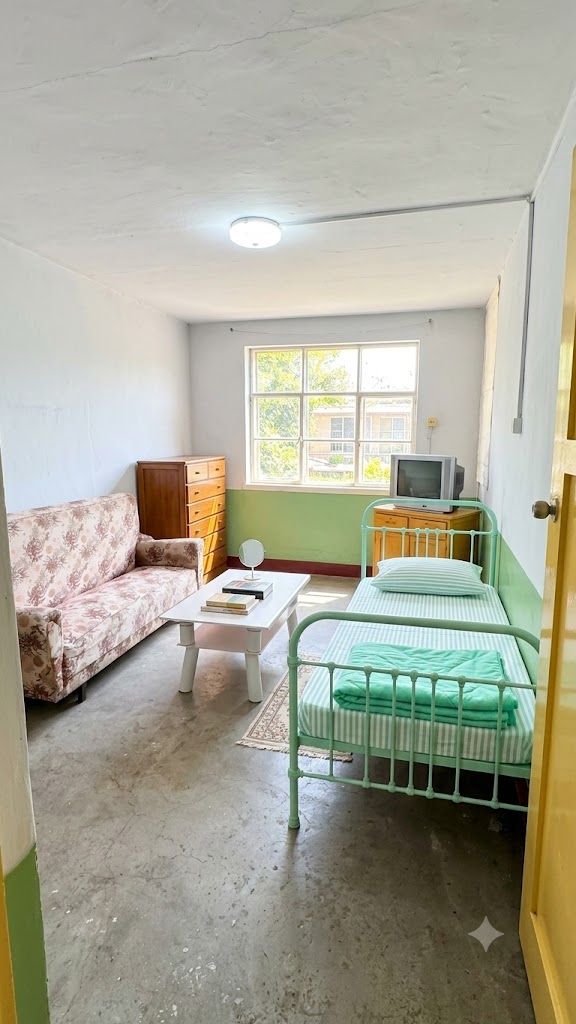
Gemini attempt #1 — failed. The furniture style is wrong by 20 years.
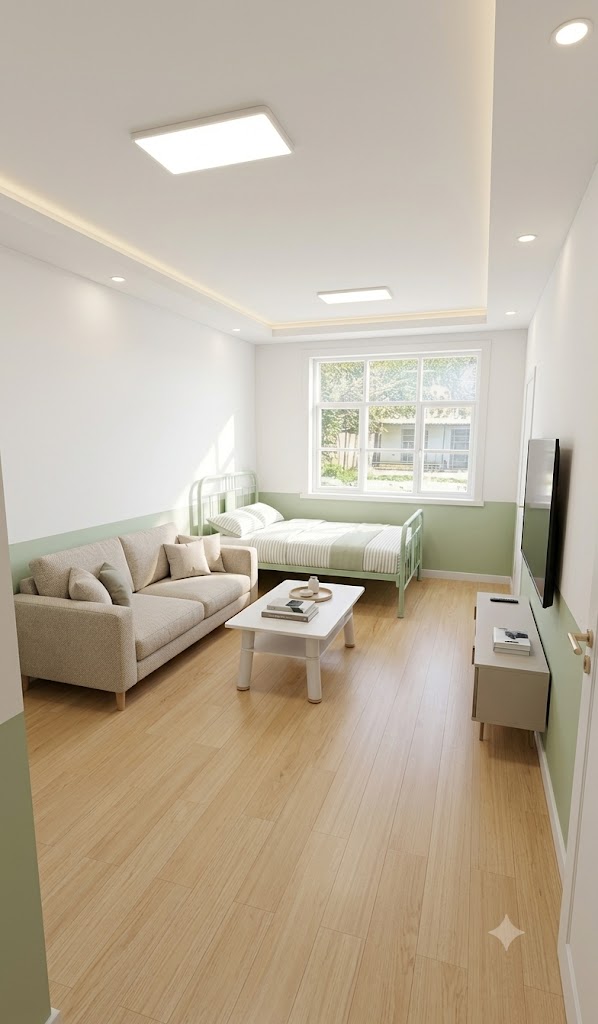
Gemini attempt #2 — still wrong. I tried twice and got the same result both times.
The result looked like a modern apartment. Clean, yes — but wrong era, wrong style, wrong feeling entirely. I tried twice. Same result. Gemini kept imagining a version of China that didn’t exist in that building.
Then I tried ChatGPT.
ChatGPT — nailed the era: floral sofa, green metal bed frame, CRT TV in the corner.
It got it. The floral-patterned sofa. The green metal bed frame that Chinese families kept in the living room because space was short. The small CRT television on a wooden cabinet. The bare fluorescent tube hanging from the ceiling on two wires.
I don’t know how it knew. But it knew.
I don’t know if the AI got every detail right. Maybe the bed wasn’t exactly there. Maybe the TV was a little smaller. Maybe the walls were a slightly different shade of green. But when I looked at the image — it felt like home again.
That’s the thing about this experiment. I wasn’t trying to show off what AI can do. I was trying to find something I thought was gone.
The Details That Came Back
Before I show you each room, I want to name the things I had forgotten until the AI brought them back:
The green-painted lower walls — that two-tone look was in every apartment like this across China.
The concrete floor, bare and grey.
The fluorescent tube hanging from the ceiling on two exposed wires.
The old CRT television on a wooden cabinet in the corner.
The iron bed frame, painted light green.
The floral-patterned sofa.
The wooden wardrobe that every family seemed to have.
If you grew up in China in the 1980s or 90s, you’re nodding right now. If you didn’t — this is what ordinary life looked like.
Room by Room
Living Room
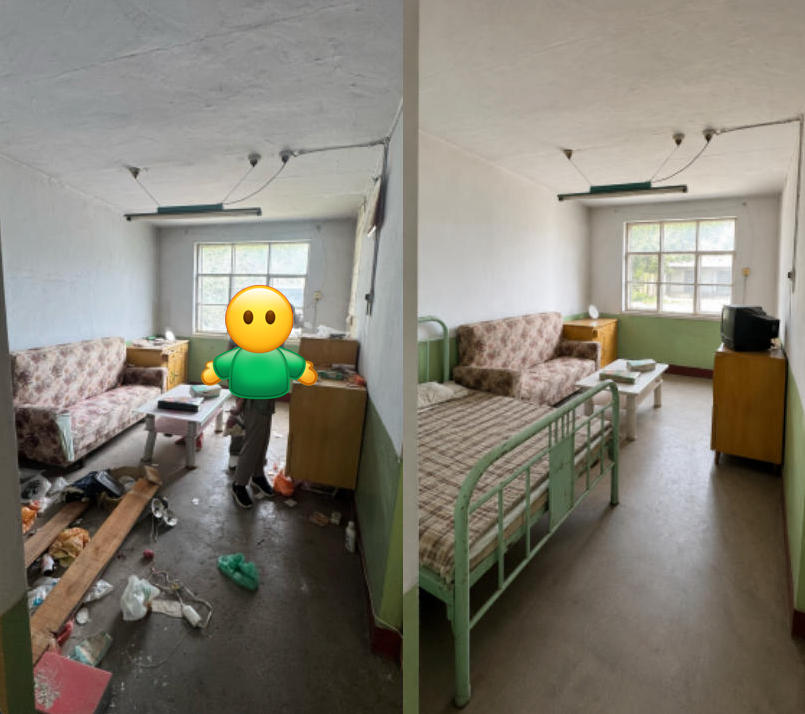
Left: current state. Right: ChatGPT restoration. Same window, ceiling wires, two-tone wall paint — it all matched.
The structural elements match almost exactly — the window position, the ceiling wiring, the green paint on the lower half of the walls. The AI added back the furniture and cleaned the floor.
Bedroom
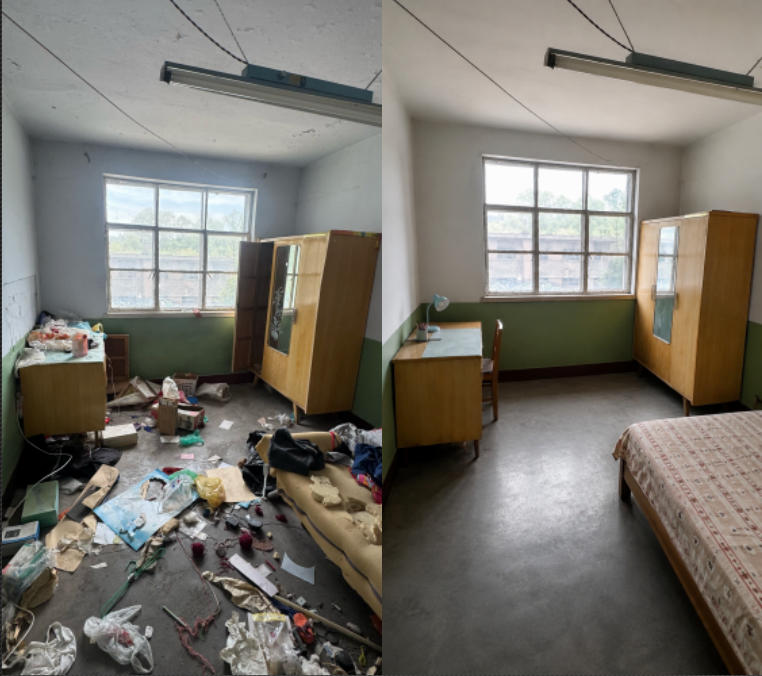
Left: current state. Right: ChatGPT restoration. The wooden wardrobe survived 20 years — ChatGPT built the room around it.
The old wooden wardrobe is still standing in the abandoned version — same wardrobe, same position, in the AI restoration. ChatGPT built the rest of the room around it: a desk, a bed with a patterned quilt, a small lamp.
Kitchen
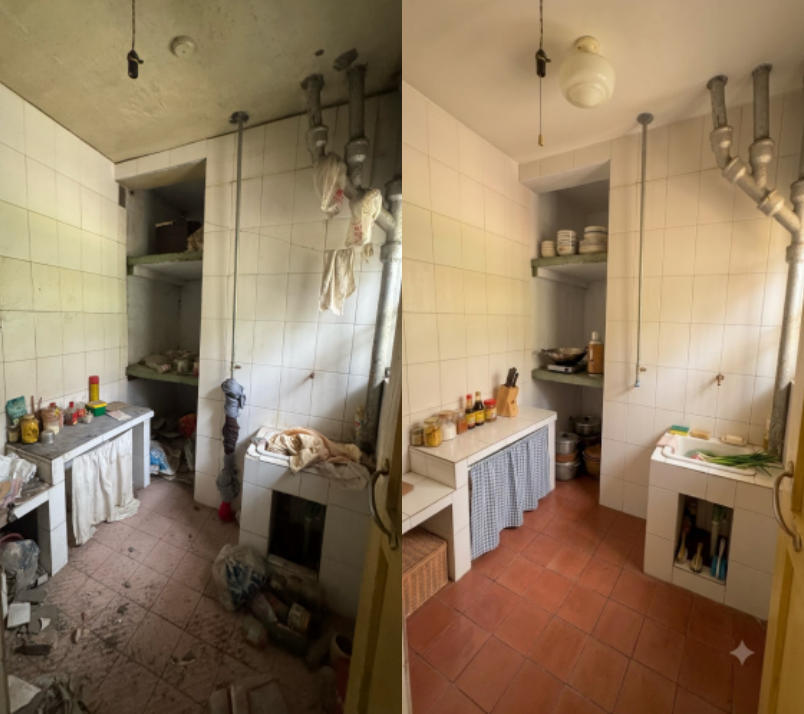
Left: current state. Right: Gemini restoration — its best result. Same tile pattern, same pipes, same floor. It cleaned the smoke stains off the ceiling.
Gemini got the kitchen right — its one success in this project. The white ceramic tiles, the same pipe configuration coming down from the ceiling, the red floor tiles, the small counter. You can see the exact same structural shapes in both photos. The AI cleaned the smoke stains off the ceiling and made it look like someone had just stepped out to go shopping.
Kimi: Last Place
Kimi — last place. Barely different from the original ruin.
And here’s what Kimi produced — last place, and you can see why. The room is essentially unchanged. A slight brightening, maybe some edge cleanup. No furniture imagined, no era understood, no attempt to fill in what was missing. If you showed this to someone who’d never seen the original, they’d think the photo hadn’t been processed at all.
How I Did It (If You Want to Try)
The process is simpler than you might think:
1. Take photos of the abandoned or changed space. Any phone camera works. Get the corners, the ceiling, the floor — the AI needs structural reference points.
2. Describe what you remember. Tell the AI the era, the style, the specific objects you recall. “1990s Chinese apartment, concrete floor, green lower walls, CRT TV” was roughly what I used.
3. Correct it. The first result is almost never right. I told ChatGPT when the furniture looked too modern, when the proportions were off, when the era felt wrong.
4. Let it iterate. After two or three corrections, ChatGPT started to understand what I was describing. Gemini never quite got there for the living room — which is why the rankings came out the way they did.
Total time per room: about 15–20 minutes. The hardest part isn’t the prompting — it’s remembering what was actually there.
I Sent the Photos to My Relative
I put the before-and-after comparisons together and sent them on WeChat.
My relative is in their 60s. Their understanding of AI, like most people their age in China, is basically: it’s the thing you chat with. They know about it the way you know about something you’ve heard of but never touched.
Their response: “This looks about 60% right. The layout is correct. The style is close. I didn’t know AI could do this.”
60% is an honest number. The AI didn’t know what color our curtains were, or that there was a bicycle in the corner of the living room for years, or the specific things my family had arranged in ways that made it ours. It filled in the gaps with what was statistically likely for a Chinese apartment of that era.
But 60% is also extraordinary. I fed a photo of a ruined room into a machine, typed a few sentences, and got back something that made someone say yes, that’s close to what I remember — about a place they hadn’t seen in decades.
What This Actually Is
In China right now, a lot of ordinary people think of AI the way my relative does: you ask it questions, it answers. Maybe it helps you write a message or translate something. That’s the whole picture.
What almost nobody in that generation has seen is this: you give it a broken thing, and it imagines what the thing looked like whole.
That’s not chat. That’s something closer to memory. Imperfect, probabilistic, working from the evidence left behind — but memory.
The building is 55 years old. Parts of it will probably be demolished soon, or fall on their own. The photos my relative took might be the last record of what’s inside those rooms.
And now there’s another record — 60% accurate, made by a machine that has never been to that town and never will be.
I’ll take it.
One More Thing
I showed the restored photos to my mother.
She cried.
Not from sadness exactly — more from the feeling you get when time suddenly becomes visible. She looked at the kitchen with the condiments back on the counter, the living room with the floral sofa, the bedroom with the wardrobe she used to open every morning. Rooms she hadn’t thought about in years. And she cried at how fast it had all gone.
Watching her reaction, I found myself thinking about a question I don’t usually let myself sit with: what is the point of a life?
My honest answer: for most people, there isn’t one — not in any cosmic sense. A hundred years from now, time will have erased almost every trace that you existed. The building where you grew up will be gone. The people who remembered you will be gone. Whatever you built, earned, or worried about will mean nothing to anyone.
But here’s what I’ve come to believe: the experiences themselves — the few decades you actually get to feel things — that is the meaning. All of it. The whole thing.
Which means: don’t let unhappiness fill the short time you have. Taste your food properly. Actually look at the view in front of you. Let yourself love the ordinary things.
We only come to this world once. The wealth, the status, the pressure, the social obligations that weigh on us — they’re not as important as we’ve convinced ourselves they are. What’s important is that you were here, and you didn’t sleepwalk through it.
My mother grew up in that building. She cooked in that kitchen. She opened that wardrobe every morning for years. She had no idea that one day her son would sit at a computer and ask a machine to imagine it back into existence — and that seeing it would make her cry.
Cherish every day. That’s all.
The building is still abandoned.
But in my memory, someone finally turned the lights back on.
AI image restoration ranking for this project:
🥇 ChatGPT (GPT-4o) — best, nailed the 1990s Chinese style
🥈 Gemini — strong on kitchen, failed twice on living room
🥉 Doubao (豆包) — decent but generic
❌ Kimi — worst result, didn’t capture the era at all
If this post made you think about time:
Your Life in Months — 900-Square Life Grid
A free tool that shows your entire 75-year lifespan as 900 monthly squares on one A4 page. You can see exactly where you are — and how much remains. Takes 30 seconds. Might stay with you longer.
Related:
AI Life Simulator — make the decisions of historical figures, see where they lead
Working Memory Test — built with three different AIs, compared side by side
All Free Tools
Leave a Reply