
View Wayback Machine archive →
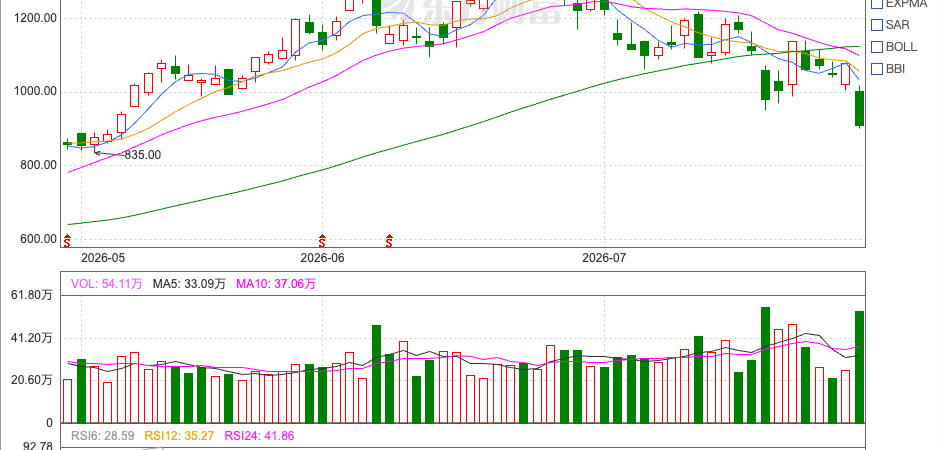
Breaking news as I write this: Zhongji Innolight just completed a Hong Kong IPO, raising $6.81 billion — Asia’s second-largest listing of 2026. The stock dropped 16% on the A-share market the same day the HK price was set.
That crash is why I’m writing this.
I Made This Mistake Before. I’m Not Making It Again.
About a year ago, I was having a conversation with Gemini about AI infrastructure stocks. It kept pointing me toward Innolight. I pushed back with what I thought was a smart objection:
“Optical modules are like hard drives. You buy them once. They’re not consumables.”
Gemini explained, patiently, that I was wrong. AI data centers don’t buy modules once. They constantly upgrade — from 400G to 800G to 1.6T — and they need millions of units as they scale. The upgrade cycle is the demand cycle. It’s more like fuel than furniture.
I didn’t believe it. I moved on.
Innolight went up 3x.
So this time, when the stock crashed 16% in a day and I felt that familiar pull — “maybe this is the entry point I missed” — I decided to actually do the work instead of acting on instinct. I asked five AI models the same four questions. Then I compared what they said.
This is what I found.
Why the Stock Dropped 16% (And Why It Matters)
Before the investment analysis, I needed to understand the crash. Because if the drop is about fundamentals, that changes everything. If it’s mechanical, the thesis might still be intact.
My conclusion: this was a pricing mechanics event, not a demand signal.
Innolight priced its Hong Kong shares at HK$980 (~¥905 RMB). The A-shares were trading at ¥1,076. That’s a 19% premium for the same company on a different exchange. Markets close that gap. The A-share fell 16% to converge toward the HK price. Classic A/H arbitrage compression.
The optical module business didn’t change. The price did.
That distinction matters for everything that follows.
The Four Questions Every Investor Should Ask
Instead of asking “Will it go up tomorrow?”, I asked five AI models four different questions:
- Where is the actual moat? (Not the story — the real defensibility)
- Can growth justify an 80x PE?
- Has the 1.6T product ramp actually materialized?
- What breaks the thesis?
The five AIs: ChatGPT, Claude Opus 5, DeepSeek, Gemini, and the Claude I use daily (Claude Sonnet).
Here’s what they said — organized by question, not by model.
Question 1: Where Is the Moat?
ChatGPT made the most useful reframe: the moat isn’t the optical technology itself — it’s the hyperscaler supply chain position. “Microsoft won’t switch suppliers because someone is 10% cheaper. If an AI cluster worth billions has a single module fail, the entire training run can be interrupted. The certification process takes 18–24 months. The real competition is: who is already on the approved list.”
Gemini went further with specifics: Google has been a customer since 2011, held 70% of Google’s optical module share in 2025, and is the sole 1.6T supplier for Nvidia with ~80% of that contract. It also quantified the scale moat — annual production capacity of 28 million units globally.
DeepSeek added the technology dimension: Innolight has been consistently first to market with each new generation — 400G in 2018, 800G first at scale, 1.6T first in volume shipments. “When competitors finally complete certification, Innolight is already selling the next generation.”
Claude Opus 5 was the dissenter. It pointed out that second-place rival Xinyisheng (新易盛) grew revenue 187% in 2025 with higher gross margins than Innolight. “The second-place player is growing faster and has better margins than the leader — that’s not what ‘competitors can’t enter’ looks like.” It also flagged that hyperscalers typically cap any single supplier at ~40% share as a supply chain risk policy.
My take: The moat is real but it’s not static. The better frame is: Innolight has to win each generation of products. The 1.6T position is strong now. The 3.2T race determines what comes next. Watch gross margin direction — if it starts falling, someone is catching up.
AI Consensus on Moat: ⭐⭐⭐⭐☆ — Real and substantial, but requires continuous validation rather than permanent protection.
Question 2: Can Growth Justify the Valuation?
The headline PE of 80x sounds alarming. Every AI agreed it was the wrong number to anchor on.
DeepSeek laid out the math most clearly: 80x is based on 2025 earnings of ¥10.8 billion. But Q1 2026 alone produced ¥5.7 billion in net profit — more than half of the entire prior year in a single quarter. Forward 2026 PE, using full-year estimates of ¥300+ billion, drops to 26–28x.
Claude Opus 5 ran the sharpest analysis — and caught a math error in my original table. It also raised the point most others skipped: consensus expectations for 2026–2027 are already baked into current prices. The market isn’t pricing in 25% growth. It’s pricing in 200%+ for 2026, then 60–80% for 2027. “Your ‘pessimistic 15%’ scenario isn’t pessimism — it’s a collapse scenario. If growth really lands at 15%, the stock won’t be waiting at 80x. It’ll already be repricing on the way down.”
Gemini provided the demand-side confirmation: combined capex from Microsoft, Google, Amazon, and Meta reaches $725 billion in 2026 (+77%). Morgan Stanley, JP Morgan, and Bank of America have converged on $1.1 trillion for 2027.
ChatGPT offered the cleaner framework: the real valuation equation isn’t PE. It’s: AI Capex × Market Share × ASP × Gross Margin. Monitor each variable separately.
My take: The quarterly earnings acceleration is the most important number in this entire analysis. Gross margin went from 35% (2024) to 46% (Q1 2026). That’s not a one-quarter anomaly — it reflects 1.6T product mix at higher ASPs. If the August interim report shows Q2 margins holding above 44%, the growth story is intact. If margins break down, something changed.
AI Consensus on Valuation: ⭐⭐⭐☆☆ — Not cheap on a static basis, but growth is already materializing at a pace that makes the forward multiple reasonable. High execution risk.
Question 3: Has the 1.6T Ramp Actually Materialized?
This was the most straightforward question. Every AI gave the same answer: yes, and the question has moved on.
Gemini had the most detailed timeline: first shipments in Q2 2025, key customers deploying at scale by Q3 2025, Q1 2026 exceeding 1 million units, Q2 2026 projected at 2 million units. Revenue share of 1.6T products reached 55% of total in Q1 2026. Global market share in 1.6T: 50–70%.
DeepSeek broke down 2026 expected 1.6T volumes by customer: Nvidia (4.5M units), Google (2.4–2.5M), Microsoft (1.5M), Meta (800K), Amazon (600K). Total approximately 10 million units.
Claude Opus 5 pushed the conversation forward: “1.6T is already shipping. The validation point has moved to 2027. What you need to watch now is whether the 2027 volume and pricing hold.” It also flagged one yellow light: Q1 2026 net cash conversion dropped from 1.0 to 0.59, suggesting rapid inventory buildup. The next report will clarify.
My take: 1.6T is not a thesis to validate — it’s a thesis that already validated. The question I should be asking now is: what does the 3.2T timeline look like, and is Innolight in the same leading position?
AI Consensus on 1.6T: ⭐⭐⭐⭐⭐ — Already delivered. Monitoring point shifts to 2027 volume and pricing, and cash flow quality in H1 report.
Question 4: What Breaks the Thesis?
This is where the AIs diverged most sharply — and where Claude Opus 5 contributed things the others completely missed.
ChatGPT and Gemini named the obvious risks: hyperscaler capex cuts, price wars as competition catches up, certification loss. All real. All worth monitoring.
Claude Opus 5 found three that no other AI mentioned:
Risk 1 — The China Taiwan supplier concentration. Innolight’s top supplier accounts for 38.3% of total procurement costs. This supplier is a China Taiwan-listed company. The components it supplies represent approximately 50% of product cost. Domestic Chinese alternatives cover less than 20% of this need.
Risk 2 — The 1260H listing. In June 2026, the US Department of Defense added Innolight to its 1260H defense contractor list. The company correctly noted this doesn’t restrict civilian business operations. But Innolight derives 61.71% of revenue from the United States. The direction of travel matters.
Risk 3 — Cash flow quality degradation. In 2025, net income and operating cash flow were nearly equal (ratio ~1.0). In Q1 2026, that ratio dropped to ~0.59. Inventory surged 79.8%. This needs resolution in the August report.
My take: The China Taiwan supplier risk is the one that keeps me from being fully bullish. It’s structural. A company can manage customer concentration and competition. It’s much harder to manage geopolitical supply chain risk on a 12-month horizon.
AI Consensus on Risk: ⭐⭐⭐⭐⭐ (severity rating) — Two structural reds exist alongside the green business fundamentals.
AI Consensus Summary
| Question | Consensus | Confidence |
|---|---|---|
| Where is the moat? | Supply chain position, not just technology | ⭐⭐⭐⭐☆ |
| Can growth justify valuation? | Forward PE ~26–44x if 2026 delivers | ⭐⭐⭐☆☆ |
| Has 1.6T materialized? | Yes. Watch 2027 pricing now. | ⭐⭐⭐⭐⭐ |
| What breaks the thesis? | Capex cuts, China Taiwan supply chain, geopolitics | ⭐⭐⭐⭐⭐ |
Investment Checklist (As of July 28, 2026)
✅ AI hyperscaler capex still growing (+77% in 2026)
✅ 1.6T shipping on schedule, 50–70% global share
✅ Gross margin at 46% and rising
✅ Full-year 2026 orders already booked
✅ H-share IPO priced (removes A/H uncertainty after July 30)
❌ China Taiwan supplier = 38% of procurement, <20% domestic alternative
❌ 1260H defense list designation (direction risk)
❌ Q1 cash conversion ratio dropped to 0.59 (needs resolution)
⏳ H-share July 30 open: premium or discount to issue price?
⏳ Microsoft/Meta earnings this week: capex guidance holding?
What Surprised Me
Five AI models, four questions, and one consistent answer I didn’t expect: the moat isn’t about technology leadership. It’s about supply chain position.
I came into this thinking the key question was: does Innolight have better engineering?
Every AI redirected me to: is Innolight already certified, and how long would it take to replace them?
Those are different questions. The first one can become obsolete. The second one is sticky even when technology shifts — because recertification restarts the 18–24 month clock regardless of who has the better product.
This is the same logic I missed last year when I argued optical modules weren’t consumables. I was thinking about the wrong variable.
What Changed My Mind
Before asking the AIs, I was asking the wrong question: Is Zhongji Innolight a good company?
After comparing five different models, I realized the better question is: Can today’s valuation still deliver returns if AI infrastructure spending slows by half?
That second question is harder. It requires thinking about scenarios where the company is still excellent but the stock still disappoints — because expectations were too high. Claude Opus 5 put it most directly: this stock is priced for 2027 earnings of ¥47–65 billion. If 2027 comes in at ¥30 billion, the stock will be significantly lower even if the company is still growing 30% per year.
Knowing that changes how I think about position sizing.
My Actual Decision
I’m not buying before July 30th.
The Hong Kong listing gives me a free data point in 48 hours. If institutional investors open H-shares above the HK$980 issue price, that’s a signal the demand thesis is holding. If H-shares break issue price, institutions are telling me something about 2027 visibility that I can’t see from here.
If H-shares open with a premium: 100 shares of A-shares, cash only, no margin. That’s ~¥90,000 and about 4% of my portfolio. Small enough to be wrong without pain. Meaningful enough to matter if the thesis plays out over 12–18 months.
The AIs gave me a framework. July 30th gives me a fact. I’ll use both.
Update coming after Hong Kong opening.
This is not financial advice. I’m an ordinary person trying to think more carefully about investing, not a professional analyst. Do your own research.
Leave a Reply