For most of my life, I believed only big media companies could tell China’s stories to the world.
Then AI changed something unexpected.
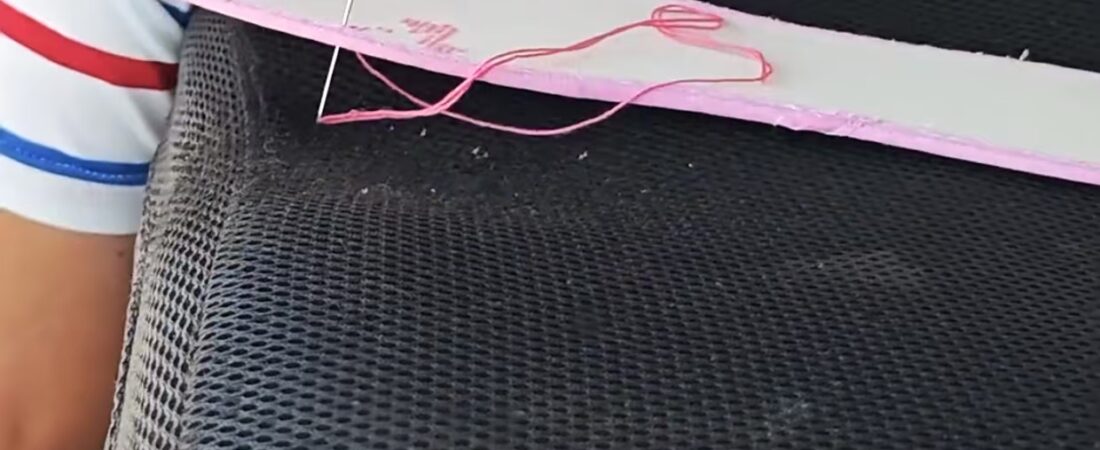
Last night I was scrolling through my phone and I stopped. A woman in a wheelchair. A street corner somewhere in China. Thirty-nine degree heat. She was bent over a piece of fabric, threading a needle — with her mouth.
She was born without the use of her hands or feet. Every stitch on every shoe insole she sells was made the same way: lips, teeth, patience. One pair takes two days. She earns fifteen yuan — about two dollars — per day. She splits it in half. One half for herself. The other half goes to her two daughters in school.
Her words, when asked if she had thought about doing something else: “My hands and feet don’t work. I can’t do much else. So I do this.”
No bitterness. Just a fact.
I watched the whole thing twice. Then I sent it to my son. He is sixteen — smart, but like a lot of teenagers, he retreats when things get hard. I wanted him to see this woman. I wanted him to feel what “hard” actually looks like.
But then I thought: why should only he see this?
The video was in Chinese. The narration, the subtitles, everything. The billion people who don’t read Chinese would scroll right past it. This woman — her callused lips, her daughters, her fifteen yuan a day — would remain completely invisible to most of the world. Not because her story isn’t worth telling. Because no one had translated it.
So I asked AI to help me change that.
I had Claude write an English narration script that followed the video beat by beat. I fed the script into ElevenLabs and generated a voiceover. I layered it over the original video and uploaded it to YouTube. The whole process took one afternoon.
I am not a video editor. I am not a translator. I am an ordinary person with a phone and a laptop — someone who grew up in an apartment block that the outside world will never see, in a city that most English speakers could not place on a map. A few months ago, I even used AI to recreate the building where I spent my childhood, before it was demolished. That piece meant more to me than anything I had written in years.
What I keep realizing is this: I don’t have a shortage of stories. I have a shortage of reach.
Here is the video:
The line at the end of the original video has stayed with me: “Strangers’ kindness always finds the people who are genuinely trying.”
I think that is true. I think it works across languages too.
AI doesn’t make our stories meaningful. It simply removes the language barrier that kept them invisible. Every ordinary person has a story worth telling. AI finally gives many of us the chance to tell it.
If you are sitting on something worth sharing, the tools are there. You just have to try.
Leave a Reply