
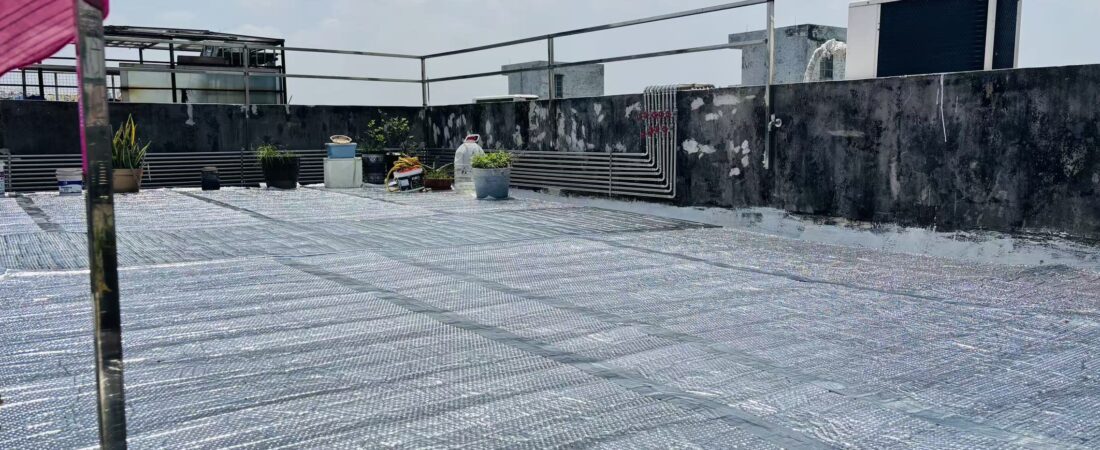
Summer in southern China on a top-floor apartment is a special kind of misery.
The roof bakes under direct sun all day. By mid-afternoon, the concrete above your head has absorbed enough heat to stay warm well into the night. You run the air conditioner not to feel cold, but just to feel human.
Last summer, my electricity bill showed it clearly. In June 2025, I was averaging 11.53 kWh per day. That’s not a spike — that’s the new normal every summer. The AC just runs and runs.
I decided to ask AI what to do about it.
The First Plan: Too Much Work
My first conversation with AI went deep into engineering territory. We discussed shade nets. Steel posts. Wire ropes. Tension calculations. The AI was enthusiastic — it covered load-bearing structures, UV-resistance ratings, and something called “Euler’s Buckling Load” that I eventually tried to explain to my teenage son.
After several hours of planning, I brought the idea to my dad.
He looked at me and said: “Too much trouble. Just turn on the air conditioner.”
He wasn’t wrong that it was complicated. But the AI had already run the numbers: a typical southern China summer runs 6–7 months. If rooftop heat forces your AC to work harder, that’s an extra ¥500–800 per year in electricity — every year, forever. A one-time fix that costs ¥500 pays for itself in twelve months.
I went back to the AI and asked: “Okay, forget the shade structure. What’s the simplest possible thing I can do?”
The Real Answer: Aluminum Bubble Membrane
The AI’s answer was immediate: reflective aluminum bubble insulation (called 铝箔气泡隔热膜 in Chinese — literally “aluminum foil bubble heat-blocking film”).
The logic was simple. A dark concrete rooftop absorbs roughly 90–95% of incoming solar radiation. Silver aluminum foil reflects roughly 95–97% of it. Instead of the roof becoming a heat battery during the day, it becomes a mirror.
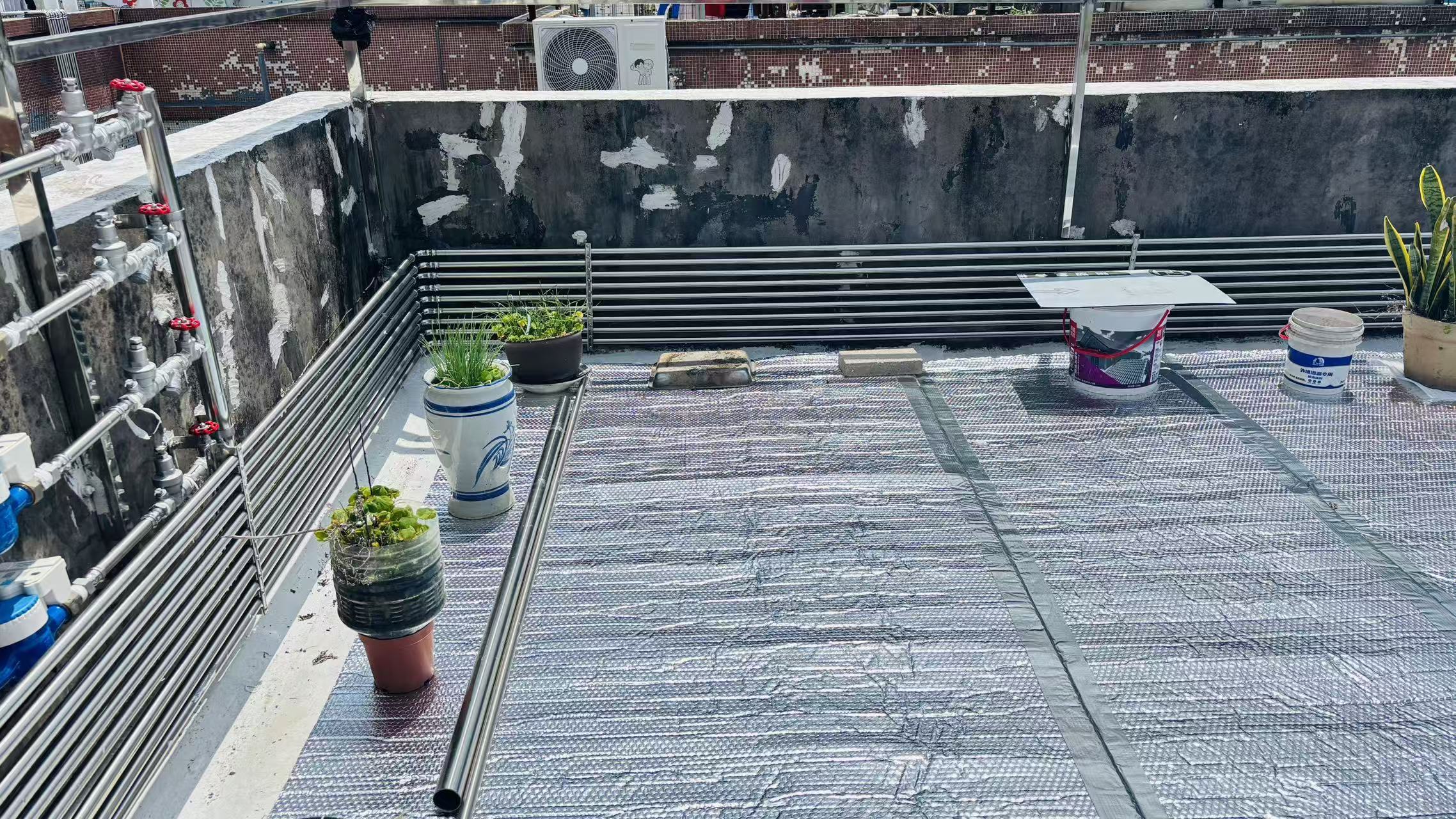
No welding. No drilling. No engineering degree required. You just roll it out flat, tape the seams, and weigh it down with bricks.
The AI walked me through what to look for: 6mm bubble thickness minimum, double-sided real aluminum foil (not metallized plastic, which degrades faster), and UV-resistant outer coating rated for outdoor use.
The Shopping Part — Where AI Actually Saved Me Money
This is where having an AI research assistant pays off.
For the material itself, the AI pointed me toward 1688.com — China’s factory-direct wholesale platform — rather than Taobao or JD. Same product, fraction of the price.
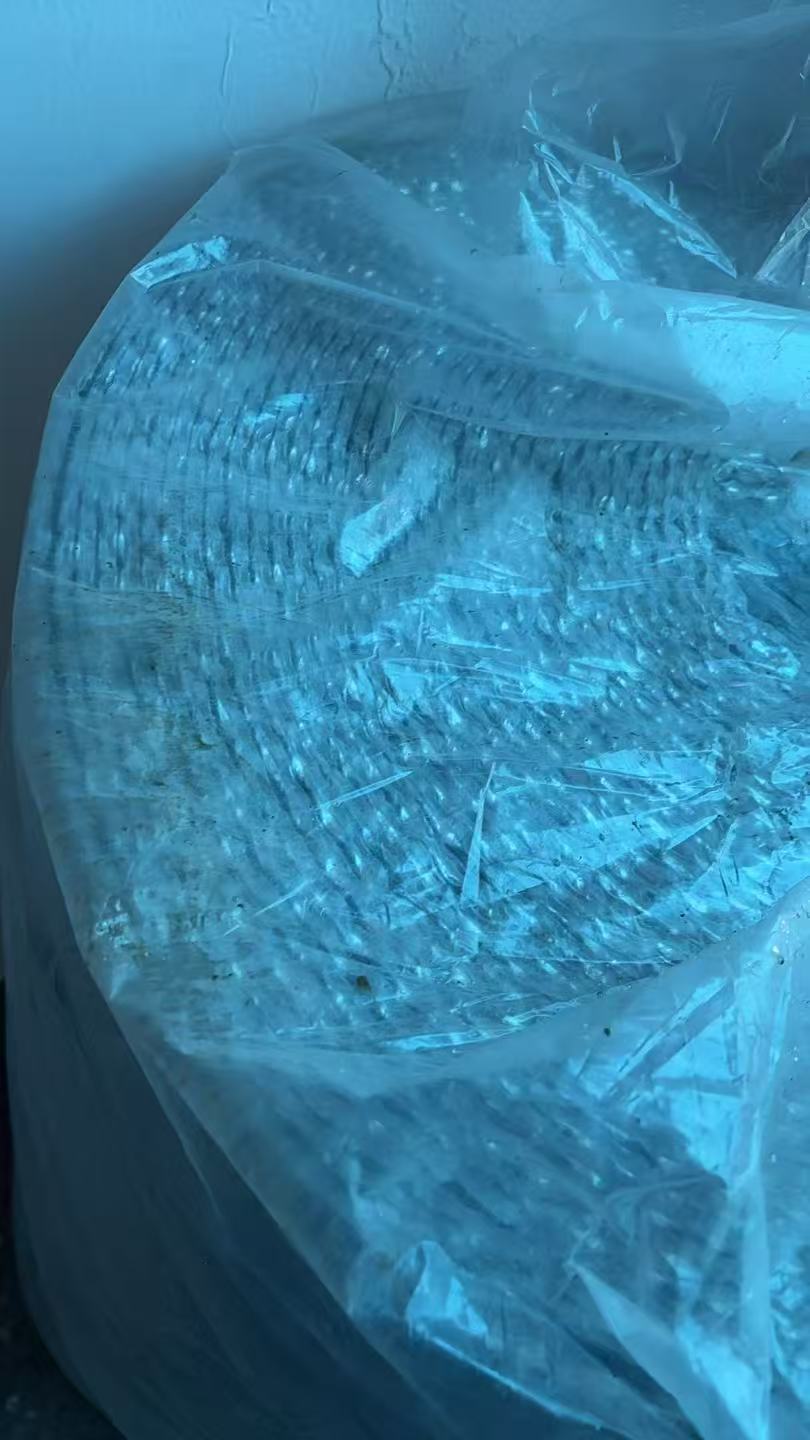
I ended up buying 48 rolls of 6mm aluminum bubble insulation, each 1.2m × 40m, from a factory in Suzhou. Unit price: ¥9.50 per roll. Total: ¥456 for the material, ¥40 shipping.
For the waterproof seam tape, the AI warned me that brand-name tape (like 3M) costs about 10× more than domestic butyl tape with equivalent outdoor performance. I bought 5 rolls of butyl waterproof tape for ¥50.12.
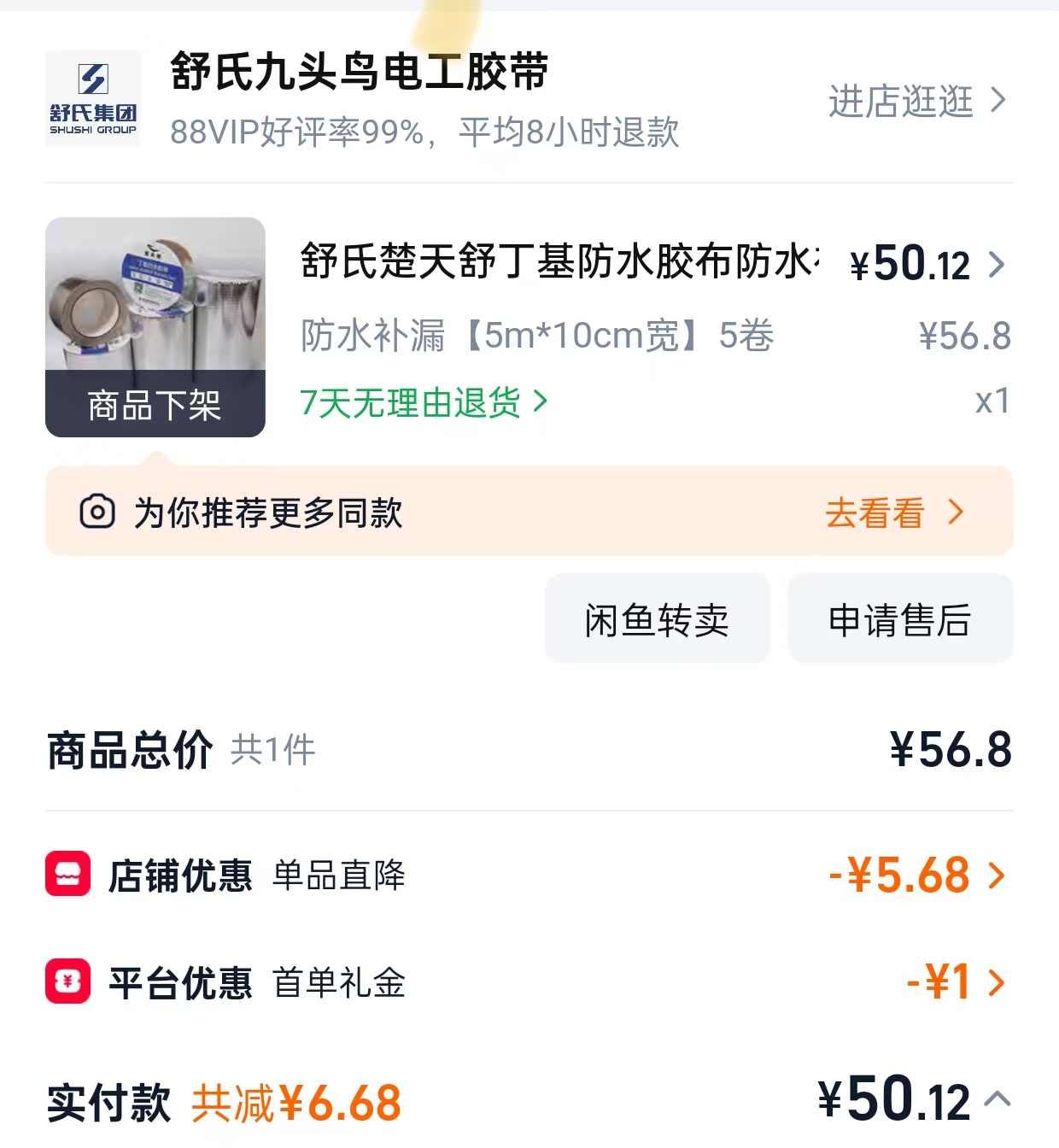
Grand total: approximately ¥546.
The Installation
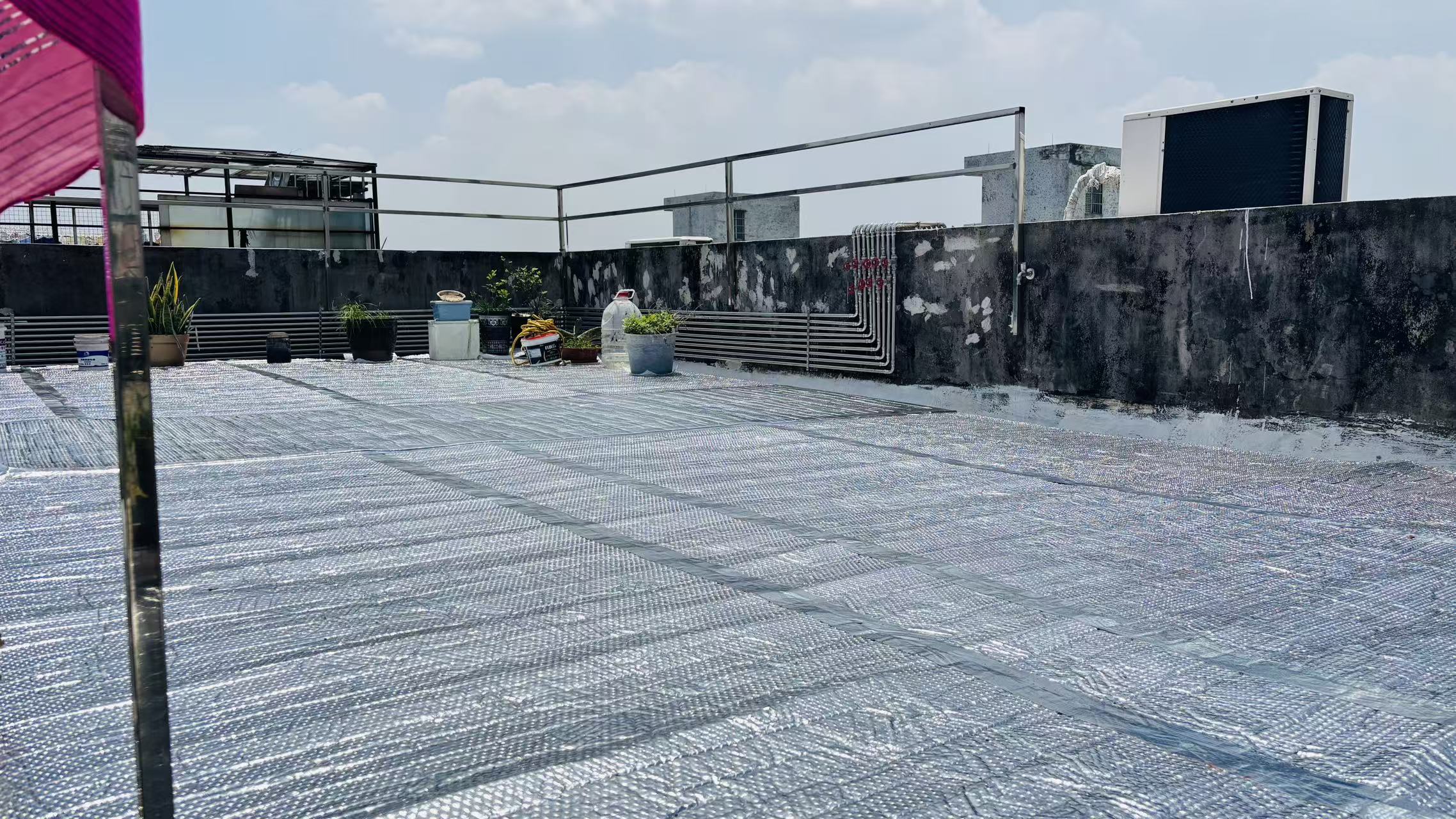
I’m not going to pretend this was glamorous work. Rolling out 48 rolls of reflective film across a rooftop in summer heat, cutting to size, taping every seam — it’s a half-day job with a lot of sweating involved.
But it requires zero skill. If you can mop a floor, you can install this.
The roof went from dark grey concrete to a bright silver mirror.
The Results: Numbers Don’t Lie
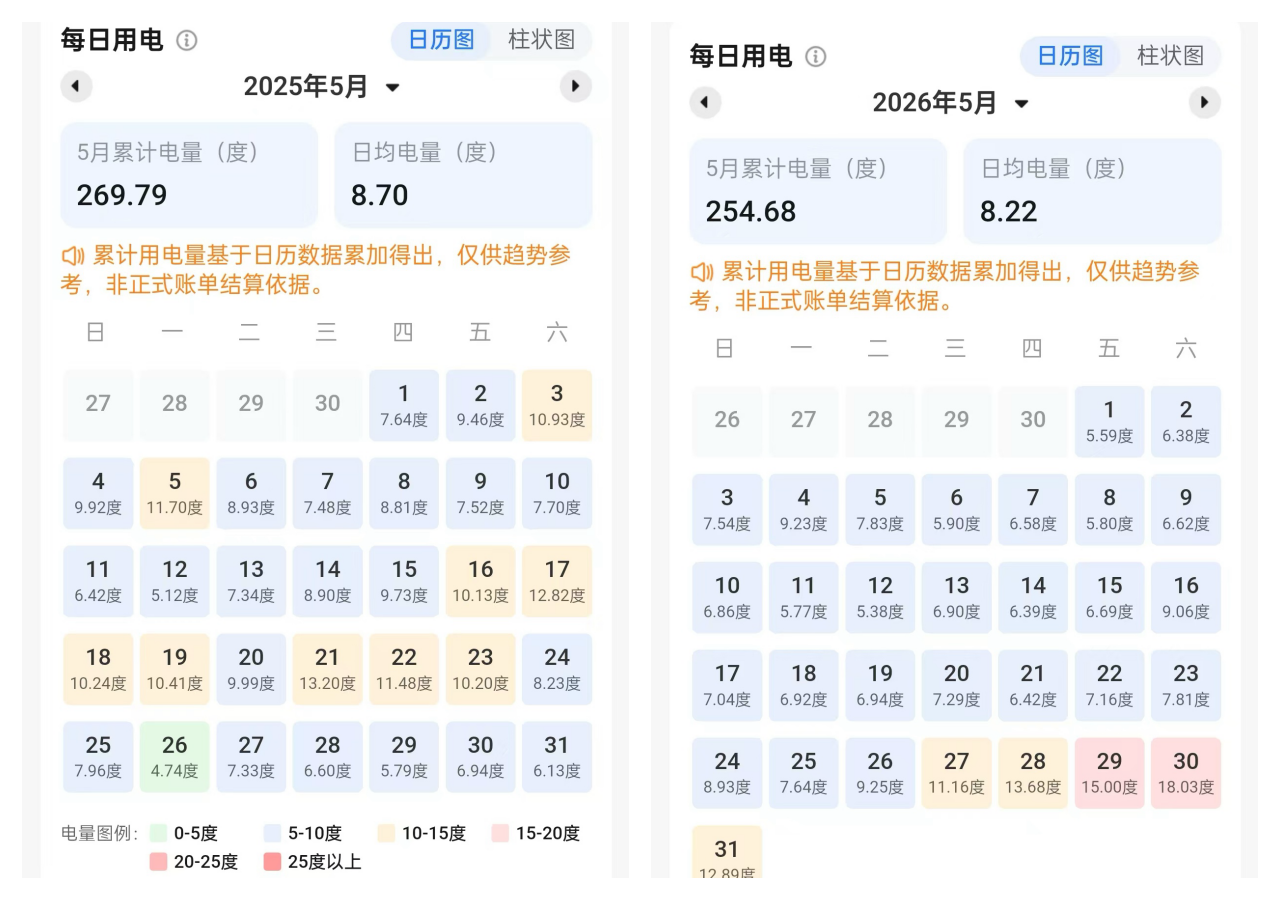
Electricity comparison — May
May 2025 daily average: 8.70 kWh
May 2026 daily average: 8.22 kWh
Saving: ~0.5 kWh/day
Electricity comparison — June (the real test)
June 2025 daily average: 11.53 kWh — AC running all day
June 2026 daily average so far: 10.94 kWh — significantly less AC needed
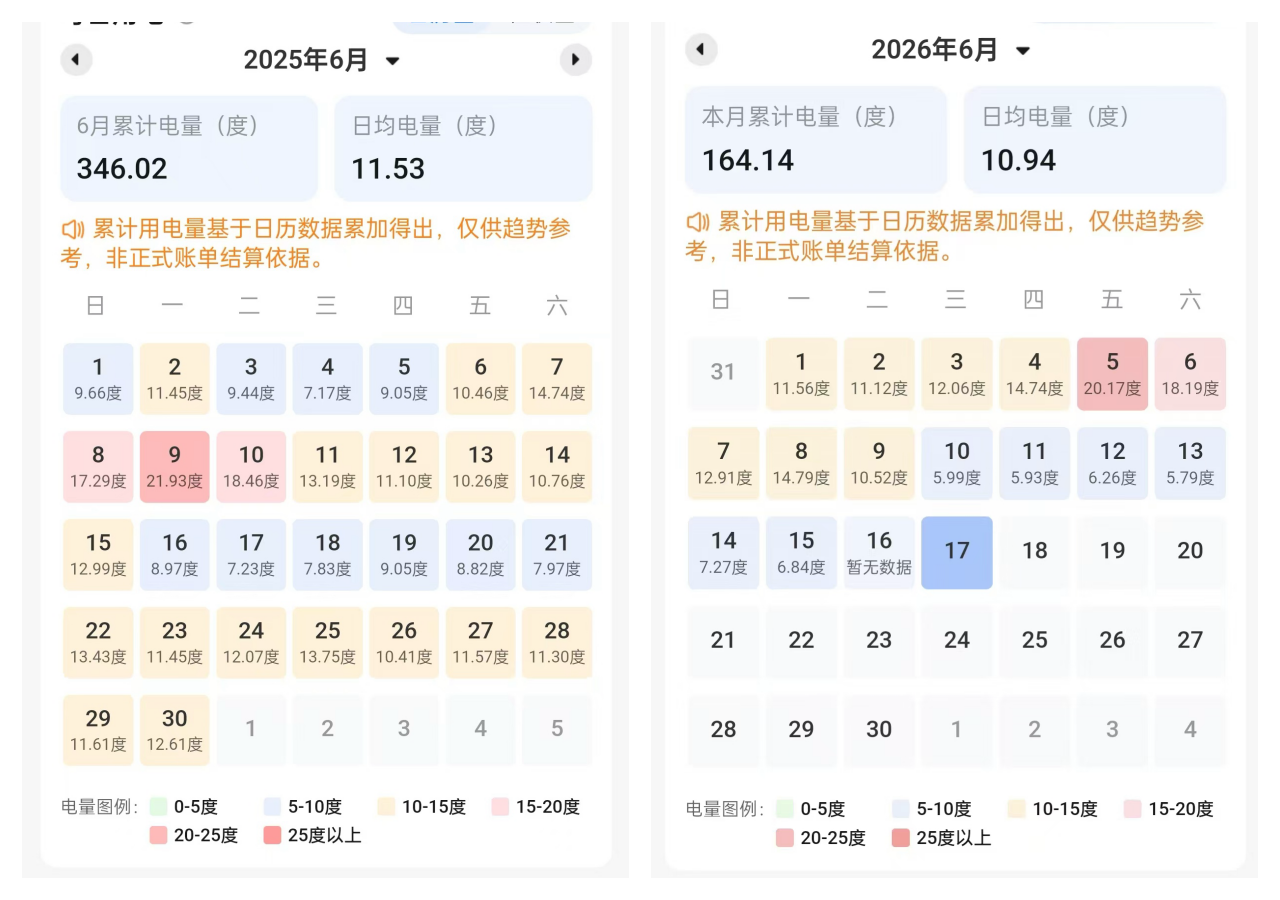
The numbers tell the story, but they understate the experience. In June 2025, 11.53 kWh/day was the cost of staying comfortable. This June, my indoor thermometer shows 28.5°C at 86% humidity — without the air conditioner running.
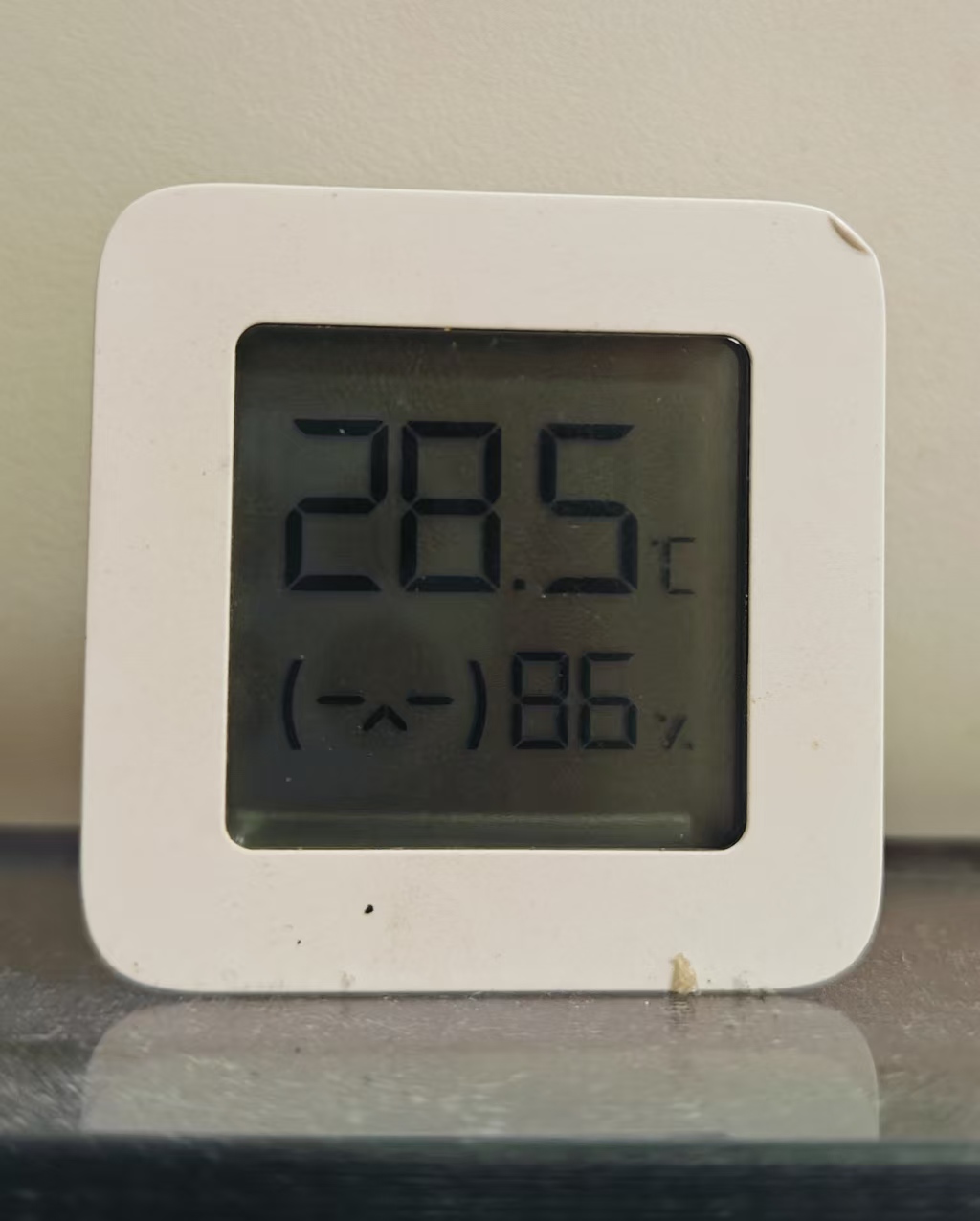
That’s not cold. But it’s livable. A ceiling that used to radiate heat like an oven now just… doesn’t.
The Math on the Investment
Saving roughly 0.6 kWh/day over 6 months = about 108 kWh saved per summer, which works out to roughly ¥60–80/year in electricity savings. On paper, that’s a slow 7–9 year payback.
But the real saving isn’t only in kWh. Air conditioners in top-floor apartments under constant full load can fail in 5–6 years instead of 10. That’s a ¥3,000–5,000 replacement cost pushed years into the future.
And there’s comfort. Last summer I ran the AC to feel normal. This summer I’m sitting in 28-degree air that doesn’t have a heat source radiating from above — and it feels genuinely different. You can’t put a kWh count on not feeling cooked.
What I Actually Learned From This
The biggest shift wasn’t the rooftop. It was the conversation.
Before AI, my approach to home problems was: ask someone who might know, or give up because the solution seems too complicated.
The AI walked me through the physics of heat transfer, helped me understand what materials to look for, found the sourcing strategy (wholesale over retail), warned me about quality traps to avoid, and helped me calculate whether it was actually worth doing.
That’s not a list of things I would have figured out on my own in an afternoon.
The actual work — rolling out foil, taping seams — took a few hours. The research and decision-making, condensed into an AI conversation, took maybe two hours. Without AI, that process might have taken days, or I might have bought the wrong material, or I might have given up at the shade-net stage and just kept paying for AC.
My dad still thinks it was too much trouble.
I show him the electricity bill comparison every month.
Total investment: ¥546. Summer electricity savings: ongoing. AC hours avoided: significant. My dad’s opinion: unchanged.
Share your experience or thoughts below.
Related Reading
- I Spent ¥340 on a Mini PC to Run a Local AI Agent. The AI Chose the Hardware. The Software Was Already Obsolete.
- I Used AI to Research Parkinson’s Disease. It Found 81 Active Clinical Trials in China My Doctor Never Mentioned.
- I’m an Ordinary Chinese Guy Trying to Make Money Online with AI — This Is My Story
Free Tools From This Blog
Leave a Reply