A Thought From the Subway Exit
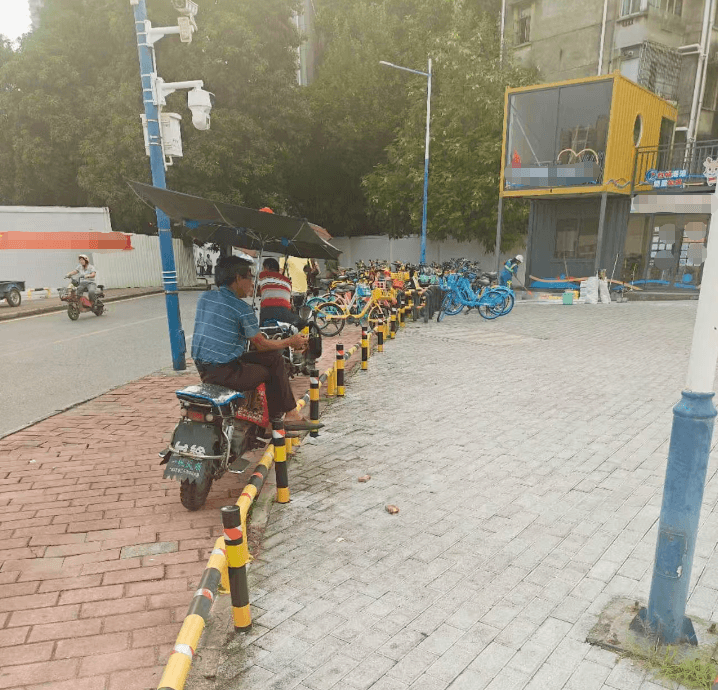
One evening after work, I walked out of a subway station and noticed something I had seen many times before.
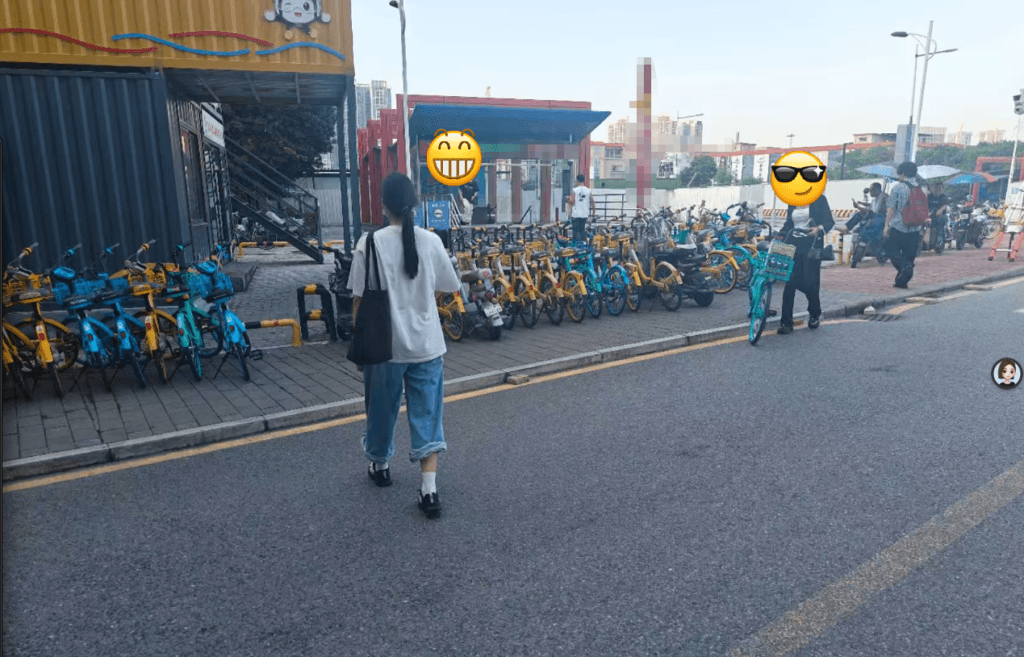
There were shared bicycles everywhere.
Dozens of them were parked around the station exit.
In China, using one is extremely easy.
You open an app, scan the QR code, unlock the bicycle, and ride away.
A short trip may cost only about 1.5 RMB.
Beside those bicycles, several motorcycle taxi drivers were waiting for passengers.
They usually charge based on distance.
Maybe 5 RMB.
Maybe 10 RMB.
Maybe 15 RMB.
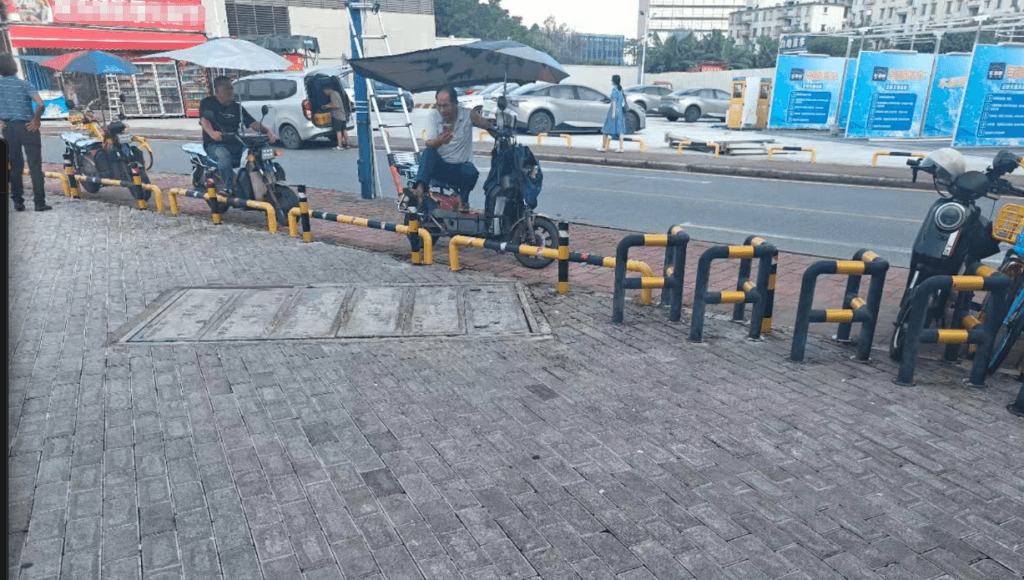
The difference is obvious.
A shared bicycle is cheap.
A motorcycle taxi is much more expensive.
And in many cases, they are directly competing for the same customer.
If I walk out of the station and choose a bicycle, I probably will not take a motorcycle.
If I take the motorcycle, I do not need the bicycle.
One passenger.
Two choices.
That evening, I suddenly started thinking about a very practical question.
Not a business-school question.
Not a motivational question.
A real one.
If I Lost My Job Tomorrow, Should I Join Them?
Imagine that I suddenly lost my job.
Imagine that I had no valuable professional skill.
No programming.
No design.
No marketing.
No special qualification.
The only thing I knew how to do was ride a motorcycle.
Forget the cost of the motorcycle for a moment.
Assume I already had one.
Would I come to this subway station tomorrow and join these drivers?
At first, it sounds reasonable.
There are clearly still passengers.
Otherwise, these drivers would not keep coming back.
But the more I looked at the scene, the more difficult the question became.
These drivers are not beginners.
Some of them may have worked here for years.
Maybe five years.
Maybe ten.
They already know the area.
They know when the subway gets busy.
They know which exits produce more customers.
They know the shortest routes.
They know what prices people will accept.
They may even have regular passengers.
An elderly woman returning from the market may already know one of them.
A schoolchild may take the same driver’s motorcycle regularly.
An office worker may have his phone number.
A familiar customer may leave the subway, see the driver, and get on without thinking.
That driver already has something I do not have.
Experience.
Trust.
Reputation.
Regular customers.
Now imagine me arriving tomorrow.
Nobody knows me.
I do not know the routes.
I do not know the customers.
I do not know the best time to wait.
I do not know which exit is best.
I have no regular passengers.
And beside all of us are rows and rows of shared bicycles charging only 1.5 RMB.
Would I really want to enter this business?
That is where the thought became interesting.
Because I suddenly realized:
This looks a lot like what I am doing with websites.
The Motorcycle Drivers Are the Established Websites
Take one of my own projects as an example.
I am building a website about Chinese Feng Shui and traditional Chinese fortune topics.
Now imagine that the entire Feng Shui market is this subway station.
The large, established Feng Shui websites are the motorcycle taxi drivers.
Some of them have been operating for years.
They have old domains.
Google already knows them.
They have backlinks.
They have hundreds or thousands of pages.
They may have newsletters.
They may have people who return regularly.
Some readers may search for the brand name directly instead of searching the topic.
Those are their regular passengers.
They know the station.
They know the traffic.
They have already survived years of competition.
Now I arrive.
A new website.
A new driver.
I do not have their history.
I do not have their backlinks.
I do not have their regular users.
I do not have their authority.
I am standing at the same subway exit, trying to find customers.
That is already difficult.
But there is another possibility.
Instead of becoming another motorcycle driver, maybe I could own a shared bicycle.
A Small Website Is Like a Shared Bicycle
A shared bicycle is very different from a motorcycle taxi.
It is cheaper.
Simpler.
Smaller.
It does not need to become the dominant transportation system.
It only needs to be useful to someone at the right place and the right moment.
That feels very similar to a small website.
A small website does not need thousands of pages.
It does not need a huge brand.
It may have only one useful tool.
One calculator.
One generator.
One database.
One set of guides.
One very specific purpose.
Maybe someone uses it once.
Maybe someone bookmarks it.
Maybe a small group of people finds it useful.
It does not need to beat the biggest website in the market.
It only needs to solve something clearly enough that a few people choose it.
That is why building small websites has always attracted me.
The cost is relatively low.
A domain is cheap.
Hosting can be inexpensive.
AI can help with coding.
I can build something without hiring a team.
So instead of buying one expensive motorcycle and committing myself to one subway station, I could theoretically place one bicycle here, another at another station, another somewhere else.
That is very close to my idea of building multiple small websites.
One about Feng Shui.
One about Chinese tea.
One about Chinese etiquette.
One productivity tool.
One strange niche idea.
Different websites.
Different markets.
Different subway stations.
And that creates a new question.
Should I Keep Placing Bicycles at Different Stations?
Suppose I have limited money.
I cannot buy 10,000 bicycles.
I cannot dominate a city.
But perhaps I can afford ten.
What should I do?
I could place one at ten different subway stations.
Maybe some stations have no demand.
Maybe some have plenty.
Maybe one bicycle is used once per week.
Another is used five times per day.
Another hardly moves.
By spreading them around, I learn where the demand is.
This is the strongest argument for building many small websites.
I do not know which topic will work.
I do not know which site Google will like.
I do not know which tool people will use.
I do not know which niche will make money.
So perhaps I should spread my experiments.
One small website here.
Another there.
Do not spend too much on any single idea.
Observe.
Learn.
Keep the winners.
Abandon the losers.
It sounds rational.
But there is a problem.
Ten Bicycles Are Still Only Ten Bicycles
Imagine I have ten bicycles spread across ten subway stations.
One at each station.
Now imagine a large company has hundreds at every station.
Suddenly my strategy looks less powerful.
My one bicycle may be parked in a bad place.
Its tire may be flat.
Someone may leave it three streets away.
Nobody may even notice it.
I cannot maintain all ten locations properly.
That is exactly what can happen with websites.
A person says:
“I own twenty websites.”
It sounds impressive.
But what does that really mean?
Does each website have enough good content?
Does each have useful tools?
Does each get updated?
Does each have proper analytics?
Does each have backlinks?
Does each have a clear business model?
Does each get enough attention?
Or do I simply own twenty half-finished projects?
That is the uncomfortable side of diversification.
Sometimes diversification is intelligence.
Sometimes it is just lack of focus.
Maybe I Should Become a Motorcycle Driver
Now imagine the opposite strategy.
I choose one station.
I stop spreading bicycles around the city.
I decide:
This is my station.
Then I stay there.
I learn everything.
I learn the routes.
I learn the passengers.
I learn the busy hours.
I learn what people complain about.
I build relationships.
I become better every year.
Eventually, I may have regular customers too.
That is what building one serious website could look like.
Take my Feng Shui site.
Instead of constantly opening new sites, I could spend years making this one stronger.
Write better guides.
Build a room planner.
Create interactive tools.
Build databases.
Answer user questions.
Improve old content.
Get backlinks.
Build an email list.
Improve the brand.
Study what visitors actually want.
Over time, maybe some users stop finding me by accident.
Maybe they remember the name.
Maybe they come back directly.
That is the website equivalent of a passenger leaving the station and looking for the driver he already trusts.
That is a much stronger position.
But it creates another problem.
What If I Choose the Wrong Station?
This is the danger of focus.
People often say:
“Focus on one thing.”
“Do one thing for ten years.”
“Stop getting distracted.”
It sounds wise.
But it assumes that the thing you choose is worth ten years.
What if it is not?
What if I choose a subway station where most passengers prefer bicycles?
What if there are already too many motorcycle drivers?
What if the remaining customers are too few?
What if the money is not good enough?
What if the station simply does not support another serious driver?
Then five years of focus may not be discipline.
It may just be five years spent in the wrong place.
The same is true online.
What if I spend years building the world’s best small Feng Shui website, but the traffic is too difficult?
What if users mostly want free answers?
What if monetization is weak?
What if larger sites dominate every important search?
What if technology changes the market faster than I can build?
Focus is powerful.
But only after I have some evidence that the direction deserves focus.
So What Should a Newcomer Do?
This is the part I keep thinking about.
If I were really that unemployed man with only one skill — riding a motorcycle — would I immediately decide to spend the next ten years at this station?
Probably not.
I would first watch.
How many passengers actually use motorcycles?
Who are they?
What time do they arrive?
How much are they willing to pay?
How long do the drivers wait between rides?
Do regular customers really matter?
Are the drivers earning enough?
Is there room for one more person?
In other words:
I would test the market before committing myself to it.
That is probably the same way I should treat websites.
At the beginning, I should not behave like I already know the winner.
I do not.
So I can experiment.
A small site.
A small tool.
A limited amount of content.
A low-cost test.
Then I wait for evidence.
Not hope.
Evidence.
Real visitors.
Real searches.
Real return users.
Real tool usage.
Real clicks.
Real emails.
Real revenue.
If nothing happens, I should be willing to leave.
If something happens, I should pay attention.
Maybe the Answer Is: Explore First, Then Concentrate
The more I think about it, the less I believe this is really a choice between “one big website” and “twenty small websites.”
Maybe those are simply two different stages.
At the beginning:
Explore.
Build several small things.
Spend little.
Try different markets.
Do not become emotionally attached too early.
Learn where demand actually exists.
Then, when one project clearly behaves differently from the others:
Concentrate.
Give it more time.
Give it better tools.
Give it better content.
Build a brand.
Try to create regular users.
Stop treating every project equally.
This may be the part that matters most.
If one station gives me ten times more rides than the others, continuing to put exactly one bicycle at every station would be foolish.
The market has already told me something.
I should listen.
The Goal Should Not Be Twenty Websites
This changes how I think about my own goal.
For a long time, “twenty websites” sounded like a goal.
But maybe twenty websites should never be the goal.
Twenty experiments might be a goal.
That is very different.
Suppose I test twenty ideas.
Maybe twelve fail.
Maybe five stay small.
Maybe two become useful.
Maybe one becomes a real business.
That would not mean nineteen failures.
It would mean the experiments helped me find the one place where more investment made sense.
The danger is not failure.
The danger is building twenty websites and refusing to admit that some of them deserve almost no more time.
That is how a person can become extremely busy without building anything strong.
A Weak Website Can Be More Dangerous Than a Dead One
A completely dead website is easy to abandon.
Zero traffic.
Zero users.
Zero hope.
Fine.
Move on.
A weak website is harder.
Three visitors today.
Six tomorrow.
One Google impression.
One random click.
Just enough activity to keep me interested.
That kind of project can consume years.
The same may be true for the motorcycle driver.
If he earns nothing, he quits.
But if he earns just enough to keep returning every day, he may stay for years without ever knowing whether there was a better opportunity somewhere else.
That makes me think a better question is:
Which of my websites have earned the right to receive more of my time?
Not:
Which websites have I already spent time on?
Past effort is not proof of future potential.
The Newcomer’s Advantage
At first, the old motorcycle drivers seem to have every advantage.
Experience.
Regular customers.
Local knowledge.
Reputation.
Established websites have the same advantages.
Authority.
Backlinks.
Brand.
Traffic.
History.
But the newcomer has one advantage too.
He can still move.
The old driver may be deeply committed to one station.
The big website may have a huge organization built around one business model.
I am small.
I can experiment cheaply.
I can change direction.
I can shut down something that does not work.
I can try a strange niche.
I can build a new tool in a few days.
I can test an idea without betting my entire future on it.
My weakness is that I am small.
My advantage is also that I am small.
I Do Not Think the Website Industry Is Dead
When people say websites are dead, I think that is too simple.
The motorcycle drivers in my photo are still there.
People still pay them.
Shared bicycles did not completely destroy them.
But the existence of shared bicycles changed the market.
A new driver cannot pretend it is still 2010.
The same is true online.
A new website cannot simply copy what worked ten years ago and expect the same result.
Competition is stronger.
Users have more choices.
Search engines have changed.
AI has changed how people get information.
Attention is harder to earn.
That does not mean there is no opportunity.
It means the newcomer has to be more careful about where to spend limited resources.
The Question I Still Have
So when I look at those motorcycle drivers and all those bicycles outside the subway station, I keep coming back to the same question.
If I am the newcomer, what should I do?
Should I buy one motorcycle and spend years trying to become one of the best drivers at this station?
Should I use my limited money to place a few bicycles at different stations and see where people actually ride them?
Should I keep exploring?
Or has the time already come to choose one station and stay?
I do not think I have a perfect answer yet.
But I think I understand the problem much better now.
For me, the most sensible path may be:
Explore cheaply.
Watch carefully.
Do not confuse activity with progress.
And when one opportunity clearly earns the right to receive more resources, concentrate.
Maybe one day I will own twenty small websites.
Maybe I will end up with only three.
Maybe eventually one website becomes so important that the others barely matter.
I do not know yet.
But I no longer think the goal is to own more vehicles.
The goal is to discover where people actually want to go.
And then decide whether I should place another bicycle there—
or become the driver who stays.
Leave a Reply