
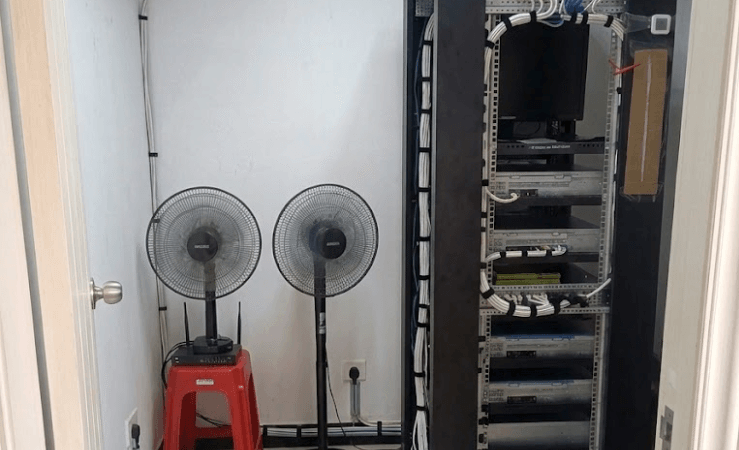
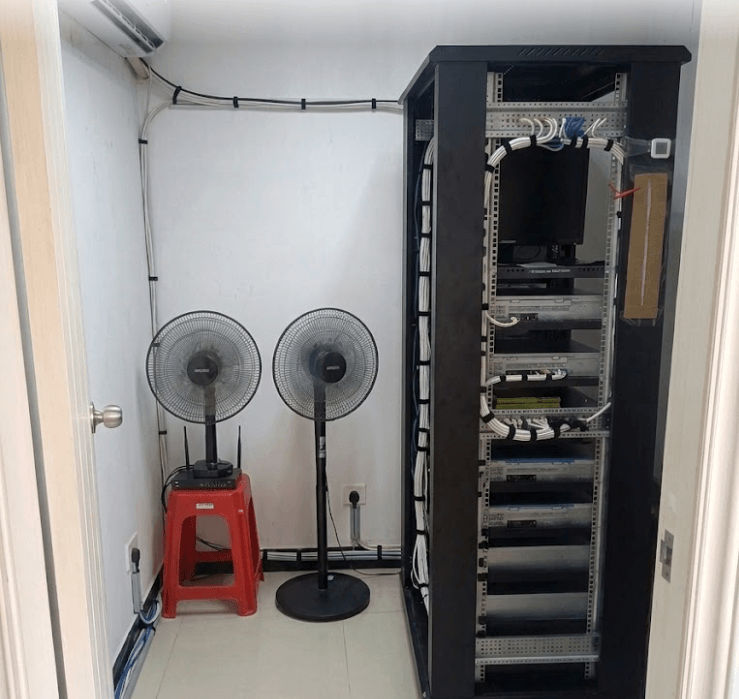
Last Saturday, my friend was paid to do something absurd: sit near a server room and check the temperature like a human thermometer.
The air conditioner in his company’s server room had suddenly stopped working.
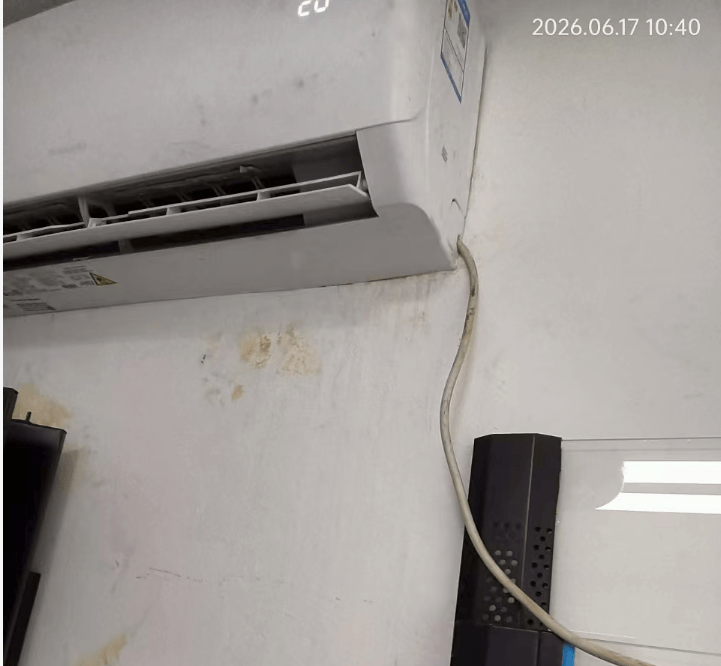
The replacement unit wouldn’t arrive until Monday.
Someone had to make sure the servers didn’t overheat.
The company’s solution?
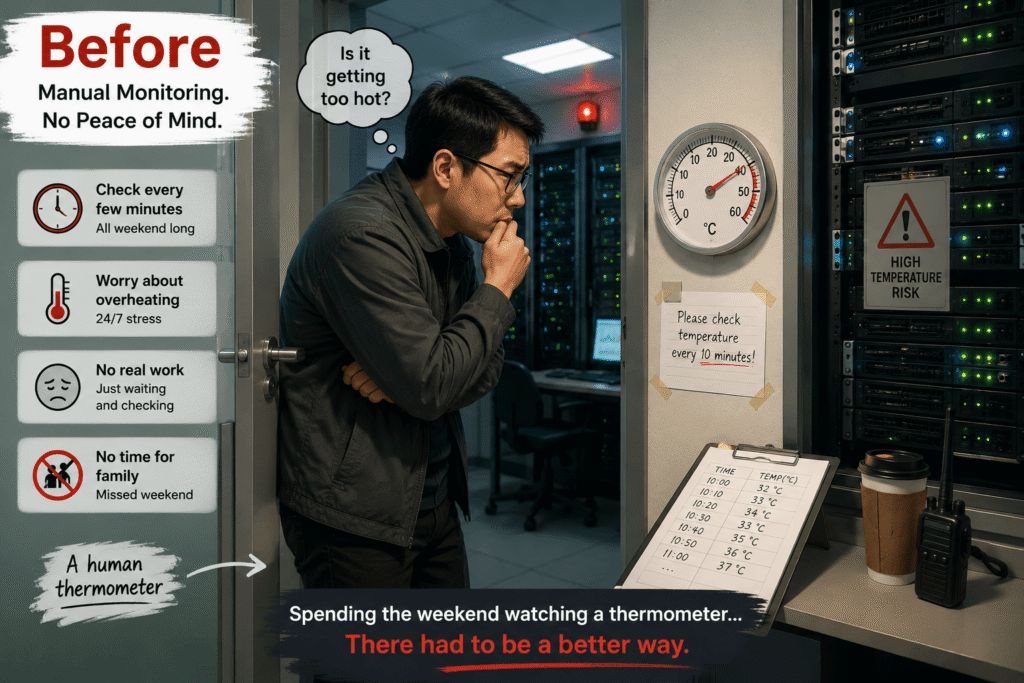
Assign an engineer to stay in the office all weekend and check the room temperature every few minutes.
He wasn’t fixing anything.
He wasn’t maintaining the network.
He was literally acting as a human thermometer.
There Had to Be a Better Way
 80/20 Rule26/06/check-serverroom.png 1536w” sizes=”auto, (max-width: 1024px) 100vw, 1024px” />
When he told me the story, my first thought was simple:
“Surely there has to be a smarter solution.”
Instead of ordering new hardware or buying an expensive monitoring system, I opened ChatGPT and explained the situation.
One simple question changed everything:
“Does this Huawei switch already have a built-in temperature sensor?”

The answer surprised both of us.
Yes.
The switch was already monitoring its own internal temperature.
Nobody had thought about using it.
AI Didn’t Invent Anything
This is the interesting part.
AI didn’t create a new technology.
It simply pointed out something we already owned but had completely overlooked.
Sometimes the best solution isn’t buying another device.
It’s making better use of the devices you already have.
A Simple Automation
ChatGPT suggested a surprisingly simple workflow.
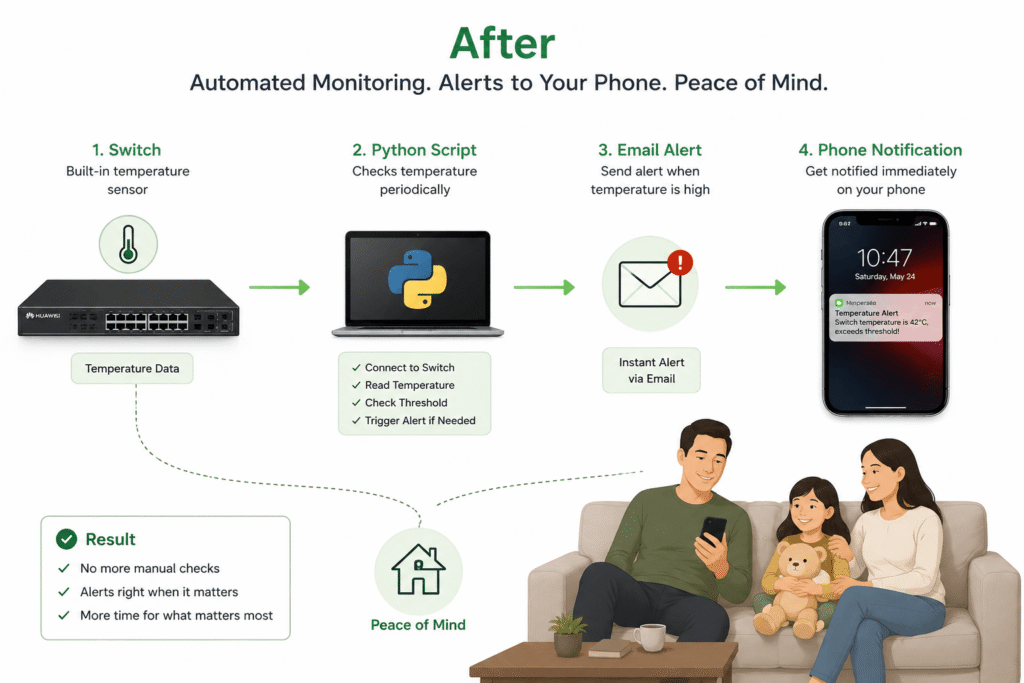
Every few minutes, a small Python script would:
- Connect to the Huawei switch
- Read the built-in temperature sensor
- Compare the value with a safety threshold
- Send an alert if the temperature became dangerous
The entire solution took less than 100 lines of Python.
No new hardware.
No subscriptions.
No complicated monitoring platform.
Just one existing switch and a tiny script.
The Result
Instead of sitting beside the server room all weekend, my friend only needed to keep his phone nearby.
If the temperature stayed normal, nothing happened.
If it became too high, he would receive an alert immediately.
His weekend was saved.
More importantly, the company also learned an important lesson:
Automation doesn’t always require expensive software.
Sometimes it simply requires asking the right question.
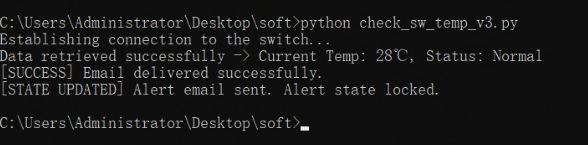
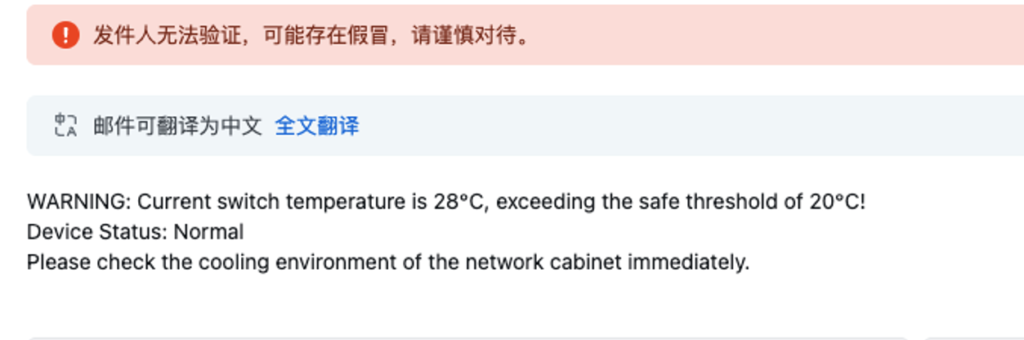
Below are the test results. The current temperature is 28°C, along with the test alert email. The threshold is set to send an email once the temperature exceeds 20°C.
💰 Hardware Purchased
$0
💻 New Software
$0
☁ Cloud Services
$0
⏱ Time to Build
20 minutes
❤️ Weekend Saved
1 engineer
What This Experience Taught Me
People often think AI replaces programmers.
That wasn’t what happened here.
AI replaced an unnecessary task.
The engineer still made the decision.
The engineer still wrote the script.
The engineer still understood the network.
AI simply helped uncover a solution that nobody had considered.
 80/20 Rule26/06/after-ai.png 1536w” sizes=”auto, (max-width: 1024px) 100vw, 1024px” />
Final Thoughts
This experience changed the way I think about AI.
The biggest value isn’t writing code faster.
It’s helping us notice opportunities hidden in systems we already use every day.
Sometimes the smartest automation costs exactly $0.
Tools Used
- ChatGPT (brainstorming and troubleshooting)
- Python
- Huawei Switch
- SSH Automation
If you’ve ever used AI to solve a real-life problem in an unexpected way, I’d love to hear your story.
Because those are the stories that actually show what AI is good at—not replacing people, but helping ordinary people solve ordinary problems a little more intelligently.
Have you ever solved a real-life problem with AI? Tell me your story.
Frequently Asked Questions
If you’re curious about the technical details behind this project, here are some of the questions people usually ask.
Can network switches measure temperature?
Yes. Many enterprise-grade network switches (such as Huawei, Cisco, HPE, Juniper, and others) include built-in temperature sensors. These sensors are primarily designed to monitor the switch’s internal operating temperature and help prevent hardware failures caused by overheating.
While they don’t measure the entire server room environment as accurately as dedicated sensors, they can provide an effective early warning when the room temperature starts rising unexpectedly.
Why not simply buy a temperature sensor?
Normally, that would be the best long-term solution.
However, in this case the air conditioner failed on a Saturday, and a replacement unit wouldn’t arrive until Monday. There wasn’t enough time to purchase and install new monitoring hardware.
Instead of waiting or assigning someone to manually check the temperature all weekend, we reused hardware that was already available. The entire solution cost $0 and took less than 20 minutes to build.
Is this solution suitable for production environments?
It depends on your requirements.
For a temporary emergency, this approach works surprisingly well and can significantly reduce unnecessary manual monitoring.
For mission-critical production environments, I still recommend using dedicated environmental monitoring systems with redundant sensors, SMS/email alerts, and centralized monitoring platforms.
Think of this solution as a lightweight emergency automation—not a replacement for professional monitoring infrastructure.
What did AI actually do?
AI didn’t magically solve the problem or replace the engineer.
Instead, it helped us ask a better question:
“Does the switch already have a built-in temperature sensor?”
That single question led us to discover a capability we had completely overlooked. AI generated the initial Python script, while the engineer verified, tested, and deployed the solution.
In my opinion, that’s where AI creates the most value—not replacing people, but helping people discover smarter solutions.
Could this work with Cisco, Juniper, or other switches?
Very likely.
Most enterprise network equipment includes built-in health monitoring features, including temperature, fan speed, power supply status, and CPU usage.
The exact commands and APIs vary by vendor, but the overall idea remains the same: reuse the monitoring capabilities your equipment already provides before buying additional hardware.
What’s the biggest lesson from this experience?
This experience changed the way I think about AI.
The real value wasn’t writing 100 lines of Python.
The real value was realizing that we already had the solution—we just hadn’t thought to use it.
Sometimes the smartest automation doesn’t come from buying more technology.
It comes from making better use of the technology you already own.
This is exactly why I started Ordinary Man Trying: not to prove that AI is magic, but to document what happens when ordinary people use it on ordinary problems.
Have you ever used AI to solve a real-life problem in an unexpected way? I’d love to hear your story in the comments.
Curious what else AI can help you build? Here’s a small tool I put together: The Loneliness Test — 13 levels of solo activities, with an invite generator to nudge a friend to hang out. Free, no login required.
Leave a Reply