I built a website, sent over 100 outreach emails, and checked my analytics. The numbers weren’t encouraging. Then I remembered something someone said over dinner.
The other day, I opened Google Analytics to check the traffic to a website I’d been working on.
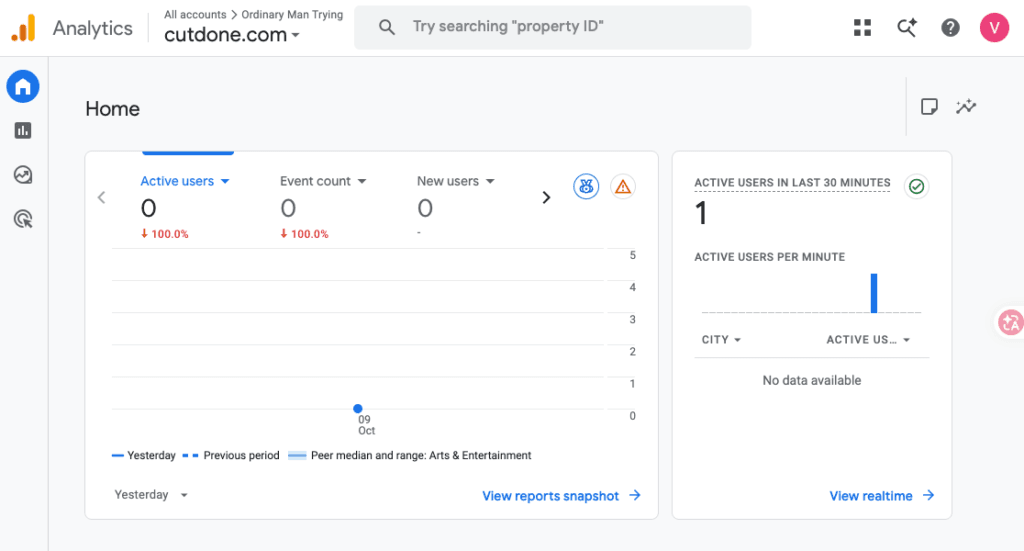
Here’s what I saw:
Active users: 0.
New users: 0.
Average engagement time: 0 seconds.
Event count: 0.
Four zeros.
I stared at the screen for a while.
There was nothing technically wrong with the dashboard. It was simply showing me what had happened during that reporting period.
And somehow, that felt worse.
Because behind those zeros were many hours of work that the dashboard knew absolutely nothing about.
The Website Nobody Asked Me to Build
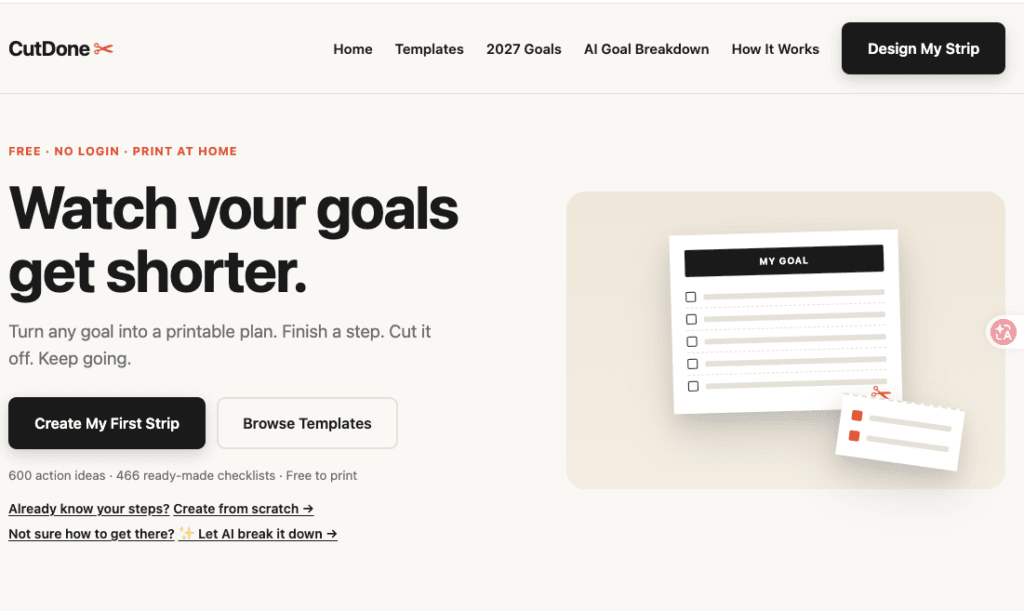
A few weeks earlier, I had started building a website called CutDone.
The idea was simple.
Most productivity apps are designed to help people add tasks, organize tasks, schedule tasks, and track tasks.
I wanted to build something that helped people make tasks disappear.
With CutDone, you create a checklist, print it on paper, and physically cut off each task after completing it.
One task finished. One strip of paper gone.
Eventually, the whole list disappears.
I liked the idea of making progress physically visible.
It wasn’t a revolutionary invention. It wasn’t going to change the world. But it was a small idea that I genuinely enjoyed.
So I kept building.
First came the basic checklist tool. Then different designs, customizable templates, goal challenges, a planner for 2027, and even an AI feature that could break large goals into smaller steps.
I fixed bugs. I tested printing. I adjusted layouts. I worked on SEO. I made the basic tool free because I wanted people to try it without creating an account.
Eventually, I had a functioning product that anyone in the world could open and use.
There was just one small problem.
Almost nobody knew it existed.
The Part Nobody Talks About When You Build Something
Building a product is strangely satisfying.
You have a problem, you work on it, and eventually something changes.
A button doesn’t work. You fix it.
A page looks terrible on mobile. You redesign it.
A feature is missing. You build it.
You can see progress almost every day.
Marketing is different.
You can spend an entire afternoon doing things that seem productive and have absolutely nothing to show for them afterward.
I submitted CutDone to software directories.
I created Pinterest posts.
I tried sharing it in online communities.
I contacted bloggers who wrote about printable planners, goal setting, productivity, and habit trackers.
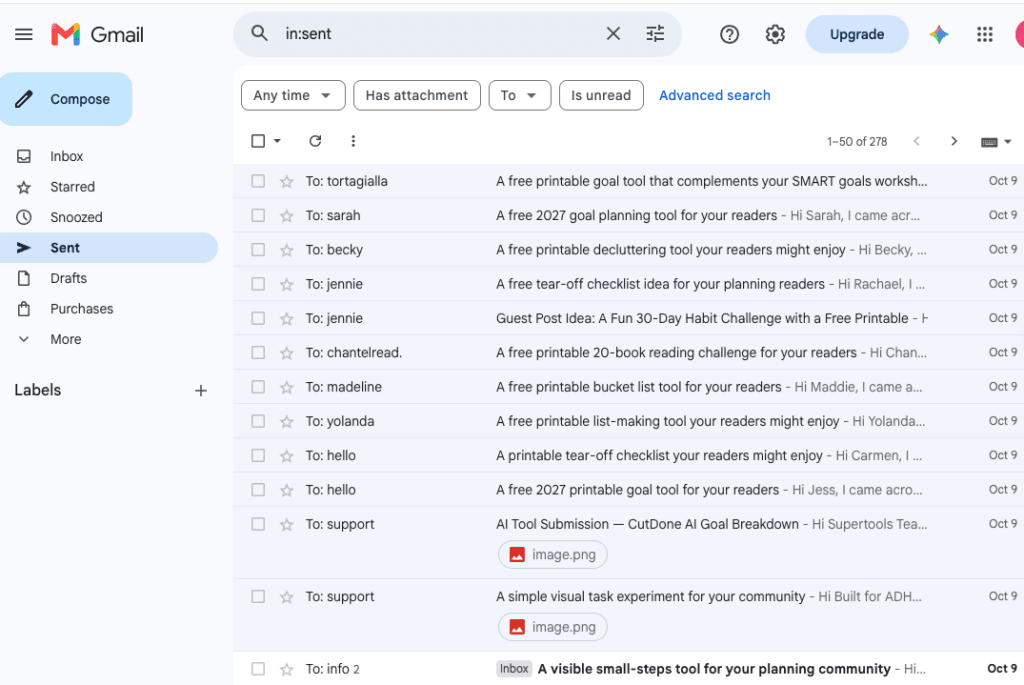
I personally worked through more than 100 outreach emails.
Some were personalized. I read the articles, found contact details, and explained why the tool might be useful to their readers.
And then I waited.
No flood of visitors.
No exciting spike in the analytics.
No moment when I could finally say, “Aha! It’s working!”
Later, when I investigated the emails more carefully, I discovered another problem: Gmail had stopped dozens of sending attempts because I’d reached a sending limit. Other messages had failed or been delayed.
So even my supposedly unsuccessful marketing experiment was not as straightforward as I thought.
I couldn’t confidently say nobody clicked.
I couldn’t even confidently say everyone had received my email.
I had worked hard, but the experiment itself was messy.
That’s a frustrating thing to admit.
Twenty-Seven Thousand Requests. Almost No People.
At one point, I opened Cloudflare and saw something that looked much more promising.
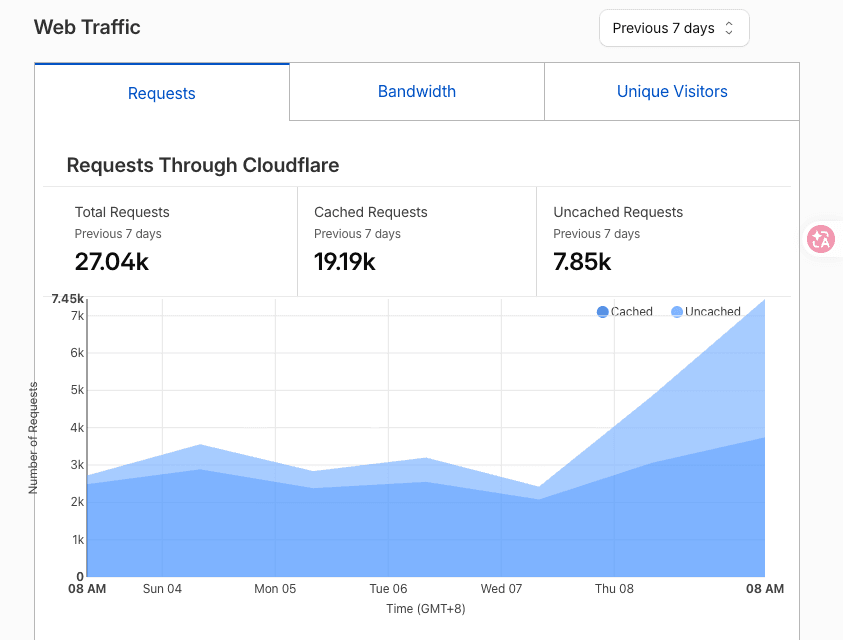
27,040 requests in seven days.
For a moment, that number felt wonderful.
Twenty-seven thousand!
Maybe Google Analytics was wrong. Maybe people were visiting after all.
Then I remembered that server requests are not people.
One visitor can generate many requests by loading images, CSS, and JavaScript files. Search engines and automated bots can generate thousands more.
A website can be very busy serving files while having almost no human audience.
My Google Analytics dashboard showed 163 active users over the previous 28 days.
Not literally zero.
But I also knew that some visits might have come from my own testing, automated tools, or other activity unrelated to genuine customer interest. Consent settings could also mean some visitors weren’t counted.
I couldn’t calculate the exact number of real potential customers.
I could only say that I still hadn’t found a reliable source of people who wanted to use the product.
It’s an interesting feeling.
You can build something that works perfectly well.
The internet can respond to thousands of requests.
And still, from the perspective of building a business, almost nothing has happened.
Something Someone Said at Dinner
Around this time, I remembered a conversation over dinner.
An older friend had said something along the lines of:
“Some people just aren’t destined to make money. It doesn’t matter how hard they try.”
In Chinese, the expression is even more direct:
“没有赚钱的命,怎么折腾都一样。”
Roughly translated: If making money isn’t in your fate, all your efforts will amount to the same thing.
At the time, I didn’t think too much about it.
But after looking at my website’s traffic, the sentence came back.
What if he’s right?
What if I’m simply not the kind of person who can make money from a business?
Some people seem to recognize opportunities immediately. They launch simple products that attract thousands of users. They know how to sell, how to communicate, and where to find customers.
I can spend weeks building something and then struggle to convince even ten strangers to try it.
Maybe I’m good at building things that nobody needs.
Maybe I’m confusing technical progress with business progress.
Maybe I simply enjoy the process of creating websites more than the difficult work of finding customers.
Those aren’t particularly comfortable questions.
But they’re more useful than asking whether I have the right destiny.
I’m Old Enough to Know Effort Doesn’t Guarantee Success
I’m 46 years old.
At this age, I’ve seen enough of life to know that hard work doesn’t automatically lead to financial success.
Some hardworking people earn very little.
Some people make excellent decisions and still lose money.
Others find themselves in the right industry, at the right moment, with the right connections.
Timing matters. Luck matters. The market matters.
And sometimes a product simply isn’t as useful to other people as its creator believes.
I don’t want to pretend otherwise.
There’s also something slightly ridiculous about spending hours discussing button colors, page titles, sitemap structures, and analytics events when the website barely has an audience.
It’s like carefully arranging the furniture in a restaurant before checking whether anyone wants to eat there.
I can laugh about that now.
A little.
But I also don’t think the answer is to stop making things just because the first results are disappointing.
The real question is whether I’m learning anything from the attempts.
If I keep building features nobody requests, I’m probably not learning enough.
If I keep sending emails without knowing whether they’re delivered, I’m probably not learning enough.
If I keep checking Google Analytics every morning and letting the numbers determine my mood, I’m definitely doing something wrong.
Maybe I Need a Smaller Definition of Success
I started thinking about what success would look like if I temporarily forgot about earning money.
Not forever. I still want this to become a real business.
But perhaps I’m trying to measure the final outcome before proving the first step.
Before asking whether CutDone can earn $1,000 a month, maybe I should ask whether ten strangers can find it and genuinely enjoy using it.
Before adding another premium feature, maybe I should find out whether anyone is using the free ones.
Before sending another hundred emails, maybe I should understand why the previous attempts produced so little measurable traffic.
I want to give myself a smaller experiment.
For the next 30 days, the question doesn’t have to be how much money the website makes.
It can simply be whether I can find a repeatable way to bring in real users.
A few genuine Google search clicks.
Someone opening the checklist designer.
Someone editing a list.
Someone clicking Print because they actually want the paper version.
Those might sound like embarrassingly small ambitions for an online business.
Right now, they would mean something.
They would tell me that the idea had made its way out of my computer and into another person’s life.
What If This Never Makes Money?
I think that’s a possibility I need to accept.
Maybe CutDone will never earn enough to justify the hours I’ve spent on it.
Maybe I’ll eventually stop developing it.
Maybe it will become one more little website sitting quietly on the internet.
I don’t particularly like that possibility, but pretending it doesn’t exist won’t improve my chances.
I can give the experiment time, set limits on how much more effort I’m willing to invest, and make a decision based on what actually happens.
The thing I don’t want to do is turn one unsuccessful website into a permanent judgment about myself.
A business can fail without proving that its creator was destined to fail.
And a person can be good at creating things without being good at selling them—at least not yet.
Those are different problems.
Different problems deserve different responses.
An Ordinary Man, Still Trying
I called my personal blog Ordinary Man Trying for a reason.
Not Ordinary Man Succeeding.
Not Ordinary Man Making Six Figures.
Just trying.
It’s an awkward word, in a way. It doesn’t promise a happy ending.
There may be no dramatic success story waiting at the end of this experiment.
No screenshot of a huge Stripe balance.
No announcement that I finally cracked the secret of passive income.
Maybe the next article will be about getting my first ten genuine users.
Maybe it will be about shutting down a project that never found its audience.
Both would be worth writing honestly.
As for that sentence from the dinner table—about not being destined to make money—I still don’t know what to think.
I know luck matters.
I know effort isn’t enough.
And I know the numbers on my screen are disappointing.
But I don’t think a Google Analytics dashboard can tell me what kind of life I’m destined to have.
It can tell me what happened yesterday.
That’s all.
Tomorrow is another experiment.
And for now, I’m still trying.
Leave a Reply