
Here is something I don’t usually admit publicly: I am holding margin debt right now, and the reason is Elon Musk.
Let me explain.
Earlier this year, I became convinced that Tesla’s humanoid robot — the Optimus, specifically the V3 version — was going to be a genuine inflection point for the robotics supply chain. I wasn’t alone in this thinking. The research was compelling. Two companies in particular kept showing up as the biggest potential beneficiaries: Sanhua Intelligent Controls, which makes thermal management components used in robot joints, and Lide Harmonic, which makes harmonic reducers — the precision gears that give robot arms their smooth, controlled movement.
I bought both. I also used margin financing to do it.
My AI investment assistant immediately flagged this as a problem.
The AI’s Argument
“You set a zero-leverage rule yourself. The margin interest is ticking every day. You’re making decisions based on a celebrity announcement that may or may not come. This is not value investing — this is event speculation. And Elon Musk’s timelines are historically unreliable.”
All of that is technically correct.
My Argument
“The robotics thesis is real. Lide Harmonic is already up 650% from my cost basis. Sanhua is a legitimate supplier. The market isn’t wrong about this direction, just uncertain about timing. A single day’s rally when V3 is announced could cover months of margin interest. And besides — investing always carries risk. If I wanted zero risk I’d put everything in a savings account.”
Also technically correct.
Where It Gets Interesting
We went back and forth for hours. My AI kept pointing out that the margin debt was causing me to make irrational decisions — unwilling to sell Sanhua because I was anchored to a higher price, unwilling to sell Lide Harmonic because I kept waiting for one more catalyst. Every time I said “let me wait just a little longer,” the AI pointed out that I’d said the same thing the month before.
It also said something I’ve been thinking about since:
“The cost of margin isn’t just the interest. It’s that every month brings a new reason to wait. That’s the real price you’re paying.”
I didn’t have a good answer for that.
Where Things Stand Today
Musk promised V3 would be revealed in July or August 2026. It is currently mid-July. Nothing yet.
- Lide Harmonic: +650% from my entry. My AI says sell regardless of Musk. I keep finding reasons not to.
- Sanhua: Slightly underwater. Bought for the robot thesis. Still waiting for the catalyst.
- Margin debt: Still there. Still charging interest. Still making me lose sleep.
I’ve given myself a hard deadline: July 31st. If V3 hasn’t appeared, I sell, I repay the margin, and I go back to my original rules.
What This Actually Reveals
Rules in investing are easy to write and hard to follow. My zero-leverage rule existed for exactly this reason — not because leverage is mathematically wrong, but because I know how I behave under leverage. I delay. I rationalize. I find new reasons to wait.
The AI knew this before I did.
Whether the robot trade ultimately pays off, I genuinely don’t know. Maybe Musk announces V3 tomorrow and both stocks double. Maybe the announcement comes in December and I’ve paid six months of margin interest for nothing. Maybe the market already priced in all the optimism and the stocks go sideways regardless.
What I do know: I made a bet, I’m holding it with borrowed money, and an AI has been right about my behavior even when I didn’t want to hear it.
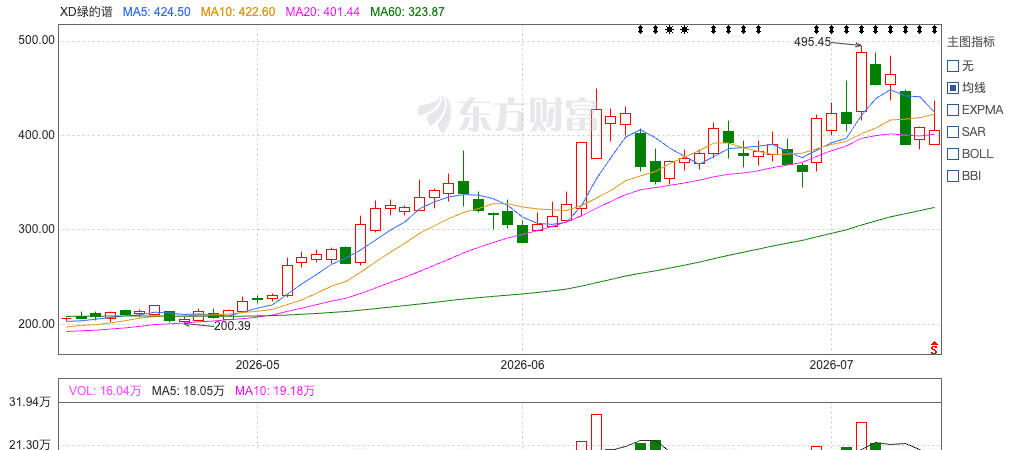
The outcome? Check back in August. Lide Harmonic’s chart will tell the rest of the story.
My AI’s Honest Take on Lide Harmonic
I asked directly: What do you actually think about Lide Harmonic at +650%?
“The business is real. Harmonic reducers are a genuine bottleneck in robot joint manufacturing — precision components that can’t easily be substituted. You picked the right company for the right reason.
But at +650%, the stock price has already priced in a future where humanoid robots are everywhere. You’re no longer betting on whether the technology works. You’re betting the future is even bigger than what the market already believes.
You bought this at ¥54. It’s now ¥405. That gap isn’t just profit — it’s the market’s entire optimism about the robot era, compressed into your small position. Taking profits here isn’t giving up on the thesis. It’s recognizing that the thesis already won.”
I haven’t fully accepted this logic yet. But I can’t argue with it either.
The uncomfortable truth: my current cost basis is ¥149 per share — I originally bought lower, then added more, then reduced the position earlier to lock in partial gains. So 400 remaining shares at ¥149 means ¥59,600 at risk. It’s now worth ¥162,000. That’s +172% on the current cost, not a lottery ticket anymore. The position changed. My psychology didn’t. Suddenly I’m holding on tight and waiting for one more catalyst, because selling feels like admitting the trade is over.
That’s not investing. That’s attachment.
Related Reading
- AI Told Me to Buy. I Hesitated. It Tripled.
- How I Analyze Chinese Stocks with Claude Every Morning
- I’m Building This Website in Public — Week by Week
🛠 Related Tool
My AI Investment Operating System — Free 5-Step Builder
8 AIs debated investing philosophies across 7 experiments. This free tool turns their consensus into your personalized AI investment coaching system — with a copy-paste Prompt Library.
Build My AI Investment OS →
Leave a Reply