
Why Ordinary Photos Become Priceless Over Time
I built a little family photo server. I thought I was organizing files. Instead, I found myself looking at ten years of my life.
A few days ago, I built a private photo system at home.
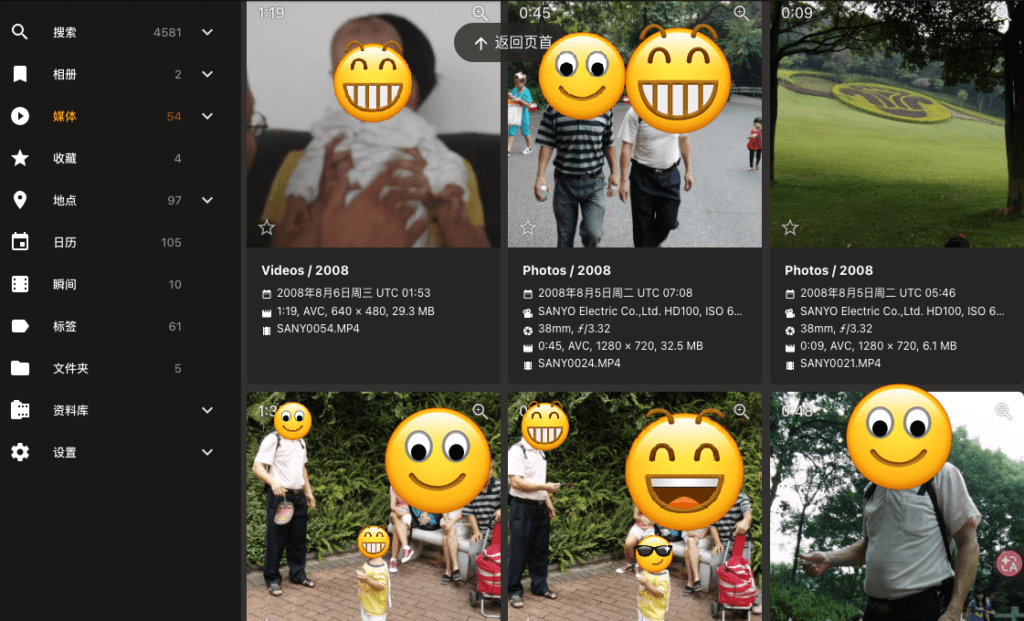
Nothing particularly impressive.
An old computer. Docker. PhotoPrism. A few thousand photographs accumulated over many years.

I originally saw it as another small technical project.
Install the software. Import the photos. Fix the folders. Let the system recognize dates and locations. Make sure everything loads correctly.
That was the plan.
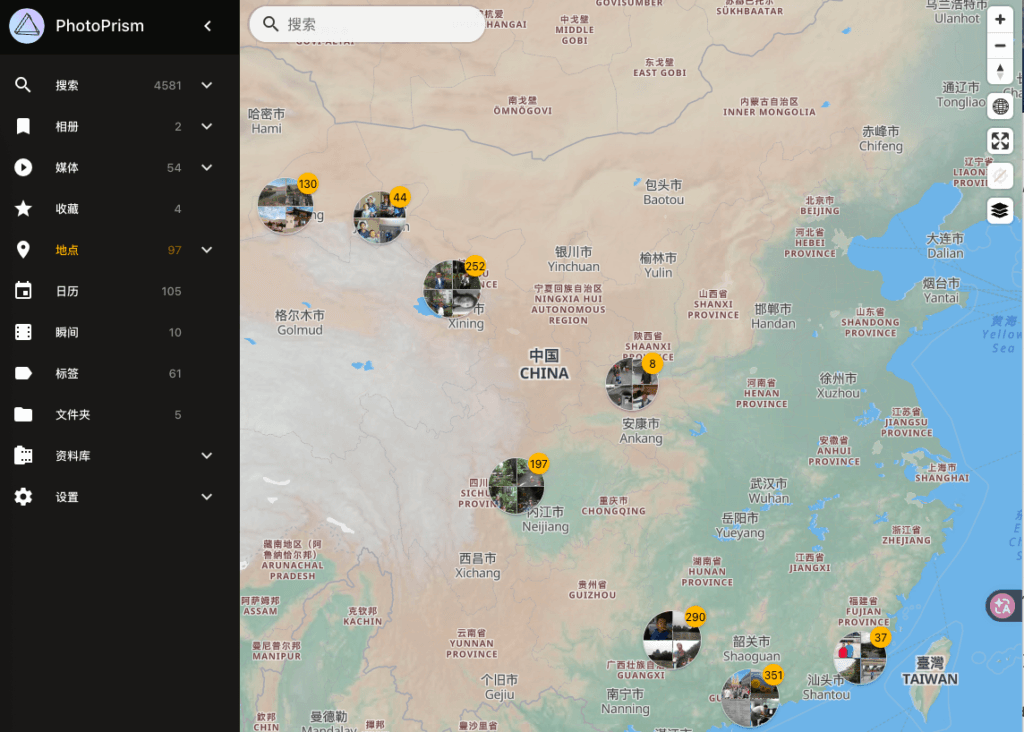
But after I uploaded more than 4,000 old photographs and opened the map view, something unexpected happened.
I stopped seeing files.
I started seeing my life.
There were circles scattered across the map of China.
A cluster here.
Another one hundreds of kilometers away.
A trip from years ago. A city I had almost forgotten. A road I once traveled. A meal, a hotel, a mountain, a family gathering.
Some locations contained hundreds of photographs.
And suddenly I became strangely nervous about losing them.
That surprised me.
Because before building this system, many of these photographs had spent years sitting quietly on hard drives.
I rarely looked at them.
Some folders contained hundreds of nearly identical pictures. Some images were badly framed. Some were blurry. Some seemed completely ordinary.
At the time they were taken, I probably thought very little about them.
But now?
I look at the same photographs and think:
I must not lose these.
And that made me wonder:
Why does an ordinary photograph become more valuable as time passes?
The Photo Has Not Changed
This is the strange part.
The photograph itself is exactly the same.
The pixels have not improved.
The composition has not become better.
The camera did not magically become more expensive.
A mediocre photograph taken ten years ago is still technically a mediocre photograph.
Yet emotionally, it can become incredibly valuable.
Because the thing inside the photograph has changed.
Or disappeared.
The child in the photo is older.
The parents are older.
The restaurant may no longer exist.
The apartment may belong to someone else.
The car may have been sold years ago.
The street may have been rebuilt.
The person holding the camera is no longer quite the same person either.
Time quietly transforms photographs.
A picture begins as a record of something ordinary.
Then, year by year, it becomes evidence of a world that no longer exists.
We Photograph the Present, but We Are Really Saving the Past
When we take a photograph, we usually think we are capturing the present.
A lunch.
A birthday.
A train ride.
A child sitting on the sofa.
Someone cooking dinner.
A hotel room.
A street outside the window.
At the time, none of these things feel historic.
They feel almost too ordinary.
That is why we delete so many photographs.
“This one isn’t very good.”
“We already have three similar ones.”
“Why did I photograph this?”
“My phone is running out of storage.”
These are perfectly reasonable thoughts.
But there is something our present-day brain cannot understand very well:
we do not yet know what our future self will miss.
The photograph of a famous landmark may not become your favorite photograph.
The photograph you treasure twenty years from now might be your father sitting in an old chair.
Your child wearing an ordinary school uniform.
Your mother standing in a kitchen that was renovated years later.
A cheap family car parked outside your old home.
A messy desk.
A neighborhood grocery store.
A dog sleeping beside the door.
None of these scenes seem important while they are happening.
That is precisely what makes them important later.
Ordinary Life Becomes Rare
We naturally photograph special occasions.
Vacations.
Graduations.
Weddings.
Beautiful scenery.
Famous places.
Those photographs matter.
But I am beginning to think that we systematically underestimate photographs of ordinary life.
A vacation is memorable even without a photograph.
You probably remember traveling to another country.
You remember climbing the mountain.
You remember the wedding.
But ordinary Tuesday afternoons disappear.
That is the frightening part.
Nobody announces:
This is the last year your child will sit at this table every night.
Nobody tells you:
Take a picture. Your parents will never be this age again.
Nobody says:
Photograph this living room. Ten years from now, you will desperately want to remember what it looked like.
Life changes gradually.
So gradually that we barely notice.
Until one day we look at an old photograph and realize an entire era has ended.
Technology Changes the Meaning of Memory
My photo server also taught me something else.
For years, those pictures were just folders.
Thousands of JPG files buried inside directories.
A filename like:
IMG_4837.JPG
means almost nothing.
But then software organized them by year.
By location.
By camera.
By event.
Suddenly the same files became a map of my life.
That change was fascinating.
The data had always existed.
But organization created meaning.
On the map, I could see hundreds of photographs grouped around places I had traveled.
One circle represented nearly two hundred photographs.
Another contained more than three hundred.
I clicked them and memories started returning.
It felt less like browsing a computer and more like opening doors into previous versions of my life.
That made me realize something very simple:
We don’t only lose memories because files disappear.
Sometimes we lose memories because they become impossible to find.
A photograph buried among 50,000 files might technically still exist.
But if nobody ever sees it again, part of its value has already been lost.
Preservation is not only about storage.
It is also about retrieval.
About context.
About making the past accessible.
The Strange Economics of Memory
There is another paradox.
Today we produce more photographs than any generation in history.
Therefore individual photographs feel cheap.
When film was expensive, people might take 24 or 36 photographs on an entire trip.
Now we can take 300 photographs before lunch.
Digital photography has made images abundant.
And abundance lowers perceived value.
But time reverses the equation.
Ten years later, there may be thousands of photographs from a year, yet only a few contain something that suddenly matters deeply.
Twenty years later, even a technically poor photograph may become irreplaceable.
The cost of creating the image approaches zero.
The cost of losing it approaches infinity.
There is no camera you can buy in 2036 that can return to 2026.
No AI model can truly recreate the exact expression on someone’s face.
No future technology can photograph a dinner that already happened.
Once a moment passes, the original data can never be collected again.
That makes personal photographs a very unusual kind of asset.
They become more difficult to replace as they become older.
Maybe We Should Photograph Differently
This experience has slightly changed the way I think about taking photographs.
I still don’t want tens of thousands of meaningless pictures.
More is not necessarily better.
But perhaps we should occasionally photograph things not because they are beautiful, but because they are normal.
Take a photograph of your parents’ home.
Take one of your desk.
Take one of the street where you live.
Photograph your child’s messy bedroom.
Photograph dinner before everyone starts eating.
Take a picture of your old car.
Your local supermarket.
Your favorite cheap restaurant.
Your workplace.
The view outside your window.
These things feel permanent.
They aren’t.
Maybe the purpose of some photographs should not be:
“Look how beautiful this is.”
Maybe it should simply be:
“This is what our life looked like.”
That might become far more valuable.
And Maybe We Should Delete More Carefully
I am not suggesting we keep every screenshot, accidental photograph, duplicate, and blurry pocket photo forever.
Digital clutter is real.
But perhaps there is a useful question to ask before deleting an ordinary photograph:
Could something in this image become impossible to photograph again?
A person?
A place?
A home?
A stage of childhood?
A family routine?
A small detail of everyday life?
If the answer is yes, maybe the photograph deserves a second thought.
Storage is cheap.
The past is not.
My 4,000 Photos Suddenly Feel Different
Before I built this system, I had many more photographs waiting to be imported.
And strangely, I felt I needed to be selective.
There were too many.
I did not want to upload everything.
But the approximately 4,000 photographs already inside the system felt completely different.
I had selected them.
Organized them.
Put them on a timeline.
Placed them on a map.
Now I wanted to protect them.
It was almost as if the act of organizing them had transformed them from files into possessions.
Perhaps that is another lesson.
We value things more deeply when we pay attention to them.
A photograph ignored for ten years is just data.
A photograph opened, remembered, placed in context, and connected to a story becomes something else.
It becomes part of your identity.
Ten Years From Now
This is the thought I cannot stop thinking about.
Some photograph sitting on your phone today may look completely unimportant.
Maybe you took it this morning.
Maybe it is your child eating breakfast.
Your spouse looking at a phone.
Your parents sitting on the sofa.
Your dog beside the window.
A rainy street outside your home.
Nothing happened.
There is no story.
You might even delete it tonight.
But imagine yourself opening that same photograph in 2036.
Ten years have passed.
Everyone is older.
Some people may live somewhere else.
The house may be different.
The children may have left home.
Some people in our photographs may no longer be with us.
And suddenly that completely ordinary photograph contains something extraordinary:
a moment you can never enter again.
That is what photographs become.
Not proof that we visited somewhere beautiful.
Not proof that we owned a good camera.
Not content.
They become tiny windows through time.
So Take the Picture
Take the photograph.
Not every second.
Not endlessly.
But occasionally, when nothing special is happening.
Especially when nothing special is happening.
Because one of the strange truths of life is that we often do not recognize the important moments while we are living them.
We understand their value only after they are gone.
Back up your photographs.
Organize some of them.
Print a few.
Send some to your parents.
Make albums.
Write dates and names somewhere.
And every once in a while, open the old ones.
Because perhaps the photograph you casually take today will become one of your most valuable possessions ten years from now.
Not because it is a great photograph.
But because it contains something that time has taken away.
Your ordinary life, exactly as it once was.
Leave a Reply