
I spent months building it.
I believed people would find it, buy from it, tell their friends about it.
They didn’t. Nobody did. For three years.
Looking back, the biggest mistake wasn’t the product. It wasn’t the price, the design, or even the market. It was something more fundamental — and more common than most failed side project founders want to admit.
This is the story of rolluppiano.net: zero visitors, 9 YouTube views in 6 years, and a Baidu translation error that invented a fictional person named Wu Xian. More importantly, it’s a story about the exact mistakes that kill most first side projects — and what I’d do completely differently today.

The Timeline
2018 — Spotted an opportunity: roll-up portable pianos were selling well on Alibaba. Built rolluppiano.net on Wix. Added products. Felt like a real business.

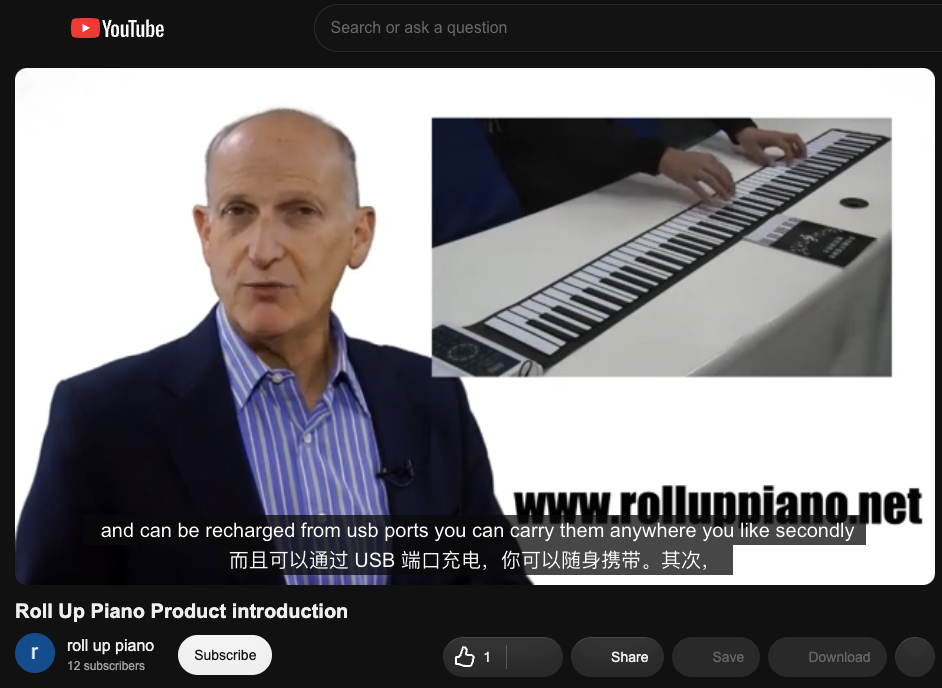
2019 — Started a blog because someone told me blogs drive traffic. Wrote articles in Chinese, ran them through Baidu Translate, published the results directly. Paid $50 on Fiverr for a product introduction video featuring a real English speaker.
2020 — Still no traffic. Kept adding products. Added a $1 piano sheet music ebook. I saved screenshots from that period — preserving every mistake as a record.
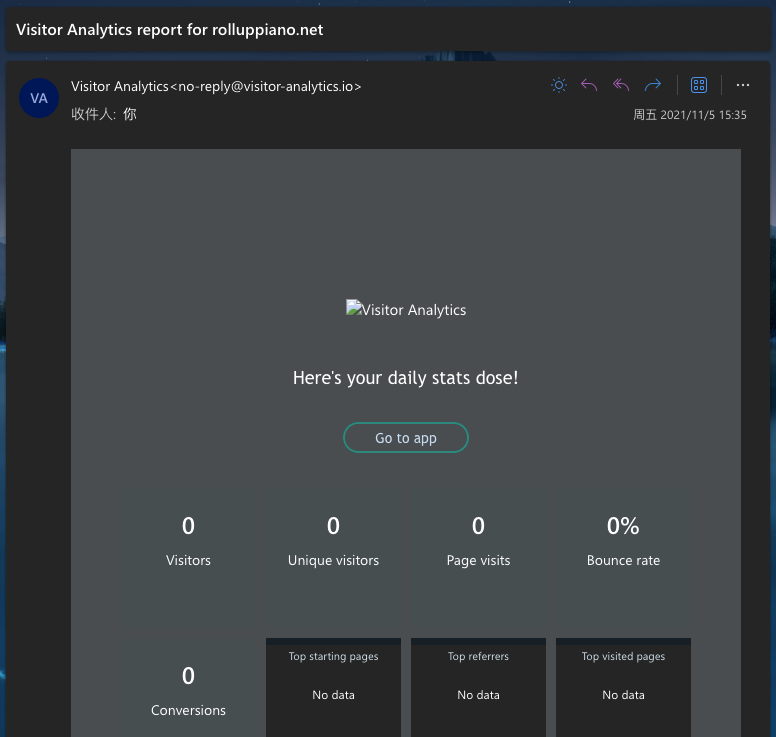
2021 — Received this email from my analytics provider:
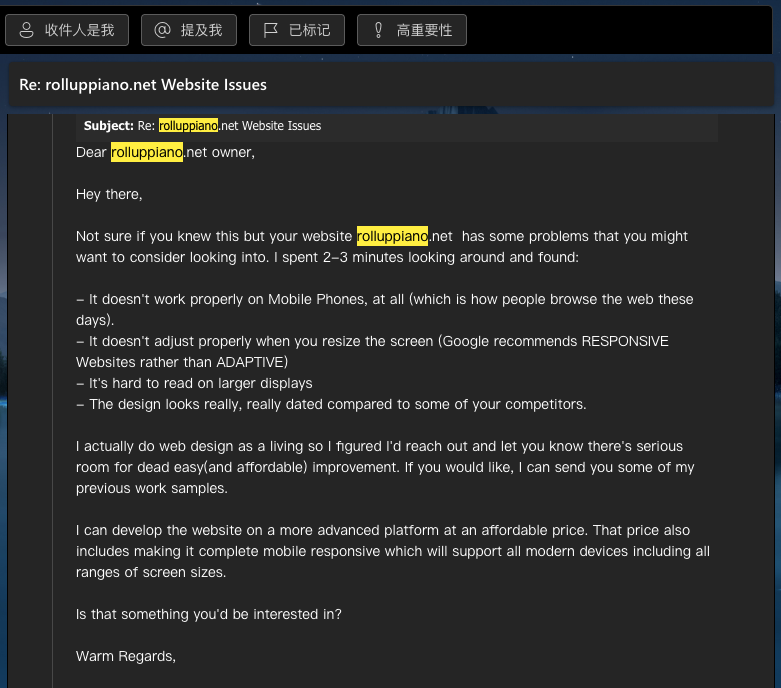
Also received a cold email from a web designer informing me that my site “doesn’t work on mobile phones, doesn’t adjust when you resize the screen, is hard to read on larger displays, and looks really, really dated compared to competitors.” He was trying to sell me a redesign. He wasn’t wrong.
2022 — Shut it down. Moved on.
2026 — Writing this article.
The Numbers
- Years running: ~3
- Money spent: $50 USD (Fiverr video) + ¥60 RMB domain + ¥1,800 RMB hosting (~¥2,200 RMB total)
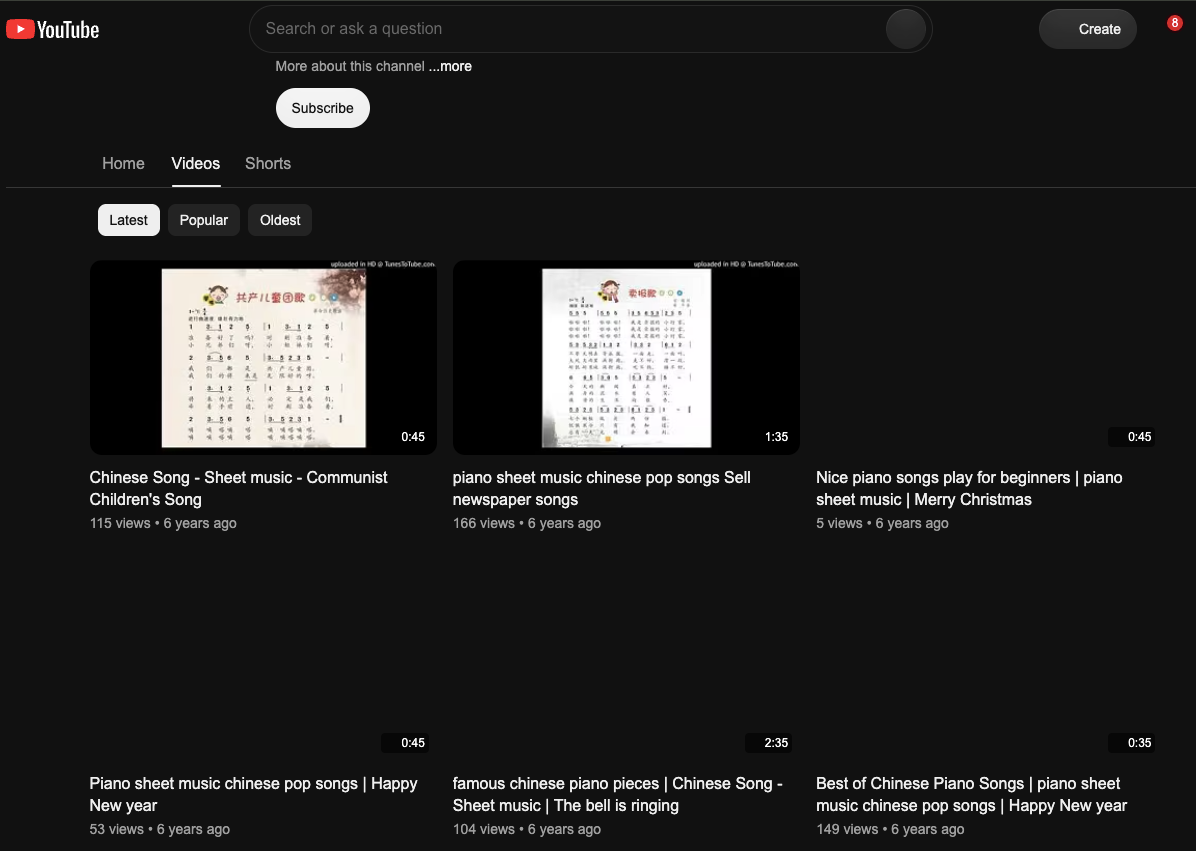
- YouTube views on the Fiverr video: 9 (in 6 years)
- Daily visitors at peak: 0
- Total sales: <5
- Blog articles published: 30
- Articles that ranked on Google: 0
The Wu Xian Problem
My most read article was titled: “Is Mozart Really a Child Prodigy? Listen to Mozart’s Music to Develop Intelligence?”
It opened with this sentence:
“When it comes to music prodigies, the first person people think of is Mozart. The five-year-old Wu Xian has indeed complied with this title.”
Wu Xian. Baidu Translate had converted a Chinese phrase meaning “from a very young age” into what appeared to be a person’s name. My Mozart article introduced a fictional Chinese prodigy to English readers worldwide.
Google’s algorithm noticed. Machine-translated content gets flagged. It ranked nowhere.
Three Reasons It Failed
Lesson 1: I optimized for the wrong signal.
I thought “having a blog” was the signal. It’s not. Having content that matches what people are actually searching for is the signal. Nobody searched “Is Mozart a child prodigy?” before buying a piano. They searched “best roll-up piano for beginners.” I was writing for an audience that had no reason to find me.
Lesson 2: I mistook translation for writing.
Running Chinese through Baidu and calling it content isn’t writing. It’s noise. Google doesn’t rank noise. More importantly, even if someone found it, Wu Xian wasn’t going to convince them to buy a piano.
Lesson 3: I built before I validated.
I spent months building the site before checking whether anyone was searching for what I was selling. A single afternoon with a keyword research tool would have told me the search volume was too low, the competition from Amazon was too high, and the content-to-purchase path was too long. I skipped that afternoon.
What I Would Do Today
If I were starting rolluppiano.net from scratch in 2026:
Day 1: Search volume check before building anything. Does “roll up piano” have buyers, or just browsers? Check who’s already ranking. Understand the competition.
Day 7: Write one real article targeting a specific buyer keyword. Not Mozart — something like “roll up piano vs digital piano: which is better for beginners?” Test whether Google will index it.
Day 14: Check Google Search Console. Is the article getting impressions? Any clicks? This tells you whether the site has a chance before you’ve invested months.
Day 30: If there’s traction, double down. If there’s nothing, pivot or stop. Don’t spend three years on zero visitors.
The entire rolluppiano experiment could have been compressed into 30 days. Instead it lasted three years.
If RollUpPiano Had Never Failed
Here’s the thing I keep coming back to.
If that site had worked — if somehow the Baidu translations had ranked, the Fiverr video had gone viral, the pianos had sold — I might still be running a piano e-commerce site. I wouldn’t have spent the next six years learning what actually drives traffic, what makes content rank, what readers actually want to read.
I wouldn’t have built the AI Investment Operating System. I wouldn’t have started the Investor Psychology series. I wouldn’t be writing this.
The failure wasn’t a detour. It was the curriculum.
After rolluppiano.net, I started taking SEO seriously. Then content strategy. Then AI — using it to research, write, and validate ideas in hours instead of months. Then I started building in public: documenting the process instead of hiding it. That’s what ordinarymantrying.com is. Not a polished success story. A live record of someone figuring it out, one failed experiment at a time.
Would I Build It Again?
Yes. Immediately. But not the same way.
The idea wasn’t wrong. Portable pianos are a real product with real buyers. The problem was never the market — it was my process. I skipped validation. I skipped distribution. I skipped writing in actual English.
If I ran the same experiment today with AI tools and six years of SEO knowledge, I’d know within 30 days whether it had legs. That’s the real lesson: not “don’t start things,” but “find out faster whether what you started is working.”
Most failed side projects don’t fail because the idea was bad. They fail because the founder never found out — one way or the other — before running out of energy.
The Question Worth Sitting With
Going through old files recently, I found the screenshots. Wu Xian is still there, frozen in November 2020, forever introducing himself as Mozart’s peer. The 9-view YouTube video is still up.
Old files keep everything.
Which brings me to the question I want to leave you with — the same one I asked myself when I found these old records:
What are you building right now that you’ll look back on in six years and realize: “I was missing something obvious, and the tools to fix it already existed — I just didn’t know how to use them.”
If AI had existed in 2019 the way it exists now, I think the keyword research problem gets solved in an hour. The translation problem disappears. The content strategy becomes obvious. Whether the business would have succeeded, I genuinely don’t know — the market was real, the product was real, the timing wasn’t bad.
But I would have found out in 30 days instead of three years.
This is part of my Learning in Public series — honest documentation of failures, lessons, and what I’m figuring out in real time.
- Failed Experiments #2: I Paid ¥1,000 for an AI Content Course. Here’s What I Got.
- Month 1 Blog Income Report: $0 Earned, 484 Real Visitors, and Why I’m Not Quitting
- The Real Problem with AI Tools (And Why I Stopped Building Them)
- Month 1 Website Self-Diagnosis: What Google, Bing, and Yandex Really Think of My Blog
Leave a Reply