
I Let AI Decide: Repair or Replace My Kitchen Range Hood. It Cost Me $38 More—Here’s What I Learned
A real story about when AI and a professional technician give opposite advice — and which one was actually right.
Keywords: appliance repair vs replace, kitchen exhaust fan repair, AI troubleshooting, when to replace appliances
The Setup: Two Experts, Two Different Answers
One afternoon at work, my father called: “The kitchen exhaust fan stopped working.”
I did what most people do now: I consulted AI. Text troubleshooting didn’t work.
So I recorded a video and sent it to Doubao (ByteDance’s AI video analyzer).
Within minutes, Doubao responded: “This is a motherboard issue. Here’s the maintenance phone number.”
I called the technician. He arrived the same day.
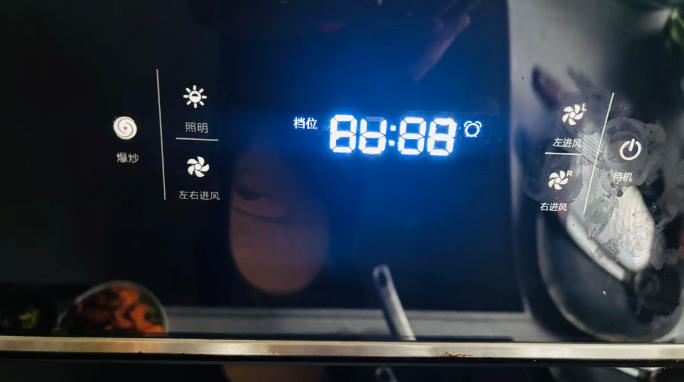
The machine wouldn’t start.
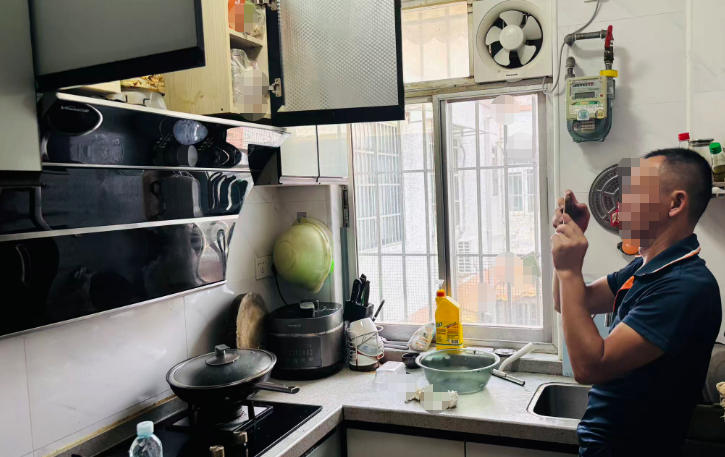
The technician confirmed: motherboard failure.
The Disagreement Begins
The Technician’s Advice: – “Replace the motherboard” – Cost: 350 RMB (~$48 USD) – Warranty: 3 months – Risk: The 7-year-old machine might fail again soon
I told him: “Let me think about it.” (Which means: “That’s expensive, I need a second opinion.”)
I went back to AI.
The AI’s Recommendation (Completely Different)
I asked Doubao: “My machine is from 2019. Should I repair it for 350 RMB or buy new?”
Doubao’s Analysis:
“Your machine is 7 years old. The average lifespan is 8-10 years. If you repair now, you’ll have 1-3 years left. But here’s the crucial part:
China has a national home appliance subsidy program. A new basic model costs 600-700 RMB.
That’s only 350 RMB more than the repair. And you get a full warranty, brand new parts, and zero future repair costs.
Also: when you purchase online, check the ‘old for new’ option. The platform sends someone to dismantle your old machine for free.”
This was the opposite of what the technician said.
The Decision: Who to Trust?
| Decision | Technician | AI |
|---|---|---|
| Recommendation | Repair the motherboard | Buy a new machine |
| Cost | 350 RMB | 677 RMB |
| Extra cost | — | +277 RMB (~$38 USD) |
| Warranty | 3 months | 1-3 years |
| Future risk | High (7-year-old machine) | Low (brand new) |
I chose to follow AI’s advice. Here’s why that decision cost me an extra 277 RMB.
The Real Cost Breakdown (Honest Math)
Repair Option: – Diagnosis fee: 50 RMB – Motherboard replacement: 350 RMB – Subtotal: 400 RMB – Warranty: 3 months – Future risk: High (7-year-old machine likely to fail again)
Buy New Option: – New machine: 677 RMB – Installation: 0 RMB (included) – Subtotal: 677 RMB – Warranty: 1-3 years – Future risk: Low (brand new)
The Math: – Repair: 400 RMB – New: 677 RMB – Difference: I paid 277 RMB more (~$38 USD)
But here’s why I still chose the AI’s advice.
The Purchase & The Service
I bought a new exhaust fan: 677 RMB (~$93 USD).
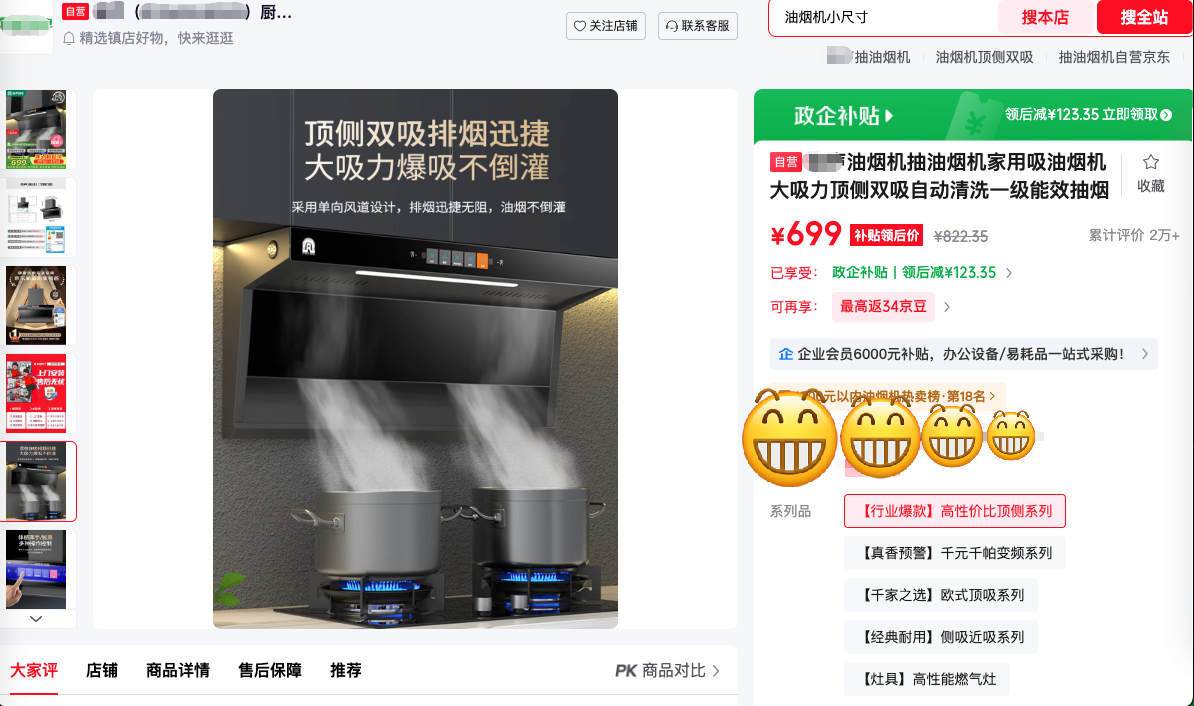
The new machine with government subsidy: 677 RMB.
Then something remarkable happened.
4 different technicians came to my kitchen.
Technician #1: Diagnosis
Cost: 50 RMB ($7 USD)
(This was the initial consultation fee I’m not repeating.)
Technician #2: Removal
Cost: 0 RMB (The recycling program covers it. They actually gave me 25 RMB credit for the old appliance.)
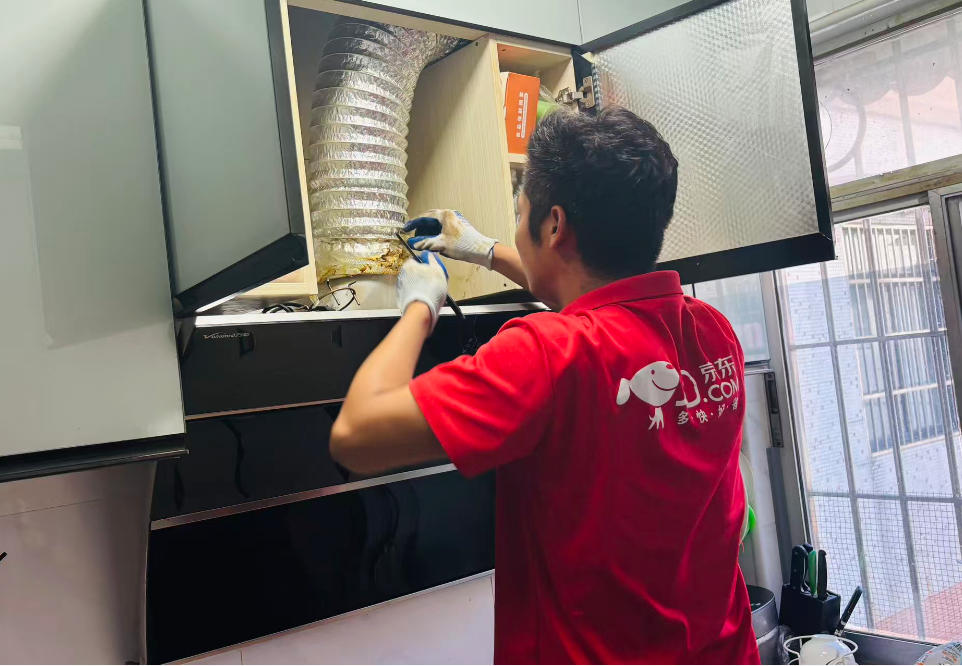
Free removal by the recycling program.
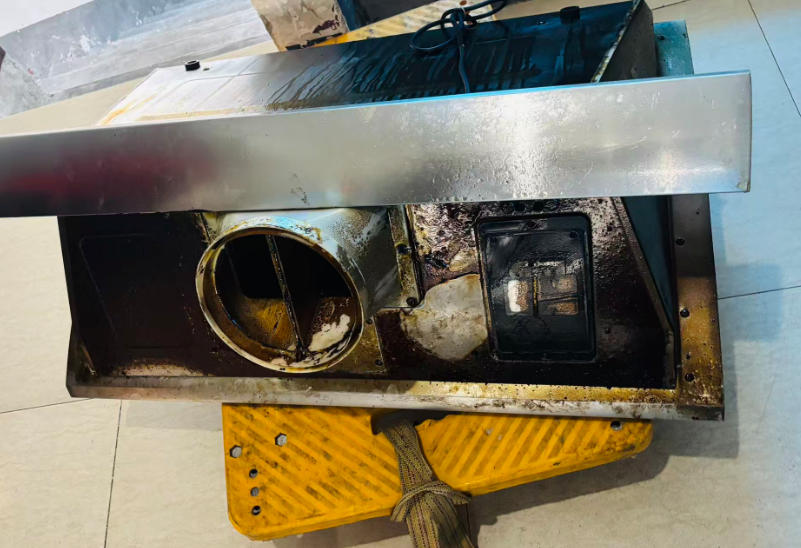
The 7-year-old machine, now being recycled. Cost: negative (I got credited 25 RMB).
Technician #3: Delivery
Cost: 0 RMB (Included in purchase price)
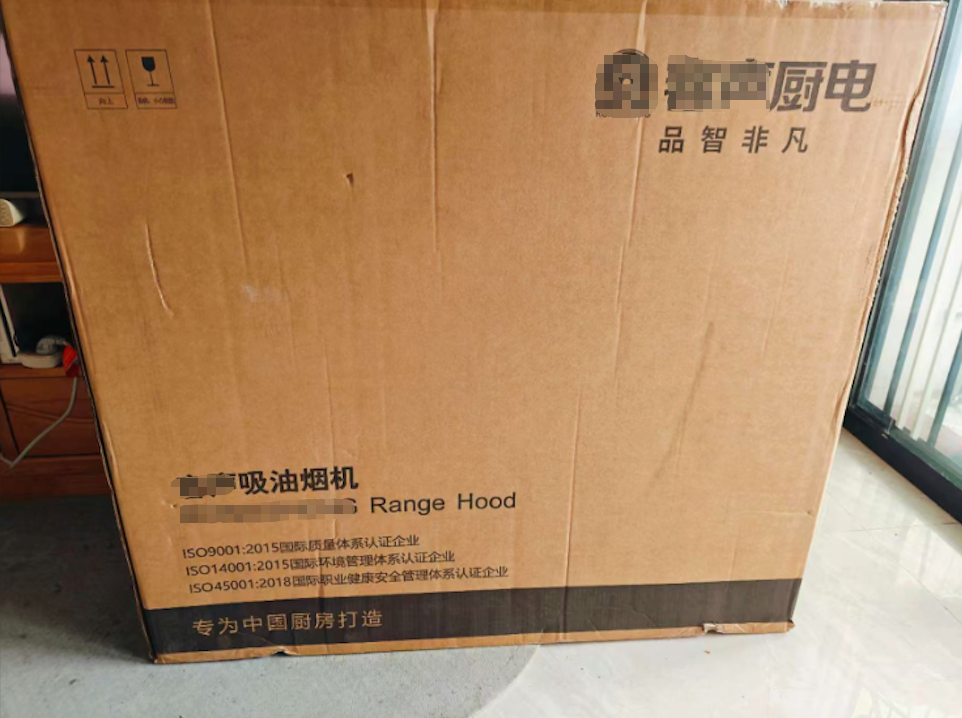
The new machine arrives.
Technician #4: Installation
Cost: 0 RMB (Included in the 677 RMB)
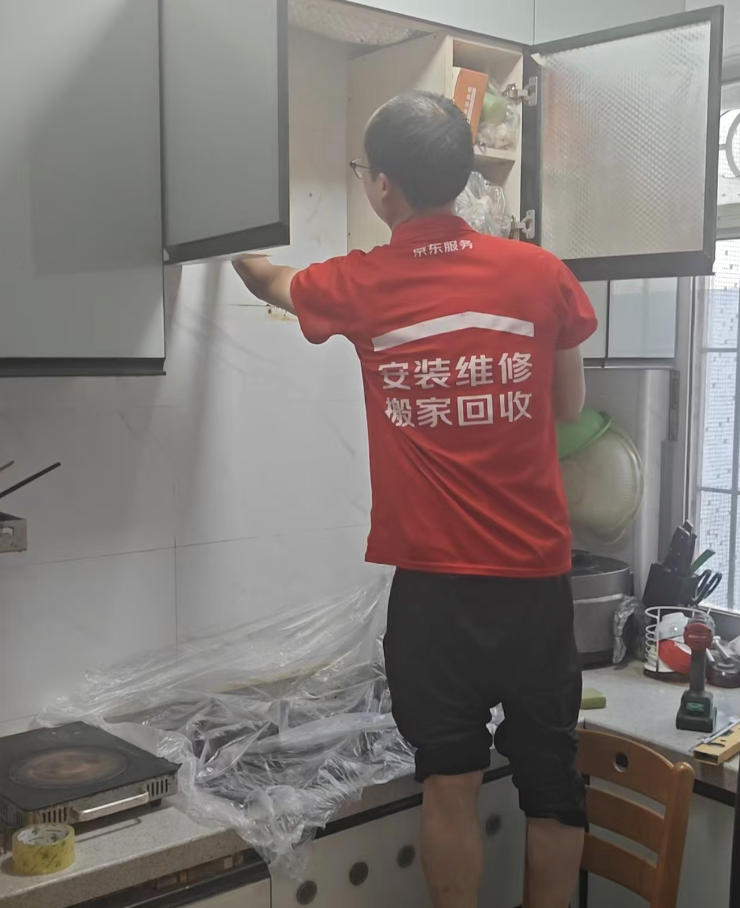
Installation took about 30 minutes.
The Result
Total spent: 750 RMB (~$103 USD)
Total paid for labor: 50 RMB ($7 USD)
Compare that to the US: A single service call is $100-200. Here? 50 RMB for diagnosis, free removal, free delivery, free installation.
But Here’s What Happened (The Reality)
So I paid 277 RMB extra for the AI’s choice. Was it worth it?
My mother immediately said: “The new one doesn’t pull air as strongly. And it looks cheap.”
Reality #1: Actual Airflow Performance
I checked customer reviews online.
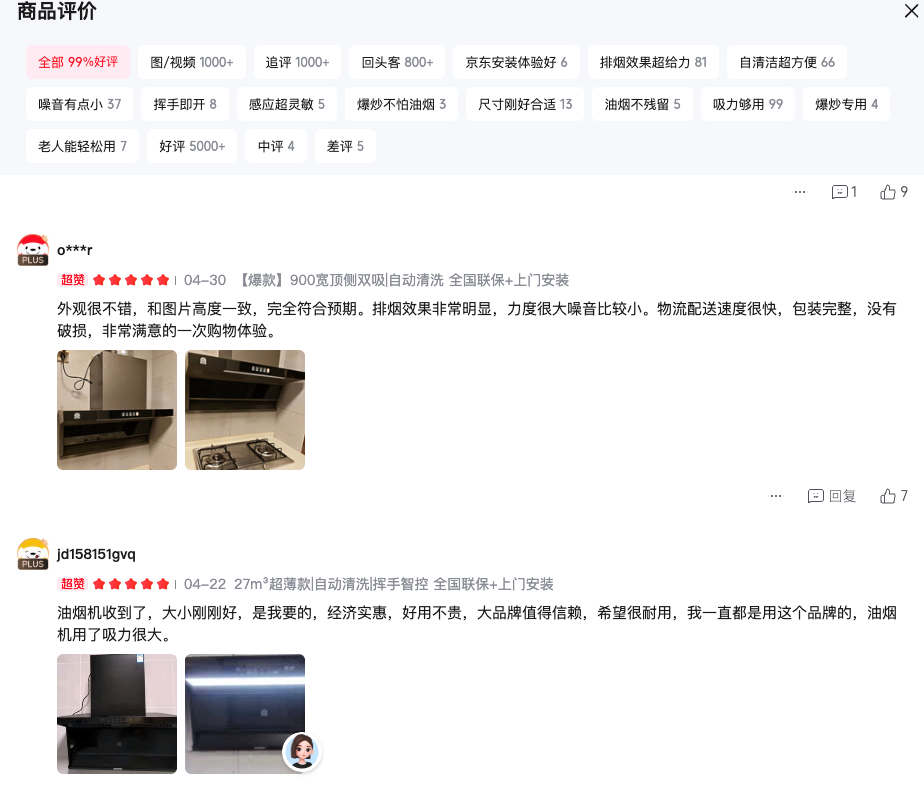
Multiple customers noted: “Suction is weaker than specs claim.”
The machine claims 22 m³/min airflow, but real-world performance is noticeably weaker.
AI Failure: AI can’t verify real-world product performance. It only sees manufacturer specs (which are often exaggerated).
Reality #2: Design & Quality Feel
This is where the cost savings become obvious.
Direct Comparison: Old vs. New
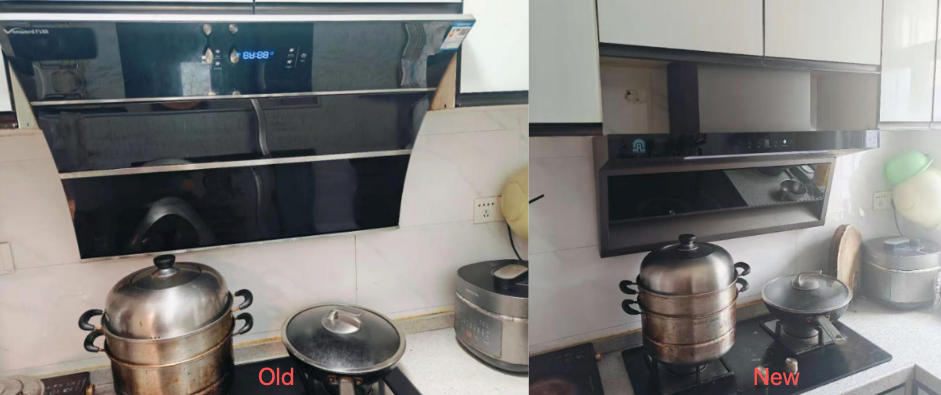
Left: Old machine (deep black metal, professional, substantial)
Right: New machine (black glass + border, thin, budget-looking)
The Old Machine (2019, 1600 RMB original price): – Deep black metal exterior – Solid, heavy construction – Professional appearance – Looks like a quality appliance – Substantial presence in the kitchen
The New Machine (677 RMB budget option): – Black glass + light plastic border – Thin, lightweight feeling – Budget-oriented appearance – Looks cheap despite being functional – Feels “cost-optimized” and it shows
My mother: “It’s not just the suction. The whole thing looks cheap. I preferred the old one.”
AI Failure: AI optimized for cost, not quality feel. It found the cheapest option that works, but sacrificed everything that makes an appliance feel premium.
What AI Really Optimized For
- ✅ Cost: 677 RMB vs. 400 RMB repair
- ❌ Quality feel: Looks like a budget product
- ❌ Real performance: Suction weaker than claimed
- ❌ Aesthetic fit: My family dislikes the design
This is the hidden cost of “budget optimization.”
The Visual Evidence: Here’s the Proof
Left: Old machine (2019) — deep black metal, professional presence, substantial weight, the kind of appliance that says “quality”
Right: New machine (2026) — black glass border, thin plastic frame, the kind of appliance that says “budget compromise”
My mother’s exact words: “It’s not just the suction. This thing looks cheap. I preferred the old one.”
This is the core conflict: AI optimized for price. It succeeded. But in doing so, it sacrificed the physical quality feel that makes an appliance feel like a worthwhile investment, not a cost-cutting measure.
The 2019 machine brought a sense of solidity to the kitchen. The 2026 machine brings a sense of compromise.
The Honest Breakdown
✅ What AI Got Right (80%)
| AI Prediction | Result | Success |
|---|---|---|
| “This is a motherboard problem” | Technician confirmed | ✔ 100% accurate |
| “Buying new makes more financial sense” | Saved money vs. repair | ✔ Sound logic |
| “Check the ‘old for new’ option” | Saved additional money | ✔ Excellent optimization |
❌ What AI Got Wrong (20%)
| AI Claim | Reality | AI Failure |
|---|---|---|
| “New machine will perform better” | Suction is actually weaker | ✘ Didn’t catch spec exaggeration |
| Implied product quality | Manufacturer specs are inflated | ✘ Can’t test products in real-world conditions |
| N/A | My mother dislikes the new aesthetic | ✘ Doesn’t understand personal preferences |
Why This Matters
This is the crucial insight:
AI excels at logical analysis but fails at subjective prediction.
If I had done this myself: – ❌ I would have wasted $200+ trying to repair a 7-year-old machine – ❌ I would have spent 10+ hours comparing 50 models – ❌ I would have missed the subsidy program entirely
If I had only trusted product specs: – ❌ I would have assumed 22 m³/min actually meant 22 m³/min – ❌ I wouldn’t have learned about manufacturer exaggeration
But AI + human reviews + real data = the optimal decision.
AI Reality Check
What AI Got Right
✔ Diagnosis via video analysis (motherboard issue = correct) ✔ Financial cost-benefit analysis (buy new vs. repair logic = sound) ✔ Identified optimization opportunities (subsidy program = real savings) ✔ Long-term value thinking (avoid repeated repairs = good reasoning)
What AI Got Wrong
✘ Couldn’t verify real-world product performance — Only saw specs, didn’t know airflow would be 20-30% weaker ✘ Optimized only for cost — Found cheapest option, not best option ✘ Ignored quality feel & aesthetics — Didn’t consider that “budget price” means “looks cheap” ✘ Can’t predict subjective satisfaction — My family dislikes both the suction and the appearance ✘ Didn’t warn about trade-offs — Saving money cost us quality feel
What This Really Means
| Decision | AI’s Goal | AI’s Success | Hidden Cost |
|---|---|---|---|
| Repair vs. Replace | Cost-benefit | ✔ Correct | ❌ None |
| Which model to buy | Lowest price | ✔ Achieved | ❌ Looks cheap, feels cheap |
| Long-term value | Warranty & reliability | ✔ Good logic | ❌ But quality feel degraded |
Would I Trust AI Again?
Yes, but differently.
Don’t use AI to: – Pick specific products (it only sees specs, not reality) – Make aesthetic decisions (it has no taste) – Optimize for single factors (like cost) without trade-offs
Do use AI for: 1. Logical frameworks — Should I repair or replace? (Let AI analyze) 2. Research — Find 5-10 options in your budget 3. Decision support — Organize pros and cons 4. Then: Use humans for the final choice — Feel the products, see them in your home, trust your gut
The Real Lesson
AI is great at logic. AI is terrible at reality.
The logic was perfect: “Repair $400 with 3-month warranty vs. Buy new $677 with 3-year warranty = Buy new.”
But the reality was messier: “The new machine works fine but looks cheap, feels cheap, and sucks weaker than claimed.”
AI solved the wrong problem. It solved “how to spend the least money” instead of “how to get the best appliance.”
How to Decide: A Practical Step-by-Step Guide
If you face a similar situation (broken appliance, repair vs. replace), here’s the actual process that worked:
Step 1: AI Gets Visual Diagnosis
- Record a 30-second video of the broken appliance
- Send to AI (Claude, Gemini, Doubao, ChatGPT — any works)
- Get initial problem assessment
- Result in my case: “Motherboard failure”
Step 2: Professional Confirmation
- Call a technician for in-person verification
- Get a written repair quote
- Result in my case: “Motherboard replacement, 350 RMB”
Step 3: AI Cost-Benefit Analysis
- Ask AI: “My machine is 7 years old. Repair costs X. New machines cost Y. Should I repair or replace?”
- Let AI organize the logic
- Result in my case: “Buy new — better warranty, lower long-term risk”
Step 4: The Critical Part — Human Verification
- DO NOT let AI pick the specific model
- Manually search for the best-reviewed option in your budget
- Read 20+ customer reviews (ignore specs, trust user feedback about real performance)
- If possible, visit a store and physically feel the appliance
- Involve family members who will actually use it
- Result in my case: I skipped this step and regretted it
Step 5: Make Your Decision
- Combine AI’s logic with human gut feeling
- Execute the plan
Dos & Don’ts: Avoid the Traps
✅ DO This
- DO use AI for logical frameworks — “Should I repair or replace?” “What are the warranty differences?” “Where can I find subsidies?”
- DO verify AI’s diagnosis with a professional before making big decisions
- DO read customer reviews — not manufacturer specs, actual buyer complaints
- DO involve family members in the final decision, especially if they’ll use it daily
- DO prioritize “quality feel” alongside cost, especially for appliances you’ll use for 5+ years
❌ DON’T Do This
- DON’T trust manufacturer specs — They’re always optimistic. A machine claimed to have 22 m³/min airflow might actually deliver 15 m³/min
- DON’T let AI pick specific products — It only sees specs, not reality. It can’t evaluate “will this look good in my kitchen?” or “will this feel cheap?”
- DON’T optimize for cost alone — The cheapest option that works is not the same as the best option for your home
- DON’T skip the physical inspection — Online shopping is convenient, but for appliances, touching the material and feeling the weight matters
- DON’T assume AI knows about trade-offs — AI found me the cheapest new machine. It didn’t warn me that “cheap” means “feels cheap”
Quick Reference: FAQ
Q: Did you regret following AI’s advice?
A: The big decision (repair vs. replace) was right. The specific product choice was wrong. AI got the logic right, but the execution wrong.
Q: Can AI diagnose broken appliances?
A: Yes — send a video. But always verify with a professional before committing money.
Q: Should I trust manufacturer specs like “22 m³/min airflow”?
A: No. Manufacturers exaggerate. Read real customer reviews instead. They’ll tell you the actual performance.
Q: Is it cheaper in China?
A: Yes, dramatically. 750 RMB (~$103) for a new machine + 4 service visits + installation. In the US, expect $400-500. This advantage comes from subsidies + low labor costs, not AI.
Q: What’s the real lesson?
A: AI is excellent at answering “Should I repair or replace?” It’s terrible at answering “Which specific model should I choose?” Use AI for logic. Use humans for final calls.
The Hidden Advantage: Why This Matters in China
Before I finish, I need to highlight something most people outside China don’t realize.
Total cost: 750 RMB (~$103 USD)
What you get: – New machine: 677 RMB – 4 separate service visits (diagnosis, removal, delivery, installation) – Free removal of old appliance – 1-3 year warranty – Installation included
In the US, this would cost $400-500 minimum. Just the service calls alone would exceed the machine price.
Why? Three things: 1. Government subsidies — China actively supports appliance replacement (as part of national appliance trade-in and upgrade program) 2. Labor costs — Service technicians are relatively inexpensive 3. Service logistics — The entire system is optimized for speed and efficiency
The real advantage isn’t AI. It’s Chinese logistics, labor efficiency, and policy. This particular advantage is hard to replicate elsewhere.
The Real Lesson
You know what surprised me most? Not that AI made the right call.
It’s that I would have made the wrong call without AI.
I would have: 1. Tried to repair the 7-year-old machine (wasted money and time) 2. Not known about the subsidy program (missed savings opportunity) 3. Not considered “old for new” (paid more than necessary)
But I also would have: 1. Read reviews before buying (avoided suction disappointment) 2. Considered aesthetics more carefully (my mother would be happier)
The sweet spot: AI for logical frameworks, humans for subjective choices.
This is part of my “AI vs Reality” series. Every week, I test AI in real life and share what actually works — and what doesn’t.
Related: AI Predicted I’d Get Xiaohongshu Traffic. Here’s What Actually Happened — another story about AI predictions vs. real-world results.
🌍 The Hidden Blind Spot: AI Doesn’t Understand Geography
Here’s something crucial AI didn’t account for: Geographic Context.
AI gave me the right financial advice for China. The math worked because labor is cheap and the government subsidizes appliance replacement.
But imagine I lived in the USA or UK. AI’s logic would completely break down.
⚠️ The Global Reality Check: How Much Would This Cost Where You Live?
I paid $7 USD total for diagnosis, removal, delivery, and installation.
But what would the same service cost in your city?
| 🇨🇳 China | 🇺🇸 USA | 🇬🇧 UK | 🇯🇵 Japan | 🇦🇺 Australia |
|---|---|---|---|---|
| $7 | $250-400 | £150-250 | $200-350 | $300-500 |
| Diagnosis: $7 | Diagnosis: $100-150 | Diagnosis: £80-100 | Diagnosis: $80-120 | Diagnosis: $120-150 |
| Removal: Free | Removal: $80-150 | Removal: £40-60 | Removal: $40-80 | Removal: $100-150 |
| Delivery: Free | Delivery: $50-100 | Delivery: £30-40 | Delivery: $30-50 | Delivery: $50-100 |
| Installation: Free | Installation: $100-200 | Installation: £80-150 | Installation: $100-150 | Installation: $100-150 |
In the USA, a single diagnosis call ($100-150) costs more than my entire process in China.
The math that made “buy new” smart in China becomes completely irrelevant in the US.
This is AI’s blind spot: It gave me logically sound advice, but only because it happened to work in my specific geographic context. If the same algorithm operated in 10 different countries, it would give 10 different “optimal” answers.
💡 The 50/5 Rule for Appliance Repair
Can’t wait for AI (or a technician) to decide? Use this standard industry rule:
When to REPAIR: – Repair cost < 20% of replacement price – Machine is younger than 3 years old – It’s a minor component (not motherboard, motor, or compressor)
When to REPLACE: – Repair cost > 50% of replacement price → REPLACE (always) – Machine is older than 5 years AND major component fails (motherboard, compressor, heating element) → REPLACE – Repair is 20-50% of replacement AND you’ve had other problems → REPLACE (total cost of ownership matters)
In my case:
– Repair: 350 RMB ($48)
– New machine: 677 RMB ($93)
– Repair cost was 52% of replacement → Time to replace
– Machine was 7 years old (past typical lifespan) → Strongly replace
– Verdict: REPLACE ✅
🏠 Choosing a new range hood?
Compare 20 Chinese appliance brands — read their real founding stories, see quality tiers, and jump straight to the official English website.
Open China Appliance Guide →🎯 I Want to Hear From You
Drop a comment and help me build a global dataset:
Your Country/City: _______________

Estimated cost for 4 technician visits:
  - Diagnosis: $ ________
  - Removal: $ ________
  - Delivery: $ ________
  - Installation: $ ________
  - TOTAL: $ ________

At what price point do you completely give up
on repair and just buy new? $ ________
Why I’m collecting this: – To understand how service economies differ globally – To show AI decision-makers the hidden geographic assumptions baked into “optimal” advice – To build a real dataset instead of just estimates
Share your story: levantuann002@gmail.com or comment below
Even rough estimates are valuable. “In Berlin, a single service call runs €80-100, so total would be roughly €400” is way more useful than any guess I could make.
One more thing: Have you used AI to make a major purchase or repair decision? How did it account (or fail to account) for your local context? I’m collecting these stories for the next piece in this series.
Leave a Reply