I Asked AI to Predict My Blog Traffic. Here’s What Happened.
A month-long experiment on why AI predictions fail in the real world
The Story
AI sounded incredibly confident.
It told me: “Post these investment articles on Xiaohongshu. Consistency matters. You’ll build an audience.”
I believed it.
I spent weeks organizing 10 months of conversation with Claude into 60 posts. I formatted them for Xiaohongshu. I set up a posting schedule.
Then I posted.
Day 1: 0 views. 0 impressions. 0 followers.
Day 3: 2 impressions. 0 views.
Day 7: Still nothing.
By Day 30, I had a number. A real number. But not the one I expected.
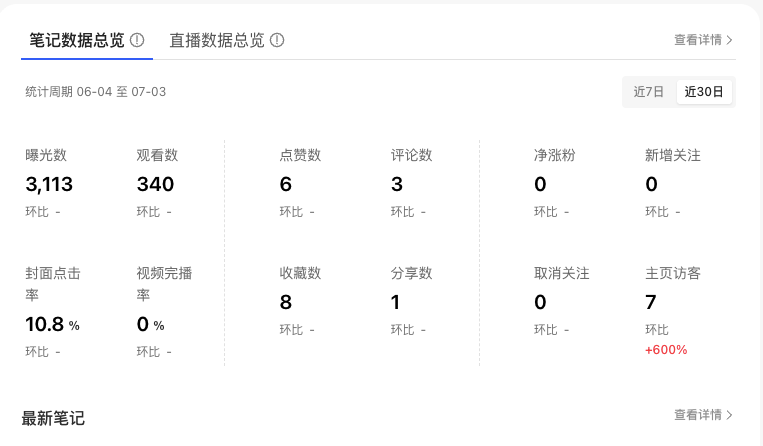
340 total views. 0 new followers. 0 comments across 8 posts.
Reality had disagreed with AI’s prediction.
The question was: Why?
The Real Story: A Month-Long Experiment
One month ago, I had 10 months of investment conversations with Claude. The insights were solid. The question was: where should I share them?
I asked Claude: “If I post these on Xiaohongshu, will they get traction?”
Claude’s response was confident:
– ✅ “This content has real value”
– ✅ “Xiaohongshu rewards educational content”
– ✅ “If you post consistently, you’ll build an audience”
– ✅ “I can turn your 10 months of conversations into 60 posts”
I believed it. Why wouldn’t I? Claude had access to platform data. It seemed like a legitimate prediction.
So I started posting.
What Actually Happened: The Timeline
Day 1-3: Optimism
- Posted first post
- Impressions: 0
- Views: 0
- Comments: 0
“Algorithms need time to understand new creators” — Claude said. I believed it.
Day 7: First Signs
- Posted 3 posts total
- Total impressions: ~50
- Total views: ~8
- Likes: 0
- Comments: 0
“Keep going, this is normal” — Claude said.
Day 14: The Turning Point
- Posted 5 posts total
- Total impressions: 800
- Total views: ~90
- Likes: 2
- Comments: 0
“Wait. This doesn’t match the prediction.” — I thought.
Day 30: The Reality Check
- Posted 8 posts total
- Total impressions: 3,113
- Total views: 340 (10.9% conversion from impressions)
- Total likes: 6
- Total comments: 3
- New followers gained: 0
- Final account status: 41 followers, zero net growth
Most posts got under 10 views. The best post got 160 views. From 160 views, I got 0 new followers.
The Contrast: What AI Predicted vs. What Actually Happened
| AI’s Prediction | What Actually Happened |
|---|---|
| “This topic has high potential for Xiaohongshu” | 4 impressions average per post |
| “People will love this financial analysis” | 0 comments total across 8 posts |
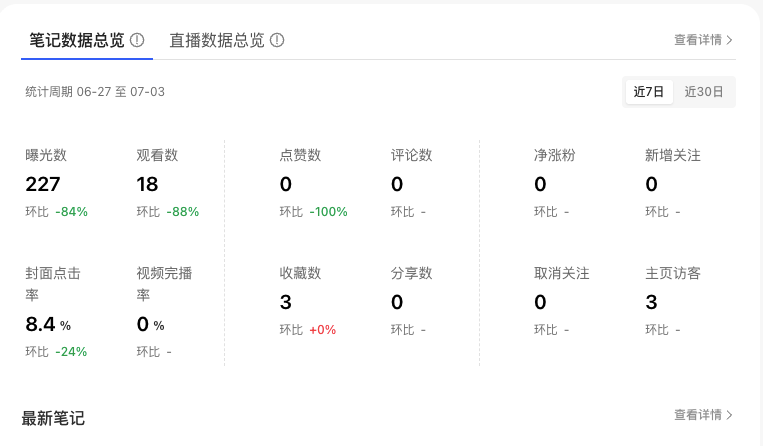
| “Consistency matters; the algorithm will reward you” | Engagement dropped 84% Week 2 |
| “Post 2x per week and watch it grow” | Posted 8 times. Followers: 0 |
| “Your content quality is strong” | 90% of views came from 1 post about foreign investors |
The most damning data point: Zero comments across all posts. Not harsh criticism. Not disagreement. Just… silence.
Claude’s “Attitude Shift”
Here’s where it gets interesting.
Week 1: Claude was convinced I should keep going.
Week 2: Claude changed its mind.
Week 3: Claude admitted the prediction was wrong.
This is Claude’s actual response after seeing the data:
“Looking at your results, I think I made an incorrect assumption about content-platform fit. I predicted financial analysis would work on Xiaohongshu based on platform data. But I didn’t account for algorithmic specifics. Xiaohongshu optimizes for lifestyle and entertainment content — not deep financial analysis.
Honestly? Continuing to post this is probably not the best use of your time.”
What This Reveals About AI Predictions
This wasn’t Claude being “wrong” — it was Claude being uncertain while sounding certain.
Here’s what happened:
-
Claude made a prediction based on: “Financial content has value” + “Xiaohongshu has educational content” = “This will work”
-
Claude didn’t account for: Platform algorithm specifics, Western AI knowledge vs. Chinese platform dynamics, and the difference between “content has value” vs. “content fits this platform’s recommendation system”
-
Claude had high confidence in a prediction that required knowledge it didn’t have
-
When given real data, Claude updated its recommendation 180 degrees
But Here’s the Thing — And This Matters
I don’t think the lesson is “AI is unreliable.”
The lesson is: “AI gave me a hypothesis. Reality gave me the answer.”
This is actually valuable. Here’s why:
✅ Claude could organize 10 months of conversations into posts
✅ Claude could format them for Xiaohongshu
✅ Claude’s hypothesis was reasonable (even if wrong)
❌ Claude couldn’t predict real-world platform dynamics without validation
❌ Claude couldn’t say “I’m uncertain about this specific platform”
❌ Claude shouldn’t have sounded so confident
What I Actually Learned
• AI can generate hypotheses. Reality validates them.
– The content Claude wrote was well-structured. The prediction about platform fit was wrong.
• AI cannot predict platform algorithms without real data.
– Especially not for Chinese platforms, where training data is limited.
• “Potential” ≠ “Platform fit”
– Content can be high quality and still fail on the wrong platform.
• Small experiments beat big assumptions.
– I found this out in 1 month instead of 6 months. That’s the value of testing.
• Confidence ≠ Accuracy
– The thing AI sounded most sure about turned out to be the most wrong.
FAQ: Questions You Might Have
Q: Can AI predict blog/social media traffic?
A: Not reliably without deep platform knowledge. AI can predict general trends (“financial content performs well”) but not specific platform dynamics (“Xiaohongshu’s algorithm prioritizes entertainment over finance”).
Q: Does AI know what Google will rank?
A: No. Google’s ranking factors change constantly. AI trained on historical data will miss current algorithm shifts.
Q: Should you trust AI for content strategy?
A: Trust AI for content creation (formatting, organization, idea development). Question AI for strategy predictions (which platform will work, which content will rank, where audiences are). Always validate with real data.
Q: What if you’d listened to AI and kept posting?
A: I’d have wasted 6 months instead of 1 month. The 1-month “failure” saved me 5 months of effort.
The Real Value of This Experiment
I’m not posting this to say “AI failed” or “AI succeeded.”
I’m posting this because: This is Week 2 of my five-year public experiment.
On this website, you’ll find:
– AI predictions
– Real-world test results
– Honest retrospectives
I don’t know if ordinarymantrying.com will succeed. But every failure becomes another data point. And I’m documenting all of it.
Most people write “Here’s how I succeeded.” I’m writing “Here’s what I tried, what happened, and what I learned.”
That’s harder. It’s also more useful.
What’s Next?
What I’m doing with these insights:
1. Moving financial analysis to my blog — a format where depth is valued
2. Keeping Xiaohongshu for different content — lighter, more visual material
3. Documenting this as a case study — so others can learn from the experiment
What I’d like from you:
Have you tried using AI for platform strategy and gotten different results? I’m genuinely curious. Reply or email me — I’m compiling reader responses into a follow-up post.
The Data (Full Transparency)
30-Day Performance (June 4 – July 3, 2026):
7-Day Performance (June 27 – July 3, 2026):
Follower Growth Over Time:
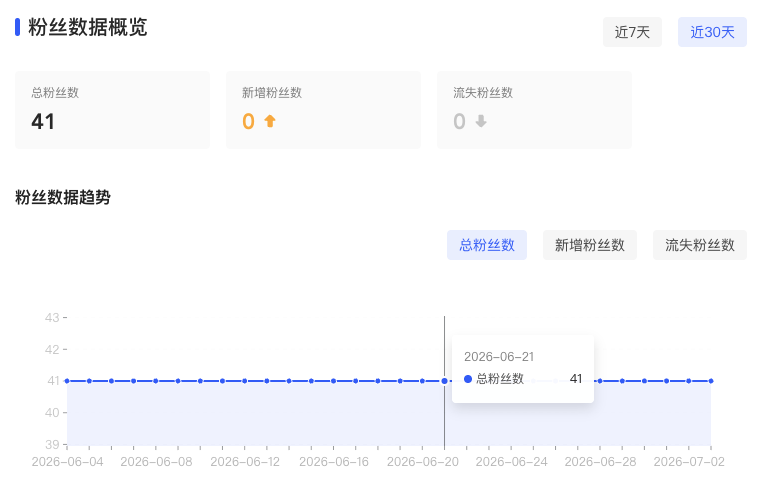
Flat line. Zero growth. This is real data from a real account.
One More Thing
If you’re thinking about using AI to predict your marketing, content strategy, or growth on any platform:
Run real experiments. Measure actual outcomes. Don’t just take AI’s word for it.
AI is a tool. A powerful one. But tools need operators who understand when to trust them and when to verify.
In this case, I trusted too early. But I verified within a month. That’s the lesson.
This is part of my series on building in public. Every failure, documented. Every assumption, tested.
Email: levantuann002@gmail.com
Read more in the “AI Experiments” category.
Leave a Reply