In 2018, a friend of mine was trying to export goji berries to overseas markets. He needed an English website to reach international buyers. I said I’d build it.
He dropped out six months later. No product, no business partner, no plan.
I kept going for another six years.
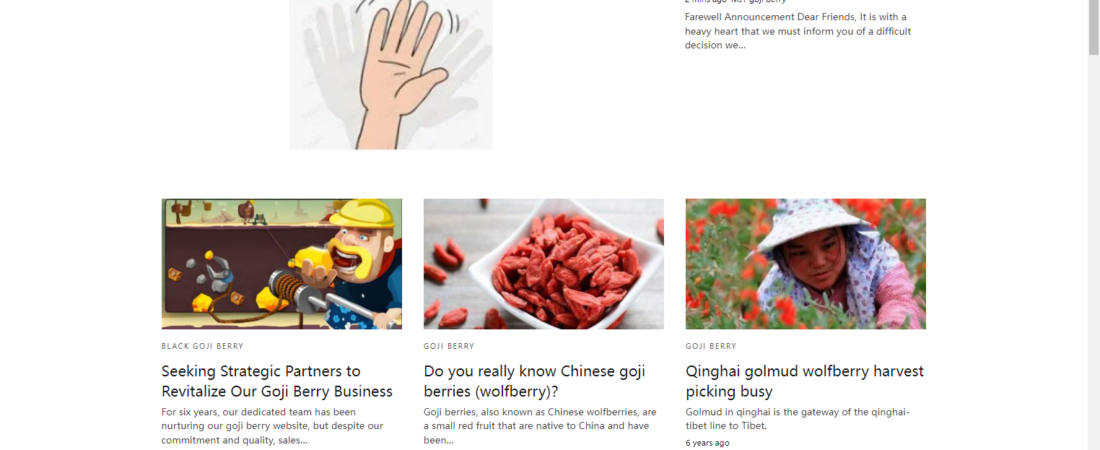
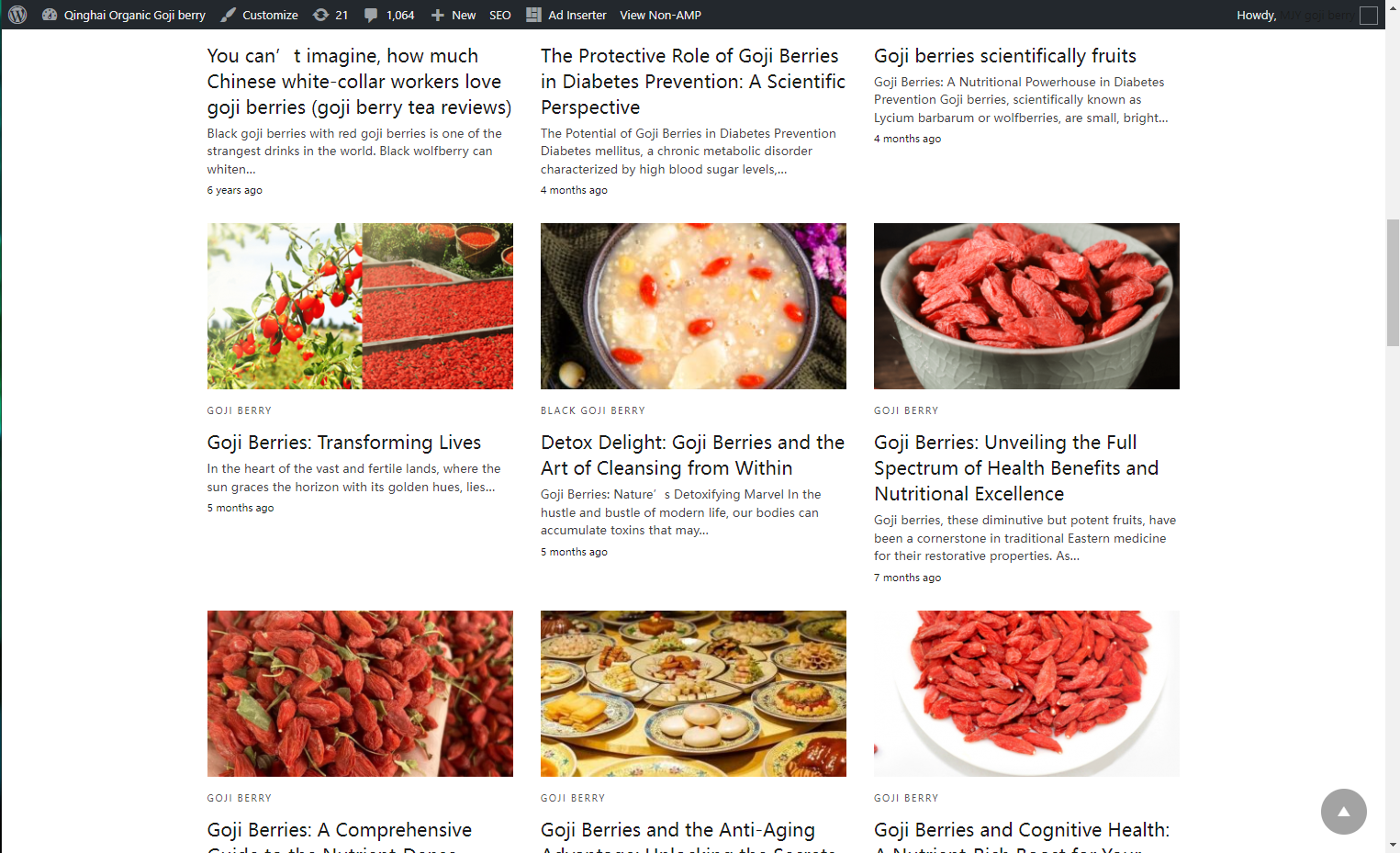
That website — mjy-shop.com — became one of the strangest things I’ve ever done. More than 800 articles. A YouTube channel with 193 videos. Hundreds of hours of work. Near-zero income for the entire run. And when the final hosting renewal notice arrived in November 2025, I just didn’t pay the ¥385.
That’s how a six-year project ends. Not with a decision. With an invoice you choose to ignore.
What I Actually Built
To be clear, I wasn’t just copying content. I was genuinely trying to build something real.
I built a WordPress site and wrote about goji berry nutrition, recipes, health benefits, sourcing from Qinghai, the science behind the antioxidants. I wrote in English even though it’s not my first language. I studied SEO. I watched my Google Analytics dashboard obsessively.
I also started a YouTube channel — Sales Goji & black wolfberry — and uploaded 193 videos. Product demonstrations. Scenery from where the berries come from. Short clips about Qinghai food and local life. I filmed, edited, and published videos consistently for years.
The channel is still live. As of 2026, it has 107 subscribers.
One hundred and seven subscribers across 193 videos. That works out to roughly one subscriber for every two videos uploaded.
The website, at its peak, received a few hundred visitors a month. Google AdSense rejected my application. I couldn’t figure out why for a long time.
What It Actually Cost
Here’s something I’ve never written down before: the numbers.
Hosting cost approximately ¥350 per year in the early years, rising to ¥385 by 2025. Over six years, the total hosting investment was roughly ¥2,100 to ¥2,200.
Revenue from the website and YouTube channel combined: essentially zero.
I’m not writing this to be dramatic. I’m writing it because I think it’s important to be specific. “Six years of failure” is abstract. “¥2,100 spent, ¥0 returned, 193 videos uploaded, 107 subscribers” is concrete. The concrete version is more useful, because it forces you to ask better questions about where you actually went wrong.
The Problems I Couldn’t See at the Time
Looking back now, the issues are obvious.
The English wasn’t natural. I was translating my thoughts from Mandarin into English, and readers could feel it. The sentences were grammatically correct but somehow stiff — the kind of writing that tells you immediately that the author is working in their second language. Google’s quality guidelines penalize this. So do human readers.
The niche had no real audience. Goji berries are a health food. People search for them occasionally. But I had no connection to the actual buyers, no fulfillment capability, no product to sell. I was writing content for a business that didn’t exist.
I had no monetization strategy. My entire plan was: write content, get traffic, apply for AdSense, make money. When AdSense rejected me, I had no backup. I just kept writing and hoping something would change.
I confused activity with progress. 800 articles and 193 videos sounds like a lot of work, and it was. But I was measuring success by output volume rather than by whether anyone was actually reading, engaging, or buying. I optimized for the thing I could control instead of the thing that actually mattered.
The Legacy That Arrived
After several years of running sales@mjy-shop.com as the contact email, the inbox had filled with something I hadn’t planned for: spam.
Casino advertisements. Dating site solicitations. Investment schemes in broken English. The occasional “business inquiry” that was obviously not a business inquiry.
My six-year experiment in content marketing had produced, as its most consistent output, a target for automated spam systems. Whatever algorithms scan the web for active email addresses had found mine.
It’s a small detail. But it’s also a very accurate portrait of what I had actually built: something visible enough to attract spam, not visible enough to attract customers.
How It Ended

In November 2024, GegeHost — the small Chinese hosting company I’d been using — sent a suspension notice. ¥350 overdue. I renewed.
One more year. I wasn’t ready to stop.
In October 2025, the next notice arrived: ¥385, due November 3rd. This time I didn’t open the payment link.
The website went offline. Around the same time, I stopped updating the YouTube channel. Not with a farewell video. Not with an announcement. I just stopped.
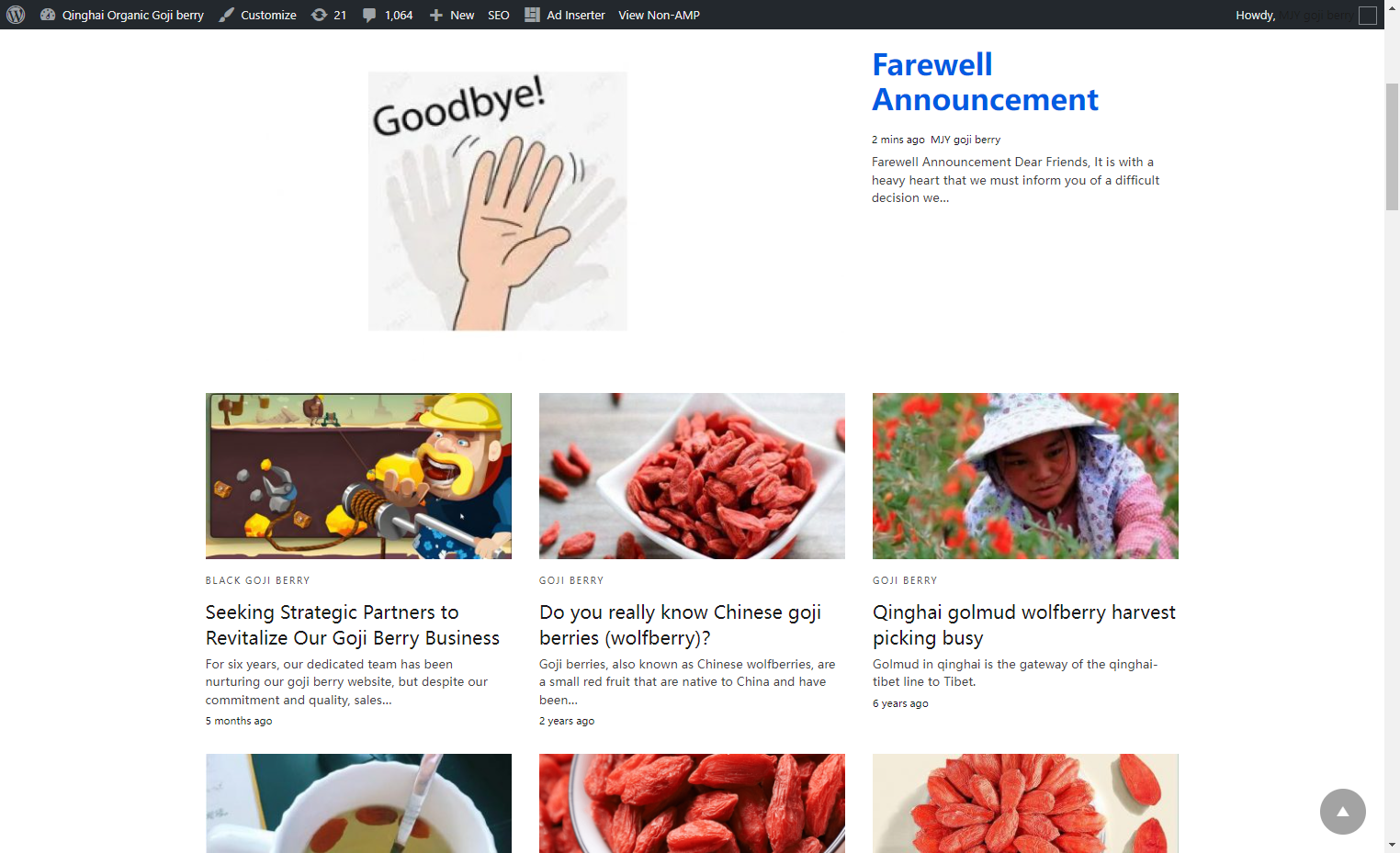
The farewell announcement that had been sitting on the homepage — written at some point when I thought I might be stopping, then left up indefinitely — was now accurate by default.
The Part That Still Bothers Me
I stopped the YouTube channel in 2025 because I had run out of hope. There was no mechanism I could see that would ever turn 107 subscribers and a few hundred monthly website visitors into anything sustainable. So I let the invoice lapse and moved on.
Three months later, I started using AI seriously for the first time.
I want to be careful about this, because “if only I had known” is usually a useless thought. But this case is specific enough to be worth naming: the exact problems that killed my goji berry project were problems that AI now solves.
The English quality problem — AI solves it. Writing in natural, native-sounding English is something I can now do with a collaborator, not by struggling alone.
The content efficiency problem — AI solves it. Producing 800 articles over six years was exhausting. The same volume of work could now be completed in a fraction of the time, leaving more energy for distribution and strategy.
The “I don’t know what I don’t know” problem — AI helps with it. I spent years unable to diagnose why AdSense kept rejecting me, why traffic wasn’t converting, why the content felt stiff to readers. Those are exactly the kinds of questions that AI is good at helping you see.
I’m not saying the business would have worked. The niche was still wrong. The distribution strategy was still missing. But the execution problems that exhausted me for six years were solvable problems that I simply didn’t have the right tools to solve.
What Six Years of Failure Actually Teaches You
I don’t regret those six years.
Not because the website succeeded — it didn’t. But because I learned things I couldn’t have learned any other way.
I learned that persistence alone isn’t enough. You also need a mechanism — a realistic path from content to reader to value to income.
I learned that language quality is non-negotiable for an English website targeting Western readers. One unnatural sentence in a paragraph can destroy trust.
I learned that niche selection matters more than volume. “Goji berries” was a product, not an audience. I should have been asking: who are the people I’m trying to help, and what do they genuinely need?
And I learned something I didn’t expect: that I actually enjoy building things in public. Even when nobody is reading, there’s something about the act of trying to explain your world to strangers that clarifies your own thinking.
Why I’m Trying Again
When I started this blog, people in my life thought I was a little crazy. You already tried an English website. It didn’t work. Why would this be different?
Here’s my answer: because the problems are different now.
The English quality problem is solved. The content efficiency problem is solved. The “I don’t know what I don’t know” problem is at least more manageable.
The niche problem is solved by my actual story. I’m not writing about a product I don’t have. I’m writing about my real experience — the failures, the experiments, the things I’m genuinely figuring out. Nobody can copy that, because it’s mine.
Will it work? I genuinely don’t know. But I’m not going in blind anymore.
If you want to see what 193 videos and six years of trying looked like — the channel is still there: Sales Goji & black wolfberry on YouTube. 107 subscribers and counting. Slowly.
If you’ve ever built something for years without seeing results — what kept you going? And what finally made you stop, or start again? I’d genuinely like to know.
Share your experience or thoughts below.
Related Reading
- I Built a 1,500-Article Website About Making Money — Then Shut It Down. Here’s Why.
- Week 1 of Running This Blog: What I Expected vs. What Actually Happened
- I’m an Ordinary Chinese Guy Trying to Make Money Online with AI — This Is My Story
Free Tools From This Blog
Leave a Reply